Governed AI Assistants for Enterprise Slack Deployments
Governed access and audit trails must wrap around MCP itself.
Deploying an AI assistant in enterprise Slack isn't just a technical integration decision, it's a governance problem: which data sources the assistant can reach, whose permissions determine access, and how every action stays auditable all have to be solved before the assistant is useful at scale.
Three questions decide whether any of this scales past a single team's pilot. Which data sources can the assistant reach, and who authorized that reach? Whose permissions govern what a given employee can pull out of it? And can every action the assistant takes be logged, attributed to someone, and reviewed after the fact? None of these are edge cases to patch in later. They separate a tool one team likes from a system the company can actually run on.
Treat this as an infrastructure decision wearing a UX costume. The rest of this piece is about why that distinction matters, and what closes the gap. The default assumption is that Slack AI assistants feel like a plug-and-play decision (pick a bot, connect a few tools, ship it).
How MCP became the connective tissue between AI assistants and enterprise systems
Anthropic open-sourced MCP in November 2024. In December 2025, it donated MCP to the Agentic AI Foundation under the Linux Foundation, making the protocol vendor-neutral. By March 2026 the numbers backed up the "de facto standard" label: 97 million monthly SDK downloads, north of 81,000 GitHub stars, and backing from Anthropic, OpenAI, Block, Google, Microsoft, AWS, Cloudflare, and Bloomberg Complete Guide to MCP (Model Context Protocol) in 2026 — Architecture, Implementation, and Enterprise Roadmap - DEV Community WorkOS.
What MCP actually does is simpler than the adoption numbers make it sound. It is at the boundary between language models and the operational systems that keep a company running: databases, ticketing platforms, identity providers, SaaS APIs. It defines that boundary through three primitives. Tools are functions the model can call. Resources are data it can read. Prompts are pre-built workflow templates it can reuse.
Before a shared standard existed, connecting agents to tools was an N×M problem. Ten agents, each needing five different tools, meant fifty separate integrations to build, secure, and maintain. MCP collapses that: build the integration once as an MCP server, and any compliant agent can use it.
For Slack specifically, this matters because the assistant living inside the workspace isn't some self-contained brain. It's a host application, creating MCP client sessions that connect out to whatever MCP servers the organization has configured. The assistant's reach is exactly as wide, or as narrow, as those configurations allow. Nothing more.
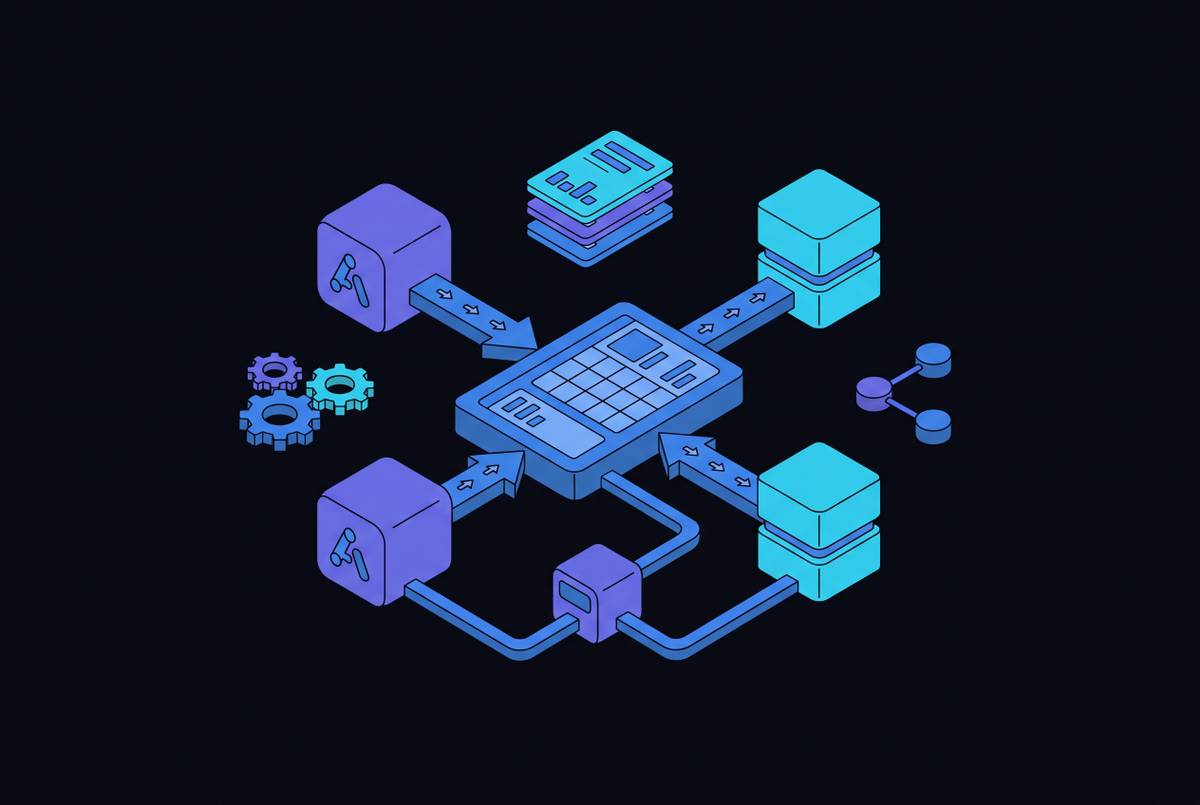
MCP standardizes the connection layer. It doesn't enforce who's allowed to access what. That gap is the subject of everything that follows. What MCP actually does in plain terms is described below.
What the July 2026 spec change means for teams running Slack assistants in production
The 2026-07-28 release is, in the words of Anthropic's David Soria Parra, the most substantial change to MCP since remote MCP first launched. For teams running Slack assistants in production, three changes affect production reliability and governance the most.
First, the protocol core went stateless. Previously, MCP required persistent, stateful sessions, which created a scaling bottleneck and undefined behavior once requests hit a load balancer. Now every request describes itself fully, so any request can land on any server instance behind a plain round-robin balancer with no shared session storage required. Practically, that means the MCP servers backing a Slack assistant can scale the same way any ordinary web service does, with no session affinity to engineer around.
Second, header-based routing arrived through two new headers, Mcp-Method and Mcp-Name. Gateways and security tooling can now route and meter traffic by reading HTTP headers directly, instead of parsing every JSON body that passes through. For security teams inspecting traffic at scale, that's a real, concrete win, not a cosmetic one.
Third, Enterprise-Managed Authorization moved to stable status. EMA replaces the old pattern of per-server consent prompts with a single sign-in through the company's identity provider, after which the user inherits access to whatever servers have been approved. Under the hood, it works through an Identity Assertion JWT Authorization Grant, an ID-JAG, that gets exchanged for an access token by the MCP server's own authorization server. At stable launch, Anthropic, Microsoft, and Okta had all adopted it.
Runtime authorization for individual actions is still the organization's problem to solve. The MCP team's own guidance is explicit that EMA governs whether a user can connect to a server, and at what scope, not what happens once they're inside. Runtime authorization for individual actions is still the organization's problem to solve.
The Tasks extension, contributed by AWS, moved to stable for Slack teams building multi-step workflows, giving long-running agent workflows, like multi-step approvals or background research jobs, a reliable way to execute.
The governance gap MCP does not close on its own
Start with the plain fact. MCP has no built-in role-based access control model, and authentication is optional in the base protocol rather than required. That's not a footnote. It's the reason a National Security Agency finding landed the way it did https://www.executivegov.com/articles/nsa-model-context-protocol-deployment.
On May 20, 2026, the NSA's Artificial Intelligence Security Center published a Cybersecurity Information Sheet on MCP security design. Its core finding: a large share of production MCP server implementations ship with no authentication controls whatsoever. EMA's own documentation makes the same point from a different angle: centralized authorization governs connection scope, not what an agent actually does once it's inside a system. The action layer, in other words, stays ungoverned by the protocol itself.
MCP's own 2026 roadmap names the resulting pain points directly, audit trails, SSO-integrated authentication, gateway behavior, and configuration portability, as areas enterprises keep running into. And the data these assistants connect to often isn't ready for this kind of access in the first place. Per CData's State of AI Data Connectivity Report 2026 Outlook, only 6% of organizations say they're satisfied with their data integration architecture for AI adoption medium.com. Most companies are pointing assistants at infrastructure that was never designed with agent access in mind.
Structurally, this plays out in three ways. Permissions inherited from the protocol don't automatically map to the role-based access an employee already has in the source system. Without explicit controls layered on top, a Slack assistant can surface data to someone that their own company's IAM policy would block if they tried to access it directly. And audit trails simply don't exist unless something around MCP builds them, because the protocol carries no logging mandate of its own.
None of this is MCP failing at its job. Enterprise readiness is called out in the protocol's own 2026 roadmap as the least defined of its four priority areas, left deliberately to extensions and to the organizations running into the problem firsthand.
How an MCP gateway addresses what the protocol leaves open
The comparison that makes this click: MCP gateways are becoming to the agentic AI world what API gateways became for web services, a single management layer sitting over every agent-to-tool interaction. Without one, deployments fragment fast. Security policy ends up scattered across teams and applications, permissions drift inconsistently across different MCP servers, and nobody has a consolidated view of what agents are actually doing or which data they're touching. The N×M problem MCP solved at the integration layer creeps right back in at the governance layer.
A properly built gateway ties agent access to existing identity providers such as Okta, Entra ID, or JumpCloud through authentication and SSO integration. Granular permission models that go past "can this agent touch Jira" and get down to what it can read, create, reassign, or delete, and on which records specifically. Audit trails with SIEM export, the only real way to answer what an assistant did and why after the fact. And the header-based routing the July 2026 spec enabled, letting gateways authorize on Mcp-Method and Mcp-Name headers instead of parsing every request body.
Two related terms need separating here. An MCP gateway governs data and tool connections. An Agent Gateway adds a layer on top, agent identities, persistent memory, per-agent monitoring. A Slack assistant serving an entire company's worth of employees typically needs both layers running together, not one or the other.
The mechanism that ties it together is identity inheritance. Each agent, or each employee's session inside Slack, inherits identity from the company's existing identity provider, so access decisions reflect the exact same policy that already governs direct system access. That keeps a Slack assistant from becoming a shortcut around access controls that took years to build.
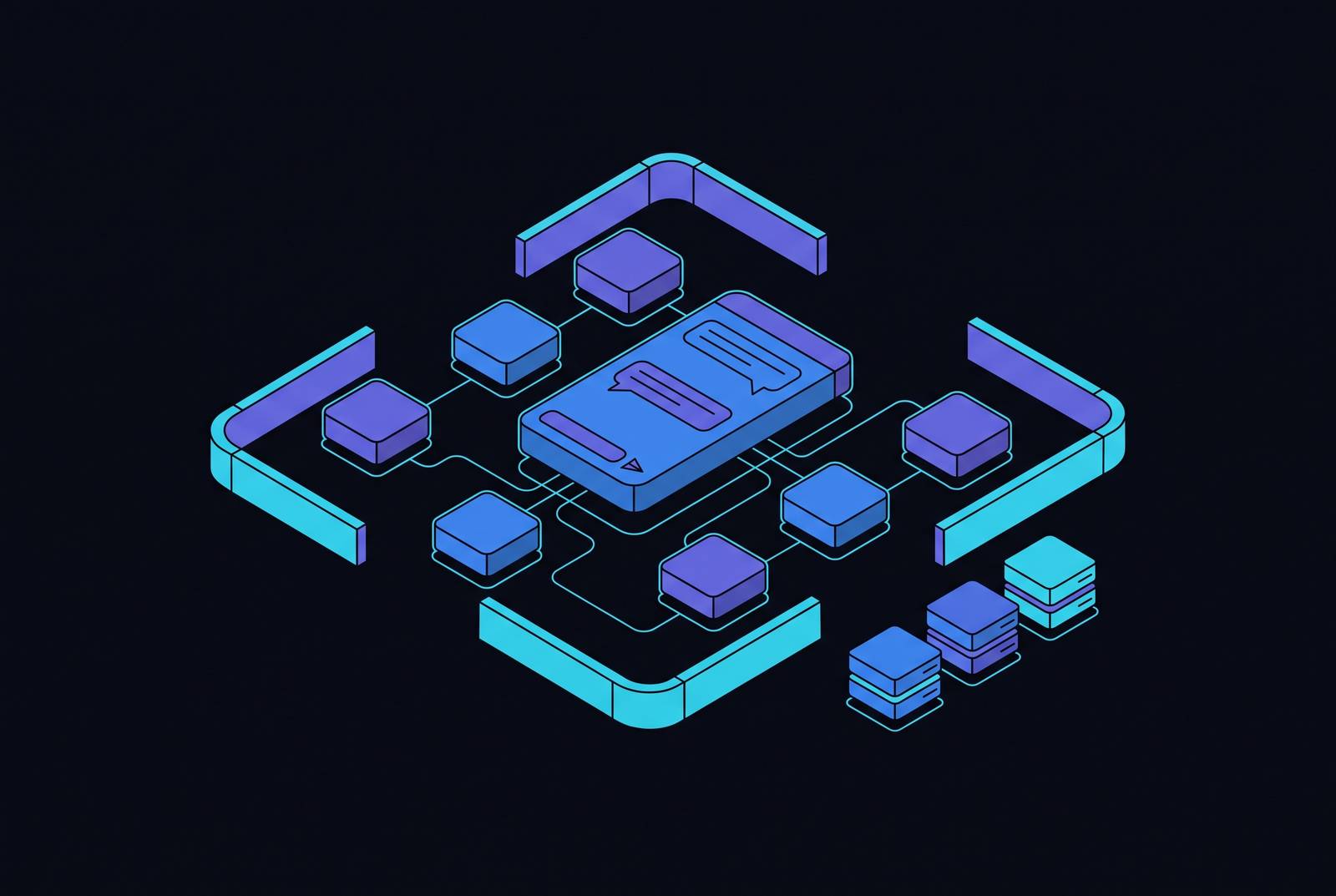
For companies running the assistant across many teams, virtual MCPs are the scaling mechanism. They bundle connectors, tool curation, and access policy behind a single governed endpoint, with directory groups driving membership through SCIM, so as team composition shifts, access policy updates automatically rather than needing a manual rebuild. Five teams each configuring their own version of the same Slack assistant end up with five different, inconsistent permission sets, while one governed setup scales cleanly. What a gateway actually governs are the layers that matter for a Slack deployment.
Gateway options available for enterprise Slack deployments in 2026
No single gateway fits every organization, and the right pick depends heavily on existing infrastructure and how much control a team wants over deployment topology. A few options stand out for different reasons.
The trade-off is straightforward: a managed-only default gives less control over deployment topology for organizations with strict data residency rules.
TrueFoundry's published gateway latency is approximately 3–4ms per TrueFoundry's MCP Gateway materials, and it is best fit for organizations with a dedicated platform team managing AI infrastructure at scale mintmcp.com.
Lunar.dev's MCPX is a production-grade gateway built around centralizing policy enforcement, access control, and observability in one place, designed to integrate with existing identity and monitoring tools while keeping data flows inside the organization's own infrastructure, a relevant detail for any company with data egress restrictions.
Composio fits best when the priority is breadth, connecting agents to a large number of SaaS tools quickly. The trade-off worth weighing is governance depth: it's worth checking whether the breadth of available connectors justifies shallower per-action controls for a given Slack use case.
For companies already running on AWS, the AWS MCP Server reached general availability on May 6, 2026, and comes with IAM-based guardrails, CloudWatch metrics, and CloudTrail logging built in, a natural fit for teams that don't want to introduce a new identity or logging stack alongside the gateway itself.
Whichever gateway a company lands on, the tool catalog sitting behind it still needs governing on its own terms. The registry layer handles that. SOC 2 compliance is included without additional configuration, with a managed SaaS-first deployment model that means no infrastructure to operate for most customers, though VPC and self-hosted options are available on request. MCP governance is unified with LLM routing and model deployment, suited for organizations running production AI workloads that need gateway and model-layer controls in one platform.
How a governed MCP registry prevents the tool sprawl that undermines Slack deployments
A registry is a catalog, not a server. It tracks every MCP server available to an organization, what each one can do, and how to connect to it, but the actual servers live wherever they're deployed. That distinction gets more important as deployments grow. Going from one team using a Slack assistant to twenty teams means the question of which servers any given team is authorized to use, and what those servers actually do, stops being something a shared doc or a verbal agreement can answer.
The public MCP registry gives the ecosystem a reference point, but it isn't a governance layer on its own; it has no built-in way to scope access by organization, role, or team. An enterprise registry adds the pieces that make it usable internally. Ownership records track who maintains each server and who signed off on it for production use. Version control makes it possible to roll a server definition back if a change breaks a Slack workflow or quietly introduces a permission regression. Access scoping determines which teams or directory groups can even discover a given server, and audit linkage ties registry entries back to the gateway's action logs so any tool call traces to an approved, versioned server.
The reuse case is where this pays off most visibly. An integration built once for the sales team's Slack assistant should be publishable to the registry so the support team can pick it up without rebuilding it from scratch. Ownership and scoping controls are what make that reuse safe instead of a shortcut into chaos.
A well-run registry generally serves three distinct audiences: server authors who need one canonical place to publish metadata, client developers building discovery features on top of it, and administrators who need to audit what's available and to whom. MCP Server Cards, a proposal for serving capability metadata via.well-known without needing a live connection, remain an active draft (SEP-2127) and were not part of the July 2026 spec, which scoped its.well-known changes to OAuth authorization discovery only. The registry and discovery layer is becoming a first-class part of the protocol's roadmap rather than something bolted on after the fact.
Keeping permissions aligned with what employees already have access to
The risk in its plainest form is this. A Slack assistant that connects out to a data source retrieves information using its own credentials, even when the employee asking the question holds different credentials entirely. That mismatch lets an assistant surface data that the company's own IAM policy or DLP rules would block if the employee tried to get at it directly.
The fix isn't complicated in principle, even if it takes real engineering to pull off. Permissions should inherit automatically from the source systems that already define them, not get redefined from scratch every time a new AI tool shows up.
EMA is what makes that principle operational rather than aspirational. The company's existing identity provider, Okta, Entra ID, JumpCloud, becomes the authority deciding which MCP servers a given employee can reach and at what scope. Access decisions travel with the employee's identity through the ID-JAG token exchange.
That's the throughline across everything above. MCP gave enterprises a single way to wire assistants into their systems. Gateways and registries are what turn that wiring into something governed enough to trust at company scale. How EMA makes this concrete in practice is outlined below.
Sources
- The 2026-07-28 Specification | Model Context Protocol Blog
- The 2026 MCP Roadmap | Model Context Protocol Blog
- Complete Guide to MCP (Model Context Protocol) in 2026 — Architecture, Implementation, and Enterprise Roadmap - DEV Community
- Everything your team needs to know about MCP in 2026 — WorkOS
- AI Model Context Protocol Adds Centralised Auth for Enterprise - InfoQ
- 2026: The Year for Enterprise-Ready MCP Adoption
- How Slack Keeps MCP Secure | Slack
- Model Context Protocol (MCP): Security Design ...