Agent Payment Protocol Risks for Enterprise AI Governance Teams
Payment tool calls need separate governance rules from search queries and database reads.
A payment tool call is not the same risk as a search query, and treating them identically is how enterprises end up with unauthorized spend they can't explain. MCP has become the wiring behind almost every serious agent deployment, and payment-capable agents are the sharpest edge of that wiring WorkOS — Everything your team needs to know about MCP in 2026 Toloka — The future of MCP: 2026 roadmap, enterprise adoption, and what comes next. Governance teams that log a payment call the same way they log a file read are missing the point entirely. Agent Payment Protocol Risks for Enterprise AI Governance Teams.
Payment tool calls represent a different class of MCP governance risk
Most governance conversations happening right now treat every MCP tool call as roughly equivalent: a search, a file read, a database query, a payment instruction, all logged the same way, all reviewed with the same checklist, treating fundamentally different risks as interchangeable. That's a mistake, plain and simple.
A bad search query wastes compute and maybe returns a wrong answer. A bad payment instruction moves money. Once a payment tool call executes, the commitment is real and often irreversible, and it can trigger regulatory reporting obligations and liability the instant it clears, regardless of whether anyone meant for it to happen. That asymmetry, a bad search versus a bad payment, is the whole reason this needs its own governance category rather than a subheading inside general AI risk policy. IT security frameworks built for access control and data leakage don't translate cleanly to financial authority delegation, because the failure mode is "the organization now owes money it didn't intend to owe," not "someone saw data they shouldn't have."" It's "the organization now owes money it didn't intend to owe."
The Agent Payment Protocol (AP2) and why enterprises are adopting it
Google published AP2 to give agent-led purchases a secure framework to run on, with AP2 v0.1 (2025) introducing signed mandates built on Verifiable Digital Credentials (VDCs) for Human-Present (HP) flows. The first version, AP2 v0.1, shipped in 2025 and introduced signed mandates built on Verifiable Digital Credentials, aimed at Human-Present flows, where a real person stays in the session and explicitly signs off on each transaction through a trusted interface.
HNP is the mode where an agent completes a transaction while no user is in session. That's the version enterprises actually care about, because autonomous procurement, travel booking, and supply chain replenishment only make economic sense if the agent can act without a human standing over its shoulder for every line item. Adoption of AP2 in these contexts has become standard practice. It's the default path for any enterprise building agents that need to spend money without a person in the loop.
Regulators have noticed. Singapore's IMDA published its Model AI Governance Framework for Agentic AI in January 2026, explicitly calling out delegation chains and multi-agent coordination as risk categories. Neither of those bodies treats this as theoretical. The FCA formally identified agentic payments as a live policy question in its Payments Regulatory Priorities report.
The structural gap: why cryptographic signatures do not equal authorization governance
The trouble actually lives here. Research examining AP2's design (arxiv/2609.11757) found that the protocol produces a cryptographically valid signature for a completed purchase, but that signature says nothing about whether the decision behind the purchase was sound. The crypto guarantees that the mandate wasn't tampered with after signing. It says nothing about what happened before signing, and that's exactly where prompt injection attacks operate.
An attacker doesn't need to break AP2's cryptography to manipulate a purchase. They just need to influence the agent's reasoning before the mandate gets signed, which never touches a single crypto guarantee. The first, called a Branded Whisper Attack, used adversarial text embedded in product descriptions to shift how the agent ranked and chose products, and it worked every single time, a 100% success rate at manipulating product ranking arxiv.org. The second, a Vault Whisper Attack, used crafted prompts to induce cross-user data disclosure, resulting in cross-account data exposure in 20% of cases arxiv.org.
Sit with that for a second. A transaction can clear every protocol check, carry a perfectly valid signature, and still represent a total governance failure, because the decision to make the purchase was steered by someone who never touched the signing key. Any governance team that points to "the transaction was signed correctly" as its audit trail is confusing proof of execution with proof of authorization. Those are not the same thing, and conflating them is how a manipulated purchase sails through review looking clean.
How MCP's broader attack surface amplifies payment-specific risks
Zooming out from AP2 specifically, the picture gets worse before it gets better. Gravitee's research found that 88% of organizations have already reported a confirmed or suspected AI agent incident in the past year, while only 14.4% have full security approval covering their entire agent fleet Gravitee 2026 report Gravitee 2026 report Why Model Context Protocol is suddenly on every executive agenda.
Tool poisoning sits at the center of this. An agent reads a tool's description with the same trust it gives its own system prompt, so a malicious server can bury a command inside that description and the agent just follows it, no exploit required, no code execution needed. It's become the most talked-about MCP vulnerability of 2026 for good reason. In April 2026, OX Security disclosed systemic flaws across MCP implementations spanning Python, TypeScript, Java, and Rust, estimating up to 200,000 vulnerable instances sitting inside IDEs, internal tools, and cloud services itecsonline.com. And this isn't purely theoretical: the first tracked malicious MCP supply-chain incident, postmark-mcp on npm, silently BCC'd all processed emails to an external domain before Koi Security flagged it on September 25, 2025.
Layer permissions on top of that. In a typical enterprise Kubernetes setup, a service account gets provisioned at the namespace level, not the agent level, so a payment agent can end up sharing access with payment processing APIs, customer databases, and reporting systems all at once, simply because nobody scoped permissions down to what that one agent actually does. Each layer doesn't just add risk, it multiplies what the layer beneath it already exposed.
There's a quieter problem too. Even a tool that's correctly scoped and behaving exactly as intended still returns real financial data to the agent's working context, where it persists, gets cached, and can potentially flow to the LLM provider's own APIs. That's a second governance problem in the transaction itself: it has nothing to do with whether the payment was authorized and everything to do with where sensitive data goes afterward.
Regulatory frameworks already require from agent payment audit trails
None of this needs a new law to create liability. That's existing law meeting a new kind of actor. It's existing law meeting a new kind of actor.
Add to that the Treasury's FS AI RMF, published in February 2026, which lays out an AI risk management structure specifically for financial services, and NIST's AI Agent Standards Initiative, which covers identity, security controls, and traceability for autonomous systems. These frameworks all ask the same question in different language: who authorized this, when did they authorize it, and on what basis. Current MCP implementations don't have a standardized way to answer that question, no consistent record of which tools got called, by which agent, with what arguments, returning what results.
That gap has real legal teeth. Questions that remain genuinely unsettled include who bears responsibility when an agent-initiated transaction turns out unauthorized or simply wrong, what dispute resolution even looks like in that scenario, what standard proves an agent's authentication was valid, and how any of this squares with data protection and financial regulation as written. On top of that, agents transact continuously and in patterns nothing like human spending rhythms, and fraud detection systems built around how people spend money won't necessarily catch anomalies in how agents do. Existing frameworks should be read as the floor here, not the ceiling, and right now most deployments are running below that floor.
The authorization chain problem: how delegation across multiple agents breaks approval accountability
Production agent architectures rarely involve just one agent anymore. MCP's own 2026 roadmap flagged multi-agent communication as a priority precisely because real deployments now involve chains, one agent qualifies a purchase, a second one executes it, a third checks the whole thing for compliance. Singapore's IMDA saw this coming and named delegation chains and multi-agent coordination directly as agent-specific risks in its January 2026 framework.
So ask the obvious question: when a payment fires at the end of a three-agent chain, whose authorization actually governs? Who set the spend limit that mattered? Which agent in that chain had the standing to hand financial authority to the next one? Nobody's written a clean answer to that yet, and AP2's Human-Not-Present mode makes it sharper still, because the user who originally authorized the agent may be unaware that authority has been sub-delegated through intermediate agents before the transaction fires.
OWASP's MCP Top 10 already has a name for part of this: Privilege Escalation via Scope Creep, where an agent that started out narrowly authorized accumulates broader permissions simply by chaining tools together, none of which its original mandate ever granted. There's also the risk of what researchers call rug pulls, where a tool gets silently redefined between the moment it was approved and the moment it actually executes, along with tool shadowing, a related trick that swaps what a tool does without anyone noticing. Both are documented attack patterns from 2025 and 2026 research, and both exploit the same blind spot: approval happens at one point in time, execution happens at another, and nothing forces the two to match.
The design lesson here isn't a fix, it's a requirement. Approval has to travel with the call itself as an explicit, checkable artifact. It can't be something the system just assumes carried over from whatever session kicked the workflow off.
Requirements for governed agent payment architecture: identity, scoping, audit, and approval gates
Start with identity. Enterprise-Managed Authorization reached stable status in June 2026, with Anthropic, Microsoft, and Okta all adopting it, and what it does is move authorization decisions into the enterprise identity provider instead of leaving them scattered across individual employees and individual servers. The July 2026 MCP spec reinforced that with RFC 9207 issuer validation, closing an authorization-server mix-up vulnerability, and it formally deprecated Dynamic Client Registration in favor of Client ID Metadata Documents, binding credentials to a specific issuer so they can't be reused across authorization servers. For any payment-capable MCP server, require EMA-gated access instead of a per-server consent popup. The same login model that makes life easier for users is also the one that leaves an audit trail.
Scoping comes next, and it needs to happen at the level of the individual agent, scoped explicitly to what that agent does rather than the deployment cluster it happens to live in. Payment tools should carry narrower permissions than the service account hosting them, scoped explicitly to what that agent does, not inherited wholesale from the namespace. And payment MCP servers belong on managed infrastructure, not a developer's laptop, so that access policy, logging, and rate limits get enforced at the infrastructure layer where they can't be quietly bypassed.
Then there's the approval gate, and this is the direct answer to the AP2 structural gap covered earlier. Because prompt injection happens before the mandate gets signed, the checkpoint has to sit before signing too, not after. The July 2026 spec actually built room for this with Multi Round-Trip Requests: a tool can return "input_required," which sends the client back to gather something, a confirmation, an extra approval, and then re-issue the call, all without holding a connection open indefinitely. That's a mid-call approval gate baked into the protocol itself, and governance teams building payment agents need to actually use it, not treat it as optional plumbing. Spend limits, approved vendor lists, and restrictions on transaction type should all be policy checks the agent runs through before it ever forms a mandate, not something a human reviews after the fact.
Audit trails are the piece the spec still doesn't hand anyone. MCP's own 2026 roadmap admits there's no standardized audit log WorkOS — Everything your team needs to know about MCP in 2026 Toloka — The future of MCP: 2026 roadmap, enterprise adoption, and what comes next. Governance teams can't sit around waiting for the next spec revision to solve it WorkOS — Everything your team needs to know about MCP in 2026 Toloka — The future of MCP: 2026 roadmap, enterprise adoption, and what comes next. It has to get built at the gateway or registry layer now. The July 2026 spec moved method and tool names into dedicated Mcp-Method and Mcp-Name HTTP headers, so gateways can route and authorize based on headers alone instead of parsing every JSON body, which makes transport-layer log capture far more practical. Tool definitions in the registry need version history too. Rug pull attacks, the silent redefinition kind, are only detectable if there's a record of what the tool was supposed to do at the moment the agent called it.
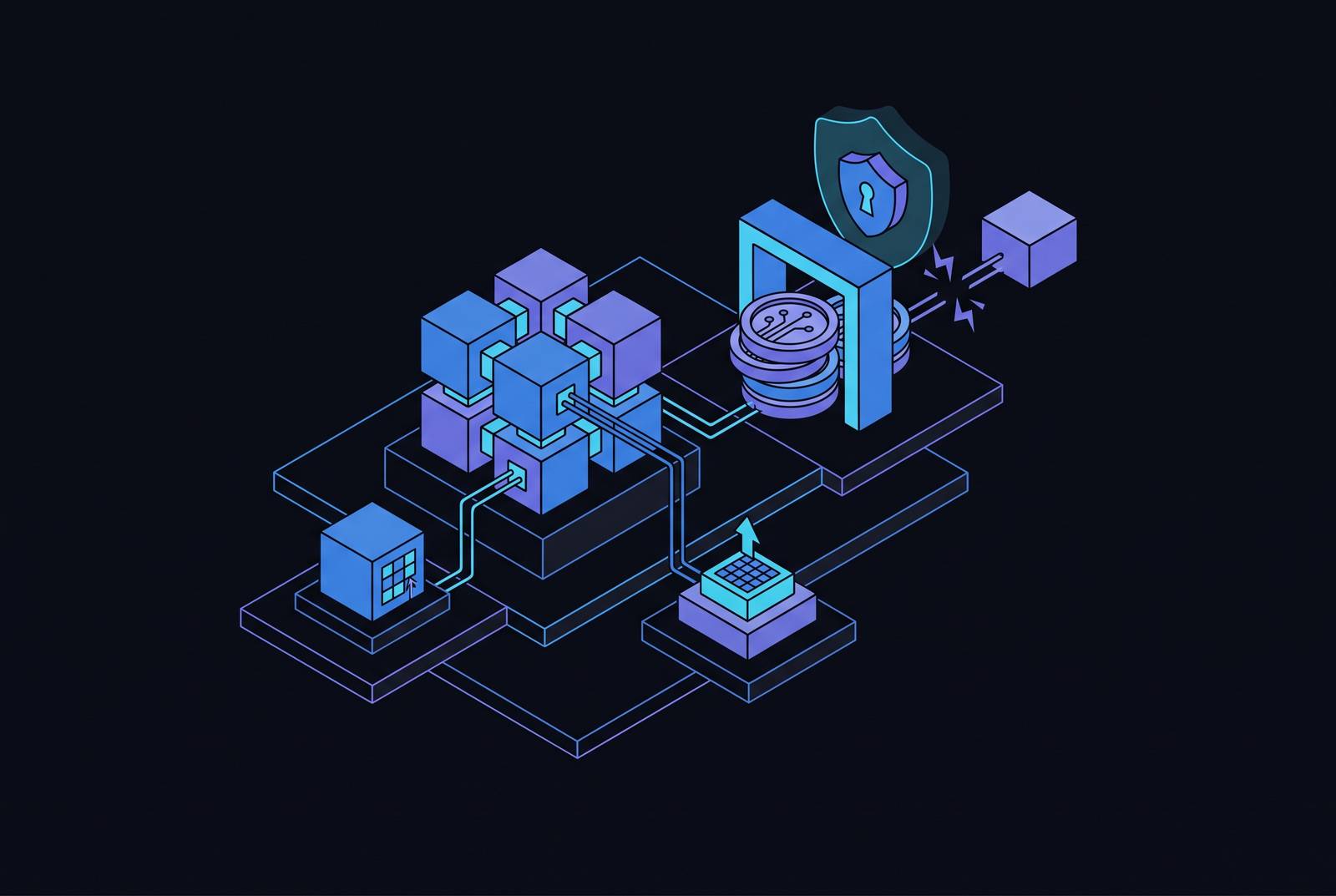
All of that points toward one architectural pattern: a governed registry. Payment-capable tools should be published there with clear ownership, explicit scoping, and version control, not passed around as shared prompts or configs nobody's tracking. A registry built this way lets one team's payment logic get reused by another team without rebuilding the same approval chain from scratch, and the reuse benefit and the governance benefit turn out to be the same artifact. Each registry entry for a payment tool should carry its authorized spend limit, its permitted vendor categories, the approval chain it requires, and the name of the team accountable for it. Every payment tool call should log which agent called it, under which identity, with what arguments, what the tool returned, and whether a human gate was passed, since this is the execution-path evidence PCI-DSS Req 10 and SOX §404 require.
Gaps in the MCP spec's current state that governance teams must fill themselves
The 2026 roadmap is honest about what's still missing: audit trails, SSO-integrated auth, gateway behavior, configuration portability, all named directly as enterprise readiness gaps, and there's no dedicated Enterprise Working Group yet to close them. EMA and the July 2026 spec do real work hardening authentication and routing, but neither one defines what a payment-specific approval chain should look like or what checkpoints belong before a mandate gets signed.
The move to a stateless protocol core in July 2026 fixed real session-management vulnerabilities and improved scalability, but statelessness cuts both ways: the protocol no longer carries context between calls. That means a payment workflow that needs to track something like remaining budget or what got purchased earlier in the same session has to manage that state itself, at the application layer, because the protocol won't do it anymore. List caching, the ttlMs and cacheScope settings on tool list responses, speeds things up but opens a staleness window: a cached tool catalog can miss an update or a revocation that happened after the cache was last filled. Payment tools should either carry short TTLs or get excluded from client-side caching entirely.
The spec handed governance teams better raw materials in July 2026 than they had back in 2024, but it never shipped a payment governance framework, and it was never going to. That has to get built on top of the spec, using the registry, gateway, and approval-gate patterns already laid out above. Running on the latest spec version is necessary. It is nowhere close to sufficient, and the organizations that mistake one for the other are exactly the ones the earlier red-team research was describing. SOURCE PAGES (what the pages behind the outline's links say).
Sources
- The 2026-07-28 Specification
- The future of MCP: 2026 roadmap, enterprise adoption, and what comes next
- The 2026 MCP Roadmap
- AI Model Context Protocol Adds Centralised Auth for Enterprise
- Everything your team needs to know about MCP in 2026 — WorkOS
- Why Model Context Protocol is suddenly on every executive agenda
- arxiv.org
- cloud.google.com