AI Agent Workflows for Revenue Operations Teams
Agents that touch RevOps data need guardrails and a standard way to connect to your tech stack.
RevOps sits on top of the most sensitive data in any company: who's about to close, who's about to churn, what a rep gets paid, what a customer actually pays versus what the price sheet says. Gartner projects 75% of high-growth companies will adopt RevOps processes in 2026, which turns this from a niche back-office function into something closer to financial infrastructure. And with that growth comes a mess: A common pattern in RevOps AI deployments is a pileup of dashboards, disconnected platforms, and redundant integrations that quietly eats the time RevOps automation was supposed to save.
None of this data is casually shareable, either. Quota attainment isn't visible to every rep. Deal terms stay confidential. Billing records carry legal weight. An AI agent that touches any of this has to respect those lines, not blur them. The same qualities that make RevOps data worth automating around, its richness, its interconnectedness, how fast it changes, are exactly what make it risky to hand to an agent without the right guardrails first.
What AI agents can do inside RevOps workflows today
An AI agent isn't just a smarter dashboard. Older AI tools in RevOps surfaced a recommendation and waited for a human to click something. Agents decide and act on their own, with a person checking in only when the workflow calls for it.
That distinction is visible in a handful of workflows already running in production:
- Lead qualification and routing. Agents read CRM activity, web behavior, and firmographic signals together, then score and route leads without a human doing first-pass triage.
- Pipeline hygiene. Agents catch stale opportunities, missing fields, or deal-stage velocity that doesn't match historical patterns, and either flag it or fix it on the spot.
- Forecasting inputs. Agents pull rep activity, deal signals, and historical close rates into one place to build or sanity-check a forecast submission.
- Post-call intelligence. Agents parse call transcripts, push updates into CRM fields, and suggest what the rep should do next.
- Quote-to-cash hand-offs. Agents carry validated deal data out of the CRM and into billing, cutting down on manual re-entry and the errors that come with it.
- Commission tracking. Agents check bookings against comp plans and flag exceptions for a human to review, instead of a spreadsheet doing it three weeks later.
B2B teams running sales agents for lead qualification and outreach have seen conversion rates jump 5x. Agentic revenue engines have reported a 35% lift in ROMI within six months, a 22% drop in cost per acquisition, and initiatives getting flagged as high-performing 40% faster.
But every one of those numbers has a condition attached: the agent needs reliable, accurate access to the right data at the right moment. Feed it stale context or a half-scoped permission set, and the 5x becomes a rounding error, or worse. That condition is where the rest of this piece lives.
Why agents break down without a standard way to connect to revenue systems
A RevOps stack is never one system. CRM, marketing automation, billing, CPQ, call intelligence, BI dashboards: an agent doing real work usually needs to read from several of these and write back to at least one, inside a single workflow.
The old way of connecting agents to tools was point-to-point. Build a custom connector for each agent-tool pair, and watch that number multiply. A Salesforce connector built for one agent doesn't work for the next agent or the next surface, so teams end up rebuilding the same plumbing over and over. That's the N×M integration problem, and it's expensive in a way that's easy to underestimate until someone tracks the hours.
CData's State of AI Data Connectivity Report puts a number on it: 71% of AI teams spend more than a quarter of their implementation time just on data integration. Not on the workflow. Not on the model. On wiring.
Freshness makes the problem worse. A forecasting agent reading from a stale pipeline snapshot, or a commission agent checking against a billing record that hasn't synced yet, doesn't fail quietly. It produces an output that looks confident and is wrong, and once a rep or a finance lead catches that once, trust in the whole system erodes fast. Faster, honestly, than if the automation had never existed.
Then there's permissions. RevOps data isn't one flat pool that everyone sees the same way. A deal desk analyst, a rep, and a CFO are looking at the same pipeline through three different lenses, and an agent that can't tell those lenses apart is a liability. It's a liability.
A single governed interface to the full tech stack for every RevOps agent, via MCP
MCP, the Model Context Protocol, is the open standard built to fix exactly this. It gives agents a common way to discover, call, and interact with tools, APIs, and data services, which removes the N×M problem outright: build the connector once, and any MCP-aware agent can use it.
Anthropic open-sourced MCP in November 2024. In December 2025, stewardship moved to the Agentic AI Foundation under the Linux Foundation, co-founded by Anthropic, Block, and OpenAI, with Google, Microsoft, AWS, Cloudflare, and Bloomberg among its backing members. That's not a side project anymore. That's vendor-neutral infrastructure with the biggest names in the industry signed on.
The adoption curve backs that up. As of March 2026, MCP was seeing 97 million monthly SDK downloads and had passed 81,000 stars on GitHub, with every major AI vendor supporting it. Stacklok's software report found 41% of surveyed software organizations already running MCP servers in limited or broad production.
For RevOps specifically, this means building a Salesforce MCP server once and having it work in Claude, ChatGPT, Cursor, or whatever comes next. One integration, many surfaces.
Three building blocks matter here:
- Tools, the functions an agent can call: pull open opportunities, update a deal stage, kick off a CPQ quote.
- Resources, the data an agent can read: pipeline snapshots, account records, billing history.
- Prompts, pre-built templates that standardize how an agent approaches a recurring task like a forecast review or a pipeline scrub.
The 2026-07-28 MCP spec introduced a stateless protocol core, dropping the old session-state requirement. That sounds small, but it means MCP servers can now sit behind ordinary load balancers without sticky sessions, which is what makes them workable at real enterprise scale rather than in a demo.
One constraint to keep in mind: connecting 5 to 7 MCP servers at once eats up 10 to 20% of an agent's context window just on tool definitions. So the instinct to connect everything to everything backfires. RevOps architects need to be deliberate about which servers a given agent actually needs.
The specific MCP servers RevOps teams need to build and what each one governs
Each core RevOps system deserves its own scoped server, not one giant catch-all.
A CRM server (Salesforce, HubSpot) exposes opportunity records, account data, contact history, and deal-stage transitions, with read and write tools gated by the user's actual role. A billing and CPQ server (Stripe, Zuora) exposes subscriptions, invoices, and quote configs; most agents get read-only access here, and write access stays narrow, tied to quote-to-cash flows with a human sign-off built in. A pipeline analytics server exposes forecast aggregates, stage conversion rates, and deal velocity, and for most agents that's read-only, full stop. A call intelligence server (Gong, Chorus) exposes transcripts and next-step recommendations, scoped to the rep and their manager, never company-wide. A marketing automation server exposes lead scores, attribution, and engagement history for qualification agents to read.
Each server inherits the permission model of the system it sits on top of, which is the rule underlying all five. A rep's CRM agent should see exactly the deals that rep can see in Salesforce, nothing more, and that shouldn't need to be re-specified every time a new agent gets connected.
None of this needs to start from zero. Official and community MCP servers already exist for Salesforce, HubSpot, Stripe, and Slack, and the public MCP server registry grew to more than 10,000 active public servers by March 2026, a 7.8× year-over-year increase. Building on what's already there beats reinventing the wheel.
The context window math from the last section reinforces the design choice here too. Purpose-scoped servers that an agent calls only when a workflow actually needs them beat one monolithic RevOps server that tries to do everything. And billing or commission servers that can trigger a financial write need tighter, tool-level authorization than a read-only analytics server. Treating every tool as equally risky is its own kind of mistake.
Deploying RevOps agents across multiple surfaces without fragmenting context or permissions
A deal doesn't stay in one app. A rep closes it in Salesforce, gets pinged in Slack, updates a quote in a CPQ tool, and a manager checks the forecast later in a BI dashboard. Agents have to follow that trail across surfaces, not just live in one of them.
By mid-2026, the list of MCP-aware clients had gotten long: Claude, ChatGPT, Microsoft Copilot, GitHub Copilot, Cursor, Windsurf, VS Code, Zed. All of them can talk to the same RevOps MCP servers.
Slack, in particular, has turned into an execution surface in its own right, not just a notifications feed. Real-time search queries and MCP tool calls on Slack are up 25x, which means deal alerts, pipeline nudges, and forecast prompts can now show up directly where reps already spend their day, without a separate integration project.
The Salesforce MCP server gets built once and then serves the rep in Slack, the manager in Claude, and the ops analyst in whatever custom tool finance built, which is the actual payoff of building this way. CData's 2026 report found 76% of software providers already exploring or building toward MCP as their standard for AI connectivity, which says the ecosystem has already picked a direction.
The risk that comes with spreading across surfaces: every new surface is a new place where permissions can quietly drift apart. If the CRM server enforces rep-level scoping in one client but gets connected without that enforcement somewhere else, the whole permission model is broken, even if nobody notices right away. Fixing that isn't a client-side problem. It needs a layer that sits above all the surfaces at once, which is where the next section goes.
The consequences of treating RevOps AI governance as an afterthought
Skip centralized governance, and every application ends up making its own governance decisions on the fly. Permissions drift out of sync, visibility fragments across tools, and security teams lose the ability to reconstruct what an agent actually touched.
The failures aren't abstract. A commission agent with the wrong data scope writes bad attainment numbers into the system, and without an audit trail, nobody catches it until a rep disputes their paycheck. A forecasting agent riding on a shared CRM credential surfaces confidential deal data, an active M&A negotiation, say, to someone who was never supposed to see it. Or five different teams, sales, marketing, deal desk, finance, customer success, each build their own version of a pipeline query workflow, duplicating work and producing five slightly different answers that leadership can't fully trust.
Gartner's note on agent governance doesn't soften this: it predicts 40% of enterprises will demote or decommission autonomous agents by 2027 because governance failed to keep pace. Gartner identifies the root cause as treating governance as a binary switch, either locked down or fully trusted, instead of something graduated.
Kiteworks surveyed 225 security, IT, and risk leaders and found all of them, 100%, have agentic AI on their roadmap. Yet most can only monitor an agent after something has gone wrong. Very few can actually stop one mid-action.
Forrester expects 60% of Fortune 100 companies to name a dedicated head of AI governance in 2026, which tells you this is becoming a job title, not a checkbox in a settings menu. And the regulatory clock is ticking too: the EU AI Act's full enforcement for high-risk systems under Annex III starts in December 2027, following the Digital Omnibus amendment, with transparency and general-purpose AI obligations already in force since August 2026. For any regulated company running RevOps agents, documented tool access and a real audit trail aren't nice-to-haves anymore. They're compliance requirements.
The infrastructure layer that makes RevOps AI agents auditable and safe to trust with revenue data
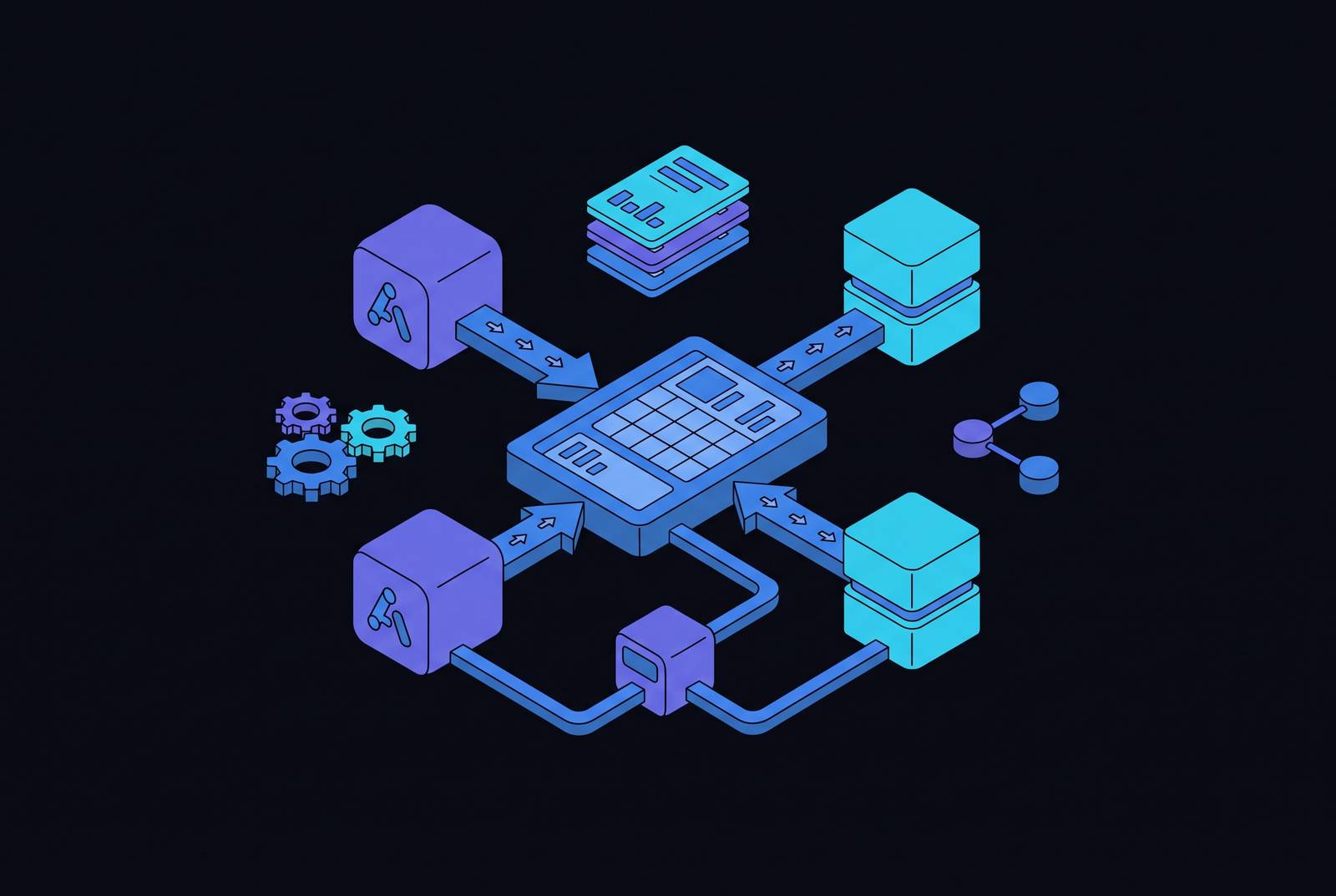
The fix for all of this is a gateway that sits between every agent and every tool: a control plane. Instead of an N-to-N tangle of agents talking directly to systems, everything routes through one hub, where authentication, authorization, policy enforcement, audit logging, and observability all live in a single place.
Enterprise guidance on MCP security is specific about how granular this needs to be: every tool inside an MCP server should carry its own authorization check, evaluated on every single call, not once at connection time. The 2025-11-25 MCP spec update backs this up with incremental scope consent, so an agent asks for only the permission a given action needs, instead of grabbing broad access up front and holding onto it.
Permissions should flow down automatically from the source system. A rep's Salesforce agent sees what that rep sees in Salesforce, and that stays true without anyone having to redefine it every time a new agent or surface gets added. Every action an agent takes, which tool it called, with what arguments, on whose behalf, needs to be logged and reviewable. That log is what turns a disputed commission payout from a shouting match into a five-minute lookup.
Scaling this across a company without it falling apart again comes down to a registry: a governed, versioned catalog of skills and workflows, not prompts getting emailed around or copy-pasted between teams. Deal desk builds a pipeline scrub workflow and publishes it; sales ops needs the same thing and reuses it instead of rebuilding it from scratch. Every change gets tracked, so there's a record of who changed what and when. And access stays scoped by team: finance's billing reconciliation agent has no business being callable from a rep-facing Slack channel, and the registry is what enforces that boundary instead of leaving it to good intentions.
Department-scoped MCP servers, tied to a registry and sitting behind a gateway, are the actual unit of trust here. That's the difference between an agent that saves a RevOps team real hours and one that quietly creates a mess nobody notices until the numbers stop adding up.
Sources
- The Definitive 2026 Guide to Implementing MCP in Enterprise Environments | by CData Software | CData Software | Medium
- Complete Guide to MCP (Model Context Protocol) in 2026 — Architecture, Implementation, and Enterprise Roadmap
- The 2026-07-28 Specification
- MCP Adoption Statistics 2026: Model Context Protocol
- anthropic.com
- theagentics.co