Eliminating Redundant AI Prompt Work Through Governed Skill Reuse Across Enterprise Teams
A governed registry lets teams reuse one skill everywhere.

A governed AI agent skill registry for enterprises eliminates repeated prompt work by capturing reusable skills, controlling access, approving versions, and recording use. Inherited permissions and a standard interface let teams reuse the same skill across AI tools without rebuilding its logic or access rules.
Why enterprises keep rebuilding the same AI prompts
Five teams can each build a CRM prompt, a Slack context wrapper, or a ticket-triage sequence without knowing that another team has already solved the problem. Each starts from scratch because there is no shared record of what exists, who owns it, or who may use it. This is a failure to capture useful work in a form that another team can safely adopt. A prompt sitting in someone’s chat history is not an enterprise capability.
MCP makes that gap easier to see. It standardizes how AI applications connect to external tools and data, reducing an N×M custom-integration problem to N+M. Instead of connecting every model separately to every system, an organization builds one server per resource that compliant clients can use. MCP was donated to the Linux Foundation’s Agentic AI Foundation in December 2025, with backing from Anthropic, OpenAI, Block, AWS, Google, Microsoft, Cloudflare, and Bloomberg. But a team can still create a server without leaving a central record of its purpose or callers. MCP standardizes the connection, but nothing in that connection alone governs the skill once it exists.
How ungoverned MCP sprawl makes the problem worse at scale
Faster connection building can also mean faster fragmentation. Consider the pattern described as “shadow MCP.” A team adds a Postgres MCP server to Claude Code on Friday, a colleague connects ChatGPT to an internal API on Monday, and by Thursday the platform team discovers dozens of ungoverned endpoints. Each endpoint has a credential surface, a prompt-injection risk, or at least a gap in what can be audited. Adoption has moved faster than the organization’s ability to account for it.
That gap helps explain why agentic pilots stall before governed production. Identity management, auditability, access controls, legacy integration, and data reliability all block deployment, even when the model can perform the task. Local STDIO servers illustrate the problem sharply because they sit outside centralized visibility, access controls, and employee-departure revocation. Remote Streamable HTTP servers behind proper authentication provide a manageable alternative, but only when the organization enforces that architecture.
Can’t an enterprise just write a policy? A policy cannot record an unobserved call or revoke access through a control that does not exist. Without enforcement, the organization still has to trust each team to make the right choices about its architecture on its own. The European Commission says that EU AI Act transparency rules apply from August 2026, so organizations have less time to learn how their AI tools are being used. That deadline is distinct from later logging and oversight requirements, but neither obligation is served by an invisible MCP layer.
What a governed skill registry actually enforces that a shared drive or catalog cannot
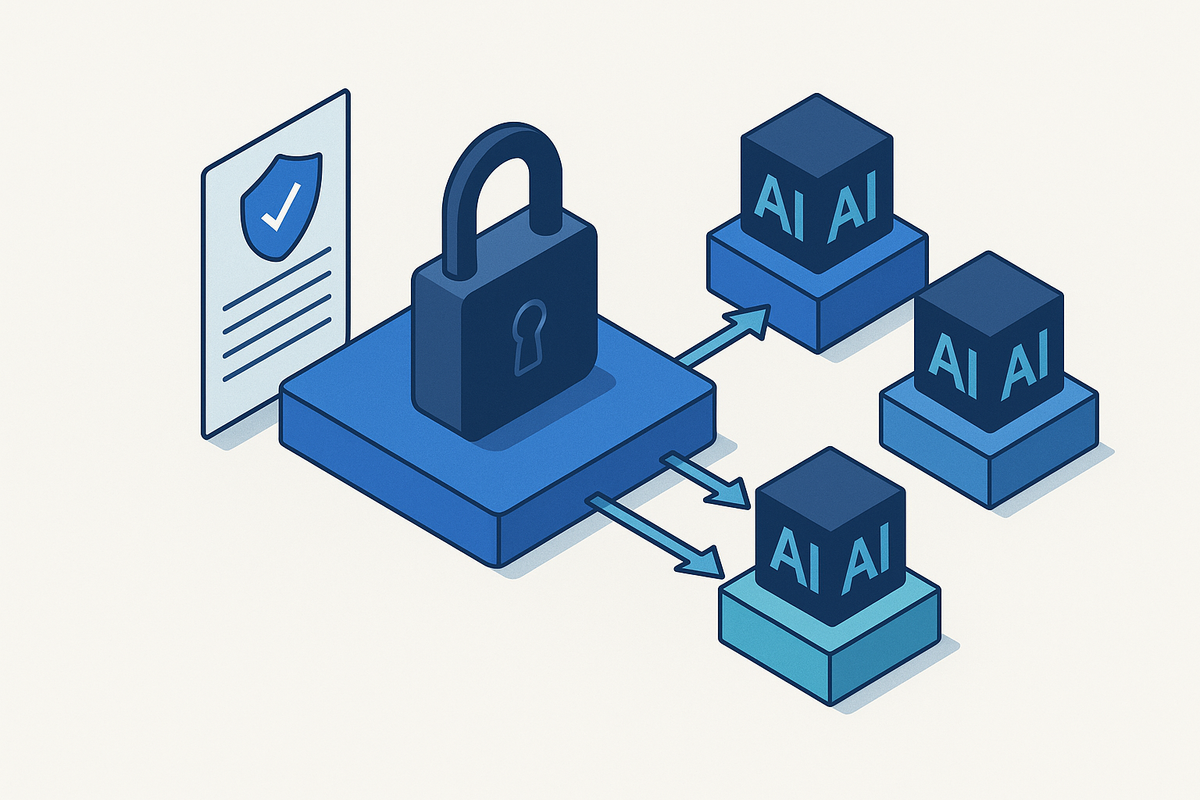
A catalog displays what exists. A governed registry controls what may run, who may call it, which version is approved, and what gets recorded when it changes. A shared drive can hold a prompt and its instructions, but it cannot enforce those decisions when an agent uses the prompt.
That enforcement begins with a managed lifecycle covering development, testing, publishing, versioning, and decommissioning. Only approved versions become visible to developers and agents. Access is scoped by role, while permissions flow from the connected source systems. Audit trails record calls and the approval context, including who approved an action, when, and through which skill version. A server inside managed registry infrastructure also inherits the organization’s logging and rate limits, unlike one running outside those controls on a laptop.
Without a registry, a team may need to connect to a skill live just to understand what it does. With a governed registry, teams can find approved capabilities within their permitted scope. The registry becomes the trust boundary. What is discoverable and what is trustworthy begin to mean the same thing because publication is tied to enforced controls.
What tools exist for enterprise AI skill catalogs with role-based access control?
Workato Enterprise MCP Registry, launched July 16, 2026, provides a governed system of record for servers built by internal teams, software providers, AI vendors, partners, or Workato. Servers move through development, testing, publishing, versioning, and decommissioning, with only approved versions exposed to developers and agents. Customers can add what their organization needs to pre-built servers without having to build every integration from scratch.
AWS MCP Gateway + Bedrock AgentCore takes a layered approach. Bedrock AgentCore handles per-agent MCP server integration and access control, while the A2A Gateway provides centralized agent registration, discovery, routing, and rate limiting across the fleet. Expedia Group layered server quality grading, automated skill sync, and organization-wide discoverability onto AWS’s self-hostable approach without forking the core project.
JFrog AI Catalog and MCP Registry emphasizes a different checkpoint. It acts as a supply chain firewall, scanning and vetting servers before they reach production. That approach fits organizations that already centralize software artifact governance and want to extend that infrastructure.
The open-source agentic-community/mcp-gateway-registry provides one governed entry point for servers, agents, skills, and custom entities. Assets are registered once, found through natural-language search, and reached through a single authenticated gateway that enforces access and records every call. These approaches are not interchangeable. Lifecycle approval, per-agent access control, security vetting, and a common gateway address different parts of governance, and none of those descriptions alone establishes that source-system permissions will be preserved.
Why inherited permissions are the linchpin of skill reuse at enterprise scale
Sharing a skill is only half the job. Without inherited permissions, every new team using it creates another access-control task for someone else. The prompt may be reusable, but its deployment still requires manual work. As skills and teams multiply, this recreates the N×M problem at the identity layer.
Permission inheritance means that an agent answering a user’s question draws only from data that user already has permission to access. The source system’s access model remains authoritative for each destination. This distinction is crucial for cross-system skills, where permission to use the skill must not become permission to read everything behind it. Access to a tool is not blanket access to its data.
The MCP team promoted Enterprise-Managed Authorization to stable status, providing a standardized foundation for centralized access through an organization’s identity provider. Users sign in once and can reach approved servers without a consent prompt for each one. Anthropic has implemented support across Claude, Claude Code, and Cowork, and Visual Studio Code has also added support. This removes the need to set up authorization again and again, but source-system permission inheritance is still needed.
How a registry-first architecture deploys the same skill across Claude, ChatGPT, Cursor, and Slack without rebuilding it
A deal-summary skill may need to work in Claude Desktop, ChatGPT, Cursor, Slack, and an older internal tool. The sales context does not change with the interface. Neither should the guardrails or permission boundaries. Without a shared home for that logic, however, the organization ends up with five separate builds because each surface has its own integration model.
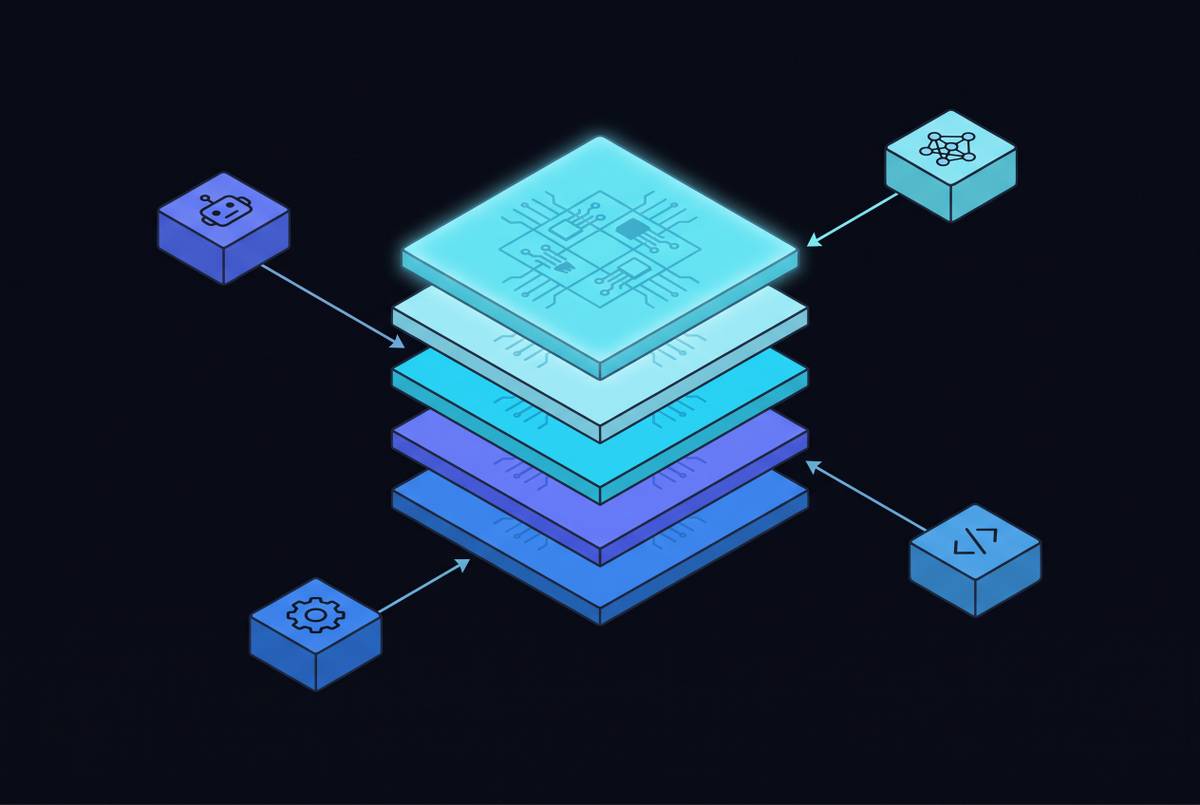
A registry-first architecture separates the skill from the surface that calls it. Each team gets a scoped MCP endpoint that can connect to an agent or chat surface, while the registry handles routing, access scoping, and version control. The consuming team does not need to understand how the skill was built or maintain another interface for it. The standard endpoint provides the connection, and the registry determines which approved capability the caller can reach.
Tina Schuchman, corporate vice president for engineering at Microsoft Foundry, said in the July 2026 release announcement that MCP lets Microsoft scale “from dozens of integrations to thousands.” A registry makes that expansion manageable by keeping discovery and access tied to governance. It also allows organizations to add or swap LLM providers without rebuilding the underlying integrations.
What governed skill reuse looks like for specific enterprise teams
For RevOps and sales, conversational CRM analytics lets leaders ask questions across Salesforce, Gong, and Segment. Without inherited access, sharing that skill creates another round of user-by-user scoping across systems. A governed registry lets users with permission use the same capability while keeping the source access model in place. Deal summaries follow the same pattern across Claude Desktop, ChatGPT, and Slack.
For engineering, incident-response agents read PagerDuty, ticket systems, and runbooks to triage and remediate common issues. Runbooks change, so the skill needs version control. Without a governed lifecycle, separate implementations can depend on different versions of the same response logic. A registry gives teams an approved version to use so that each team can work without having to keep its own copy up to date.
For HR and People Operations, onboarding automation coordinates Workday, Okta, Slack, and email. The permission boundary follows the new hire’s role. Without inheritance, each deployment needs its own interpretation of what that role permits across all four systems. With it, the shared skill can run the workflow without giving users more access when they reuse it. The HR team can own the workflow while the registry governs its publication and use.
For finance and compliance, monitoring agents read transaction data, flag anomalies, and file preliminary reports. An ungoverned implementation leaves a gap between an action and the record needed to explain it. The registry’s audit trails keep that record as teams share and use the skill. The Digital Omnibus moved deployer logging and human oversight requirements for standalone Annex III high-risk systems to December 2027, distinct from the August 2026 transparency rules.
How to move from prompt sprawl to a governed registry without a multi-year infrastructure project
Before relying on adoption totals, an enterprise should take an internal inventory to establish which MCP servers and AI skills are actually running and which have reached governed production. Downloaded software and governed deployment are different states. That inventory shows how much work the program must do, with MCP architecture, gateway security, and cloud infrastructure moving forward together.
The next step is an enforceable deployment baseline. Remote Streamable HTTP behind proper authentication should be the production standard, and the registry should refuse to publish servers that do not meet it. Authentication belongs in that baseline from the start because retrofitting it onto existing skills creates avoidable work. Enterprise-Managed Authorization is the standard way to handle identity binding. It should be wired in before skills spread across teams.
Ownership can then stay with the people who understand the workflow. Domain experts should build and maintain their skills, while the registry enforces versioning, access scoping, and audit requirements. Discoverability needs equal attention because a published skill that nobody can find will still be rebuilt. Natural-language search makes skills that already exist easier to find, while capability advertising is on the 2026 MCP roadmap. Availability alone does not create reuse.
Teams may resist central governance if it sounds like central IT taking over their work. That is not the necessary trade-off. The registry governs what is shared, while domain experts retain ownership of what they build. This is how enterprises replace prompt sprawl with reusable infrastructure without making every workflow a central development project. Good intentions ask teams to share safely.