Versioned Prompt Libraries as the Governance Layer for Cross-Team AI Agent Reuse
Versioned prompt libraries enforce governance at the infrastructure layer, not just policy.
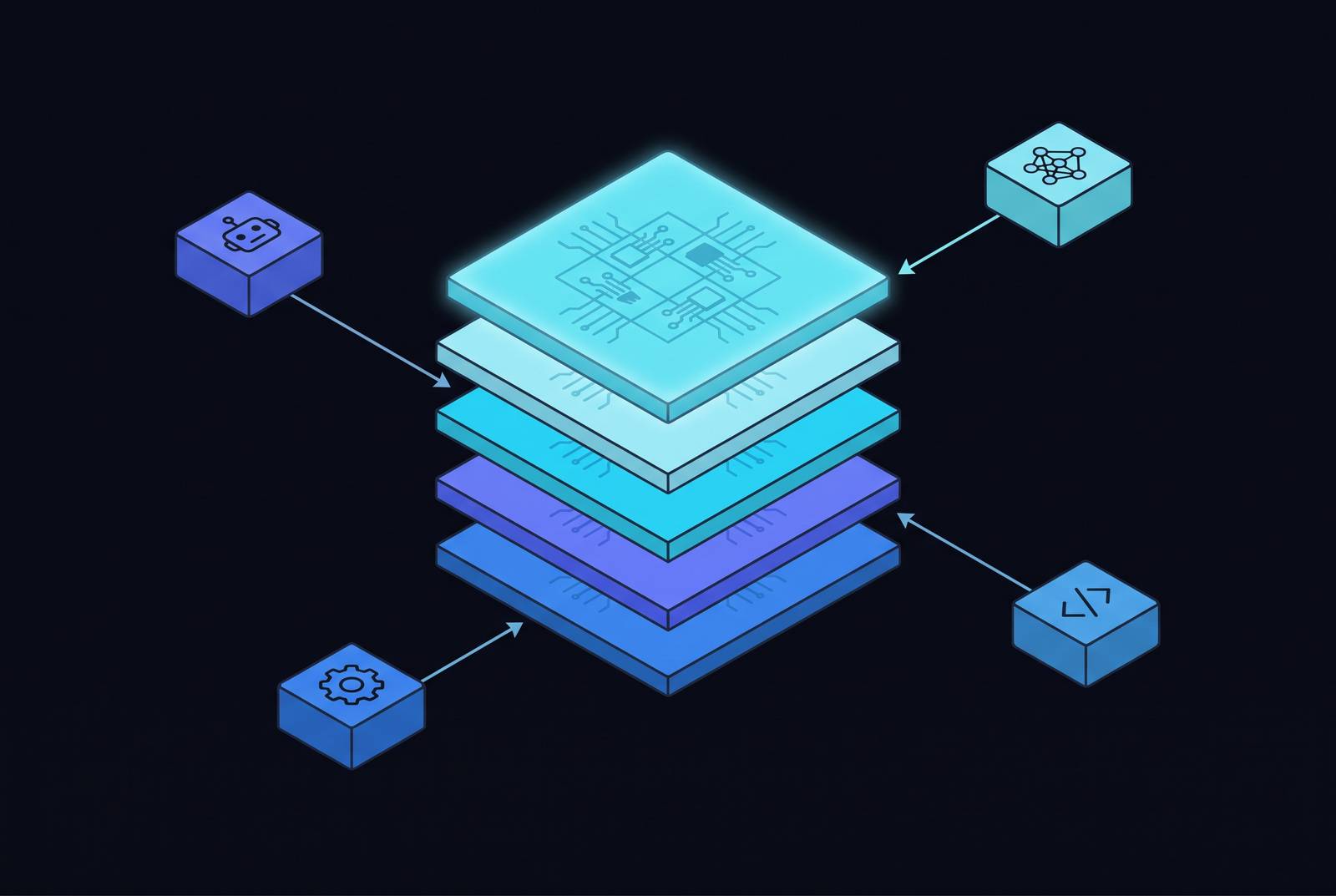
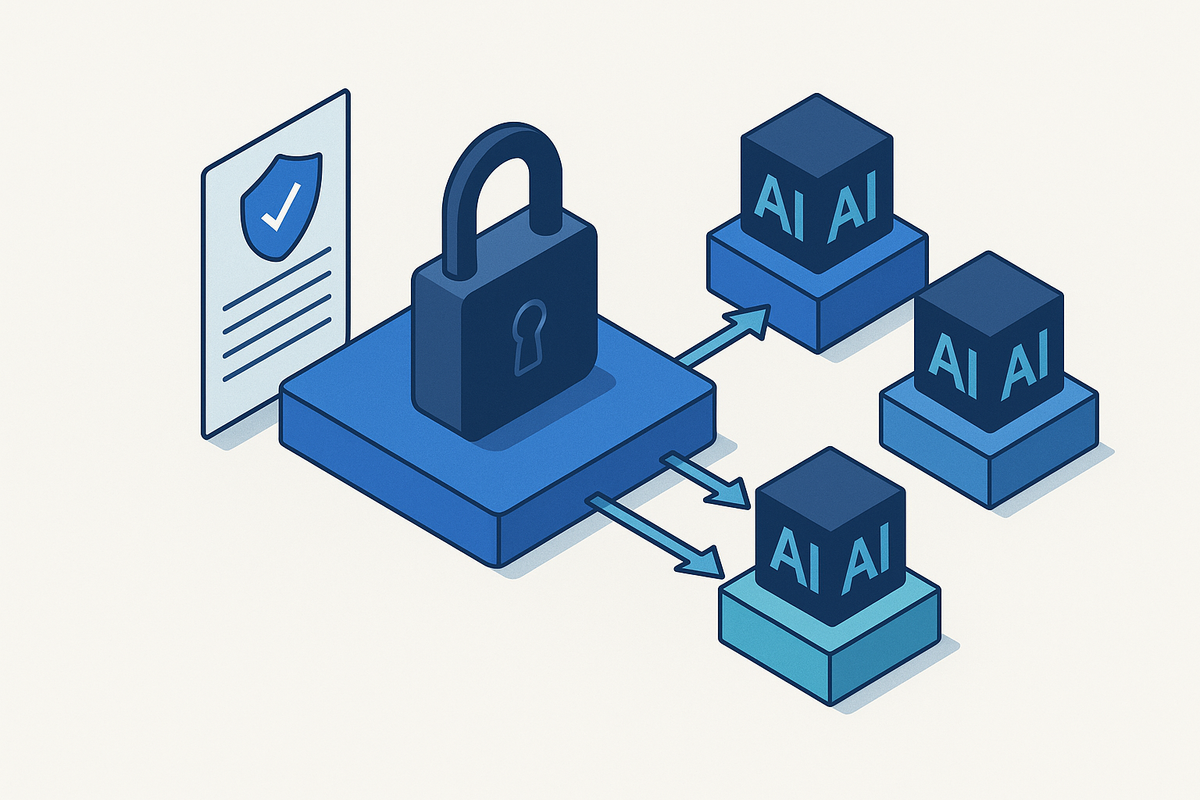
A governed AI agent skill registry for enterprises is a versioned prompt library that has named owners, approval workflows, scoped access, and audit records for each operation. It lets teams centrally manage and share agent prompts without rebuilding skills or weakening permissions. The governance gap is infrastructure.
Why AI governance discussions keep landing on policy while the real gap is infrastructure
Better AI policies can seem like the way forward when agents spread across departments. Rules can say what use is allowed, and review committees can decide what needs a closer look. Neither can enforce access at the moment an agent calls a tool. Nor can they stop a second team from rebuilding a prompt workflow that another team already shipped.
The mismatch starts with how organizations store prompts. Prompts increasingly function as mission-critical assets, yet many sit in Slack threads, personal notes, or shared drives without ownership, versioning, or access scoping. That is a weak foundation for production work. When another team cannot find a skill or establish whether it is approved, building a separate version becomes the easier choice. Missing infrastructure therefore creates both uncontrolled access and duplicated work.
How MCP turned agent-to-tool connectivity into an enterprise-scale infrastructure problem
The Model Context Protocol, or MCP, gives AI models a common way to connect to external tools, data sources, and services. Teams use a single protocol layer so they do not have to build custom connectors for every pairing of a model and a tool. Anthropic donated MCP to the Linux Foundation’s Agentic AI Foundation in December 2025, with OpenAI, Block, Google, Microsoft, AWS, Cloudflare, and Bloomberg as backers. Connectivity became shared infrastructure across vendors. Governance did not automatically follow it.
Across departments, many MCP servers mean many credentials and tool catalogues. Without coordination, those connections create fragmented security boundaries, duplicated infrastructure, and poor visibility into which agents call which tools. Tool definitions can fill the context window before the model processes the actual prompt. More seriously, the way a system is built can give tools broad service-account access without per-user authorization or per-operation logging. The protocol permits governed connections, but does not supply governance by itself.
MCP exposes three core primitives, which are tools an AI can invoke, resources it can read, and predefined prompts for common operations. Connectivity alone cannot settle who may publish those prompts, which version is approved, or who may use them. If the protocol is neutral on governance, what concrete mechanism provides it?
What a versioned prompt library actually is and why Git alone doesn't cover it
A versioned prompt library keeps a history of changes and has controls for publishing and using approved agent skills. Those controls include approval workflows, environment staging, access scoping, and audit trails. Git supplies an important part, but not the whole. Git alone records changes rather than governing which teams may invoke a prompt, whether its outputs passed evaluation, or whether it has approval for production. Other systems can add those functions around Git, which is precisely the additional infrastructure required.
The distinction becomes sharper when prompts guide an agent through a chain of actions. A small edit early in that chain can cascade through the agent and alter its behavior. Reviewing isolated text is therefore not enough. Management has to cover the full chain, with evaluation results linked to the version that produced them. An approved rollback target is more useful than an older file whose behavior is unknown.
A governed library supports development, staging, and production versions, with formal approval before promotion and designated publishers for shared skills. A centralized repository accessed through an API also makes authorized templates consumable across departments. This is the “Prompts-as-a-Service” model described in the notes. Its practical value is enforcement. The system enforces a rule that requires review by blocking deployment until approval is recorded.
How ownership scoping and RBAC prevent permission fragmentation as agents proliferate
Data permissions answer whether someone may access a source. Skill permissions answer a distinct question about whether that person may discover, invoke, create, or publish a workflow that acts on it. A shared skill must not become a shortcut around the permissions of the systems it calls. Someone who has access to the underlying data should still need separate permission to publish a company-wide skill.
Role-based access control, or RBAC, separates those responsibilities. It determines who can create a skill, approve its promotion, publish it, and discover or call it. Each operation must establish whether this user may perform this action on this data, rather than relying on permission granted once for a session.
Team profiles make that model manageable across departments. Sales can have CRM read/write and Slack tools, Engineering can have code repository and CI tools, and Finance can have accounting read access. Developers can find skills in the registry without having to rebuild tool access or handle raw credentials on their own. Source permissions should remain the underlying constraint. Inheriting them avoids creating a separate, potentially conflicting access policy whenever another agent is introduced.
How do enterprises centrally manage and share AI agent prompts across teams?
A shared registry gives each reusable skill a canonical published version, an owner, an approval history, and a defined access scope. A shared drive may hold the text, but a folder alone does not establish that operating model. A registry entry can identify the owner, approved version, teams allowed to call it, and linked evaluation results. Readers can distinguish a usable capability from an unreviewed draft without tracking down its author.
That structure changes how improvements spread between teams. Without it, five teams solving the same problem can produce five workflows that require separate maintenance and diverge over time. A searchable catalogue makes the shared option discoverable. A clear deprecation path also identifies when an older skill has been superseded, rather than leaving several apparently valid copies in circulation.
The official MCP Registry launched in September 2025 and holds thousands of active servers, establishing a catalogue pattern at the ecosystem level. An enterprise registry applies that pattern internally to organization-approved agents and skills, with versioning and policy controls. The surface need not determine the skill’s identity. A governed skill can be made available through Claude, ChatGPT, Cursor, or Slack without rebuilding it for each surface. Keeping business context, permissions, and guardrails with the skill definition also prevents a change of model from requiring a new governance layer.
Department-specific MCP servers as the grounding use case for governed skill sharing
Salesforce’s Hosted MCP Servers became generally available in April 2026 to those on Enterprise Edition and above. They let AI clients query and act on CRM data while Salesforce handles hosting, authentication, and permissions. Agents can get pipeline by stage, contact activity history, or account data without having direct access to the Salesforce UI or knowing how to use SOQL. HubSpot offers a related fit for CRM workflows. Its first-party remote MCP server is free across hubs and tiers, and since April 2026 has included read and write access to core CRM objects.
GitHub’s official MCP server handles issues and pull requests. Atlassian’s first-party remote server connects engineering teams to Jira and Confluence for issue tracking and documentation. Microsoft released public previews of MCP servers for Dynamics 365 Customer Service and ERP in November 2025. These offerings address different departmental needs. They make capabilities available through vendor-managed connections rather than requiring each consuming team to recreate the connection.
Microsoft Foundry extends the managed-sharing pattern through Toolboxes, which expose curated tools through a single managed MCP-compatible endpoint with centralized authentication, governance, and versioning. Its AI gateway separately provides centralized identity, observability, and policy enforcement. The distinction is important when assessing the architecture. A managed endpoint and an audit mechanism are not interchangeable. An internal registry follows the same pattern as vendors by publishing skills that teams build with scoped access and ownership, but it still needs its own version history and proof that use was authorized.
What auditability requires and why most gateway implementations don't provide it
Real auditability means a per-operation record of who called which skill, on whose data, under what authorization, and when. A session log or request count does not show all of that. Activity alone is not evidence of authorized use. For a versioned registry, the record must also connect each invocation to the specific skill version, so an incident review can reconstruct the prompt the agent was running.
Many gateway implementations fall short because they rely on a single service account or shared key. The log can show that an agent called a tool without identifying the user or authorization decision behind the action. If a shared identity is compromised, the harm can also spread across the systems it connects. Per-user attribution must therefore survive the gateway boundary. The registry should record changes to skill definitions, environment promotions, approvals, and rejections against the relevant version as well.
The August 2026 MCP roadmap identifies standardized agent identity for non-interactive callers as work still to be completed, including Demonstrating Proof of Possession and Workload Identity Federation. Implementations cannot assume the protocol already supplies that attribution. The quality bar is concrete. Before production, the system must be able to reconstruct both who authorized a skill’s release and who was authorized to use it for a particular operation.
The adoption speed objection and how to sequence governance without stalling teams
Governance can slow teams so much that fewer take up the tools. Only a minority of enterprise agentic pilots reach production, while embedded MCP connectors make it easy for developers to connect systems with little friction. Adding review queues and manual permission work can threaten already fragile projects. A registry earns its place by removing repeated work.
Sequencing separates experimentation from production responsibility. A development branch lets a team experiment, promotion to staging triggers review, and production requires approval. Controls apply at the transition where their purpose is clear. Automatically inherited source permissions also remove the need to negotiate a new access model for every agent. The setup effort is shared instead of charged again to each team building the same capability.
The interface must support the people who own the knowledge. A registry that requires a pull request to publish a skill can exclude the domain experts whose context it needs. Access to governance tooling cannot be engineering-only. The first team to bypass a registry may save setup time, but repeated rebuilding erodes that advantage as more teams need the same skill. Branching, staging, and publishing that is easy to use let teams experiment on their own and share what works with other teams.
What organizations building a versioned prompt registry should get right from the start
The starting point should be ownership. Every skill needs a designated team or individual responsible for its accuracy, approval status, and eventual deprecation. That responsibility must remain visible as other departments adopt it. Team-scoped registry views should then determine what each group may discover and call, while inherited source permissions constrain the data and actions available to each caller.
If staging cannot produce a per-operation log, the skill should not advance to production. The same system should have version control and approvals, and let teams access the skill through multiple MCP-compatible surfaces without rebuilding it. Identity support also needs room to evolve. Choices made now should allow adoption of the roadmap’s agent identity standards as they stabilize.
Does the platform inherit permissions automatically, maintain a shared registry with versioned approvals, and make every action auditable at the operation level? Can teams contribute business context through workflows they can actually use? Treating the registry as production infrastructure is what makes shared AI skills usable across departments without turning reuse into another source of duplicated work and fragmented permissions.