Workflow Orchestration Patterns for Enterprise AI Pipelines
How to build AI pipelines that actually work in production, not just in demos.
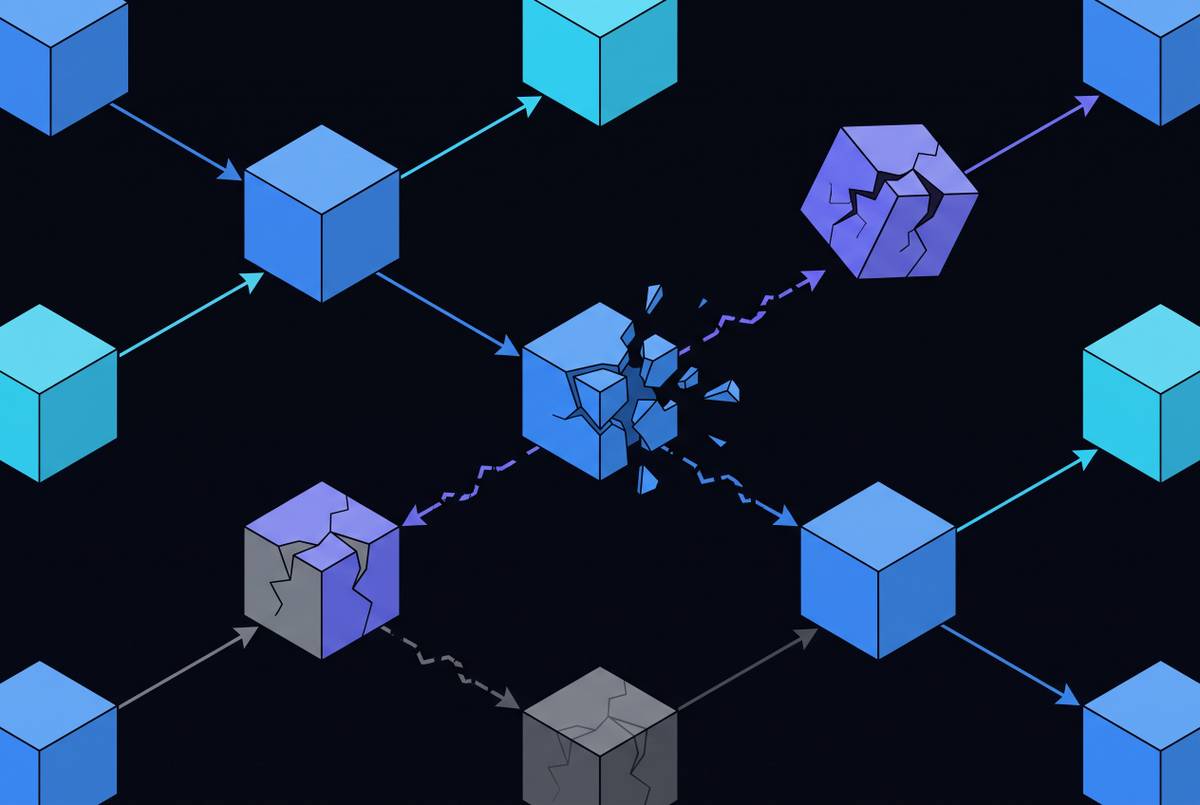
Enterprise AI pipelines don't fail because the models can't reason. They fail because nobody built the plumbing that lets an agent act on the right data, for the right person, in a way you can audit six months later. MIT researchers looked at enterprise generative AI pilots and found the vast majority delivered no measurable ROI. The culprit wasn't model quality; it was integration and governance.
I've sat through this exact meeting more times than I can count. A team builds a slick demo, the agent chains three tools together, and it produces exactly the output leadership wanted to see. Then it hits production and falls apart. Not because the model got dumber. Because the agent can't reach the data it needs for the specific person asking, the integration was a one-off built for one team's stack, or nobody can say which agent touched what, when, or under whose authority once something breaks.
That gap between "AI in a demo" and "AI running company-wide" is an orchestration gap. Closing it means solving permission inheritance (access has to travel correctly as context moves between agents), auditability (every action traces back to an approval and a policy), and reusability (a workflow one team builds should become infrastructure the next team can just pick up). None of that is possible, though, until agents and tools have a shared way to talk to each other. So that's where I want to start.
What MCP actually is and why it changed the orchestration baseline
Before the Model Context Protocol, every connection between an agent and a tool was a custom job. Want your agent to talk to Salesforce? Build a connector. Want it to also talk to Jira? Build another one, with its own auth scheme, its own failure modes, its own maintenance burden two years down the line. Anthropic called this the N×M problem: N clients times M tools, a combinatorial mess of bespoke wiring nobody wants to own.
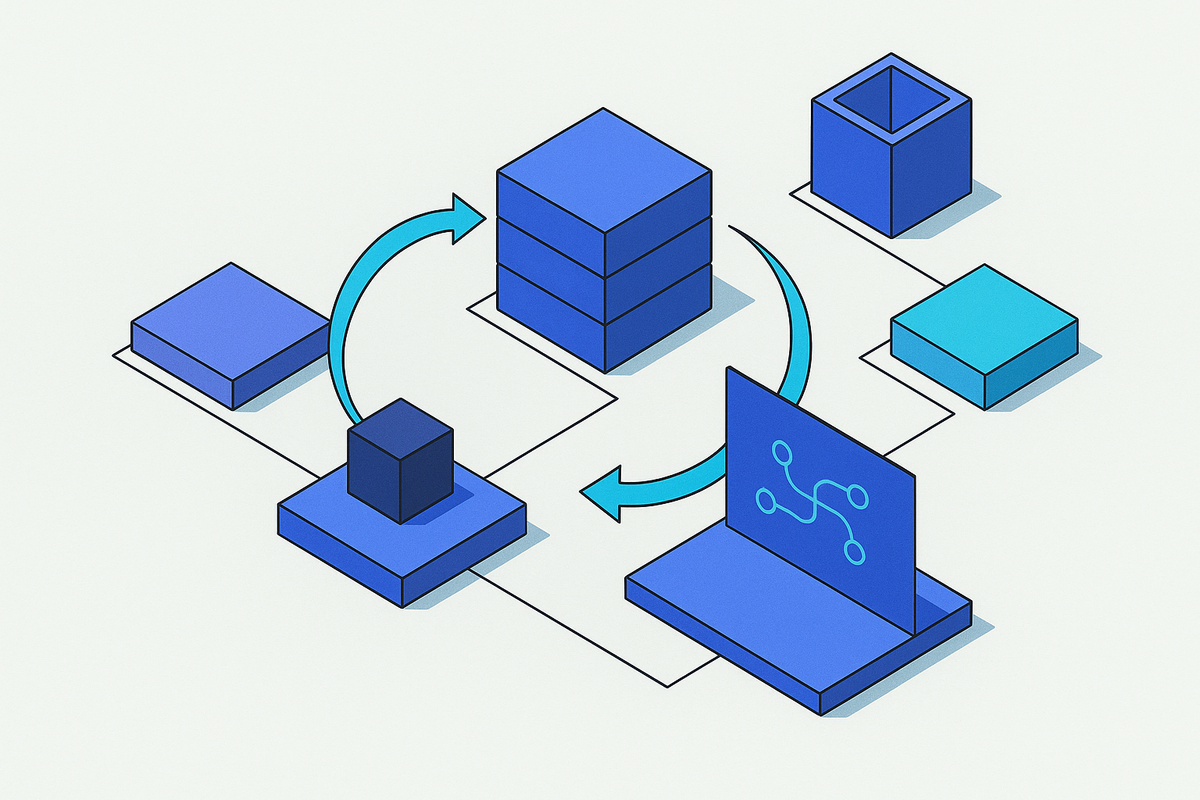
MCP collapses that into a standard interface with three roles. The host is the AI application actually making requests. The client is the connection manager sitting inside the host, handling protocol details. The server is a lightweight program exposing one system's capabilities, a CRM, a ticketing tool, a code repo.
This isn't a webhook firing off a one-time event, and it isn't a polling loop checking every few minutes. It's persistent, stateful, bidirectional; you can actually query it. People call it "USB-C for AI applications." Plug in a compliant host, plug in a compliant server, they talk. No custom wiring per pair.
The governance history matters more than people give it credit for. Anthropic open-sourced MCP in late 2024. By mid-2025, the major model providers had adopted it. By late 2025, stewardship had moved to the Linux Foundation under the Agentic AI Foundation, roughly the path Kubernetes took on its way to becoming boring, dependable infrastructure. For a procurement team, that lineage means your business context, your permission definitions, your tool schemas aren't locked to one model vendor. Swap models, add a new one, whatever. The integration layer doesn't get rebuilt from scratch every time.
MCP solves connectivity. It does not solve governance, and it opens a category of risk most teams don't see coming until it's already sitting on their desk.
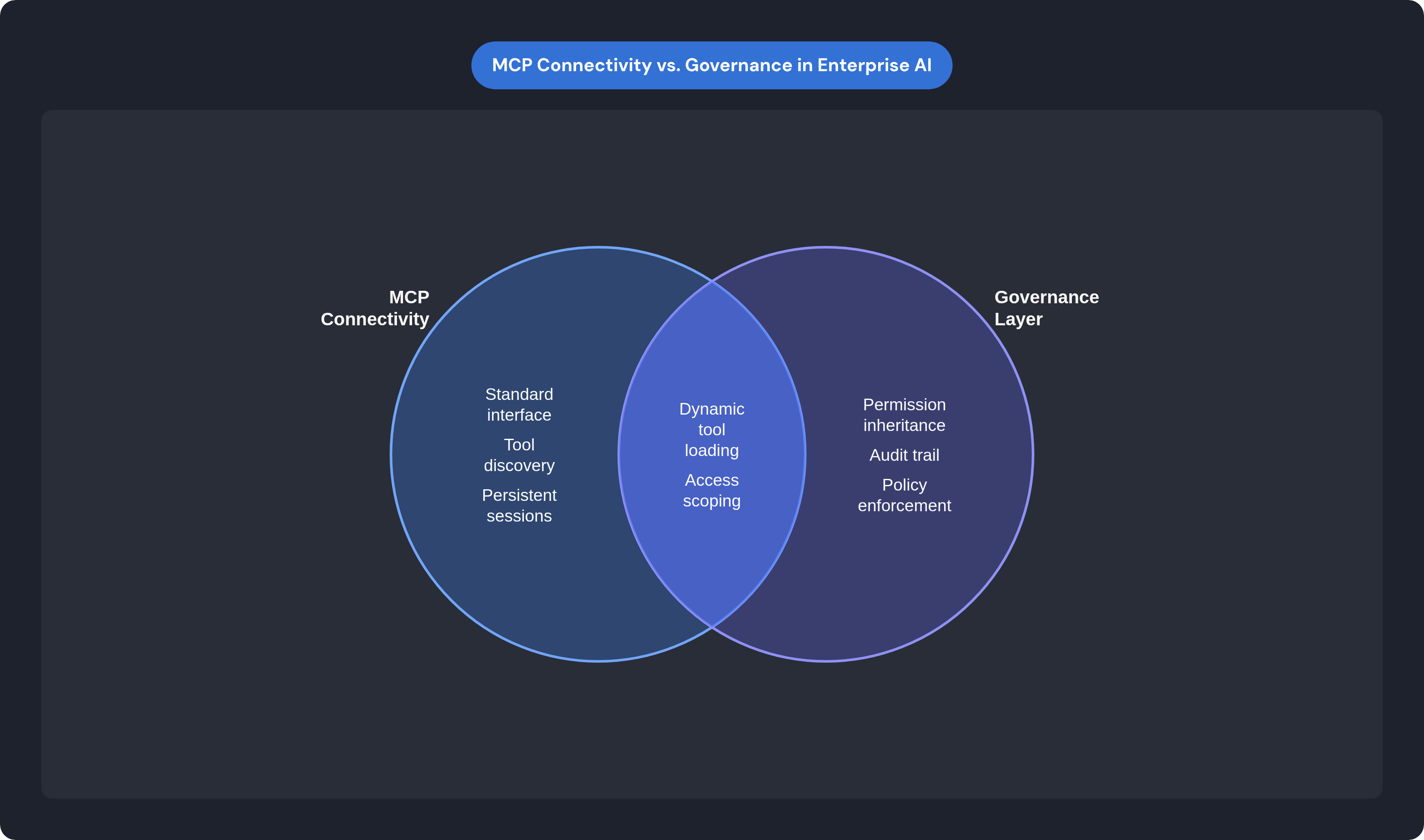
How permission fragmentation emerges as pipelines grow
Here's the typical path. A team stands up an MCP server, wires it into a couple of tools, starts building. Governance gets pushed to "phase two." Phase two rarely arrives on schedule.
What actually happens as pipelines multiply: each team manages its own credentials, usually just sitting in environment variables or CI/CD secrets with no central rotation policy. Access gets granted per-user at setup and nothing re-checks it later, so when someone changes roles or leaves the company, the agent built for them keeps running on stale permissions like nothing happened. Nobody's tying any of it together with an audit trail, so when something breaks, there's no record of which agent pulled which data, for which user, under which policy.
The problem compounds once you start chaining agents. If agent A hands context to agent B, does B inherit A's permissions, or the permissions of whoever kicked off the chain in the first place? Most implementations never actually decide. They default to whatever credentials the server happened to be initialized with, which is a quiet way of saying nobody chose on purpose.
Shadow AI makes the surface area worse. A large share of enterprise AI usage runs with no real oversight, and unauthorized tool connections are turning into the fastest-growing source of credential exposure industry-wide. Security research into MCP server deployments found a majority expose credentials through hard-coded values sitting right there in config files. That's not carelessness. It's structural, baked into how these systems get stood up in the first place.
The economics are lopsided in a dangerous way, too. The productivity win from a poorly governed agent shows up fast and feels great. The breach shows up later, and it's usually a lot bigger than the win that came before it.
The fix isn't building governance from scratch inside every AI tool. It's inheriting governance from the identity infrastructure you already have, the same IdP roles, the same lifecycle policies, the same revocation paths that already govern your human employees.
The core orchestration patterns and what each one governs well
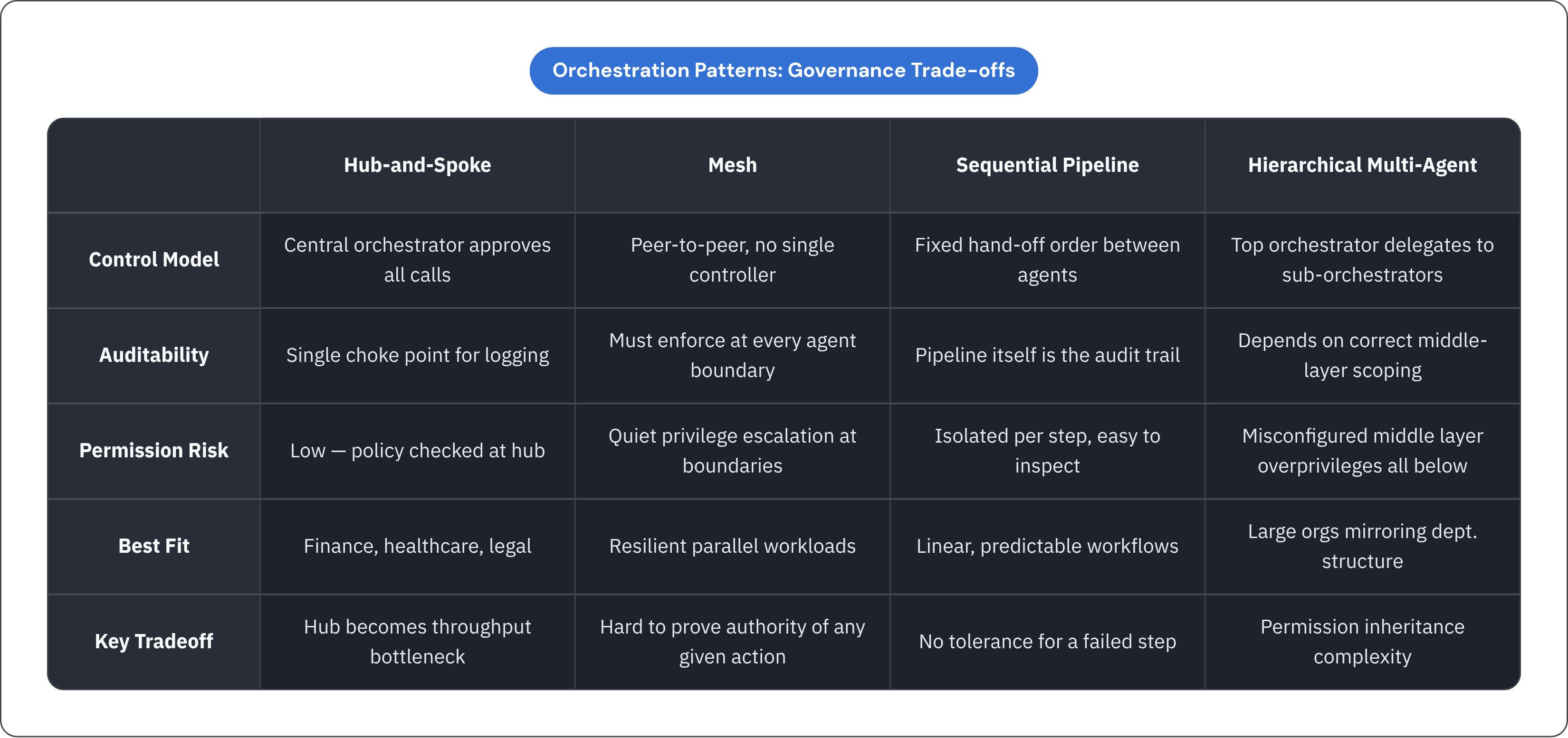
Choosing an orchestration pattern is a governance decision wearing an architecture costume. The real question isn't what workflow you need. It's what the pattern makes auditable, inheritable, and reusable.
Hub-and-spoke puts a central orchestrator in charge of every downstream call; nothing moves without the hub signing off. That's a single choke point for policy checks and logging, which is why this pattern dominates in finance, healthcare, legal, anywhere auditability outranks raw speed. Northwestern Mutual's implementation, which cut processing time from hours to minutes, shows this working at real scale in a regulated environment. The tradeoff is real: the orchestrator becomes a bottleneck, and throughput is capped by whatever the hub can handle at once.
Mesh flips that around. Agents talk directly to each other, peer to peer, no single node controlling the flow. That buys resilience. A failure in one corner doesn't take the whole system down, and independent work runs in parallel. But permissions have to get enforced at every agent boundary, not just the front door, or context passing between agents quietly escalates privileges nobody meant to grant. The hard question mesh always raises: if agent B acted on data agent A handed it, is there a log proving what authority B was acting under?
Sequential pipelines are the simplest to reason about. Each agent hands its output to the next in a fixed order, intake, extraction, validation, routing, notification. The audit trail is the pipeline itself; you can inspect any step in isolation. The catch is zero tolerance for a failed step unless you've explicitly built fallback logic, and no real support for dynamic branching.
Hierarchical multi-agent setups put a top-level orchestrator over domain-specific sub-orchestrators, each running its own cluster underneath. This tends to mirror how most companies are actually built: a company-wide AI layer delegating down to department-level layers. Permission inheritance gets genuinely tricky here, since the top orchestrator's permissions have to scope correctly all the way down through the middle layer. Misconfigure that middle layer and you silently overprivilege everything beneath it. Get it right, though, and those department-level orchestrators become shareable infrastructure instead of one-off builds nobody else can touch.
Whichever pattern you pick, three things have to hold. Every action ties back to a real user identity and an approved policy. Permissions come from the source systems, not a redefinition at the AI layer. And there's a versioned record of what changed and who signed off.
How context design determines whether a pattern holds under load
None of these patterns survive if the context feeding them is a mess. This is the part people underestimate, every time.
Every MCP server you connect injects its tool definitions into the agent's active context: parameter schemas, descriptions, capability declarations, all of it. Connect a handful of servers at once and a meaningful chunk of the context window is gone before the agent has processed a single real query. Past a certain number of connected servers, model performance starts to degrade and cost per query climbs noticeably. The pattern that looked great in staging quietly falls apart the day it hits production scale.
The obvious fix, load every tool and let the model sort it out, is wrong twice over. It's expensive, since cost scales with context length and unused tool definitions are pure waste. And it's a governance failure: an agent sitting on access to everything, all the time, violates least-privilege by design.
The better fix is dynamic tool loading. A gateway layer exposes only the tools relevant to the current task, and which tools show up depends on who's asking and what they're trying to do, not on whatever happened to be wired up when the server started. This is permission inheritance applied one level down: what a user is allowed to touch determines what shows up in the agent's context, never the reverse.
This is also where reusability starts overlapping with governance. A context definition scoped to a specific role or task type can be versioned and handed to other teams. An ad-hoc context built fresh by every developer for every agent is just the same prompt getting reinvented five separate times, badly.
What department-specific MCP servers look like in practice
The rule that actually works: one well-defined purpose per server. Not one giant server trying to be everything to the whole company. Scoping by function is what keeps permissions clean and context manageable.
RevOps and sales is a good place to see this concretely. A governed pipeline can route a new lead by reading firmographic data from the CRM, checking rep capacity, writing the routing decision back, creating a task, pinging the rep in Slack, all inside one conversation, each step scoped to whoever kicked it off. What MCP adds isn't just automation, it's that every write is attributable. If the routing decision turns out wrong, there's a record of exactly what the agent read, what it concluded, what it changed. CRM hygiene agents catching duplicates and stale records are the natural next step once that read/write pattern is already governed.
Engineering has been ahead of the curve on this one. Software engineering MCP servers were among the most downloaded server types in the ecosystem's first year, so the tooling is mature and the use cases are proven. Code review agents that read pull requests, run static analysis, flag risky patterns, wired into source control and security scanning, cut down review turnaround and catch regressions before they hit production. Infrastructure drift detection agents comparing live cloud state against declared config catch problems far faster than a manual review cycle ever could. Worth repeating here: agents with write access to repos and deployment pipelines are some of the highest-risk deployments you can stand up, so separating read from write matters more in engineering than almost anywhere else.
Customer support needs agents that check order status, update tickets, reference policy, and remember prior conversations, not just fetch answers from a knowledge base. What keeps this safe is separating reads, pulling customer history or policy docs, from writes, issuing a refund or changing account details. Read access can go broad. Write access needs tighter scoping and a harder audit requirement. Klarna's customer-service AI, handling a workload equivalent to a large full-time support team, shows what this looks like at real scale. It also makes clear that the governance underneath that scale isn't something most platforms hand you by default.
Once a department gets one of these servers working and governed, the question stops being how do we build this and becomes how do we share it. That's a different problem entirely.
Why a registry is the missing layer between department pilots and company-wide deployment
Without a registry, a good workflow ends up trapped somewhere useless: one developer's laptop, one team's private repo, a shared drive nobody else knows to check.
A shared drive can't give you what actually matters. No version history, so you can't tell which version is live in production or who touched it last. No ownership, so when something breaks, there's no team to call. No access scoping, so anyone who finds the file can use it, appropriately or not. No discoverability, so the next team that needs this exact workflow has no way of knowing it already exists.
That last point is the expensive one. Without a registry, the same prompt, the same integration pattern, the same agent workflow gets rebuilt independently by every team that needs it, again and again. Effort that should go toward something new gets spent re-solving a problem that got solved three floors up, months ago.
A registry is what turns a department's pilot into company infrastructure. It's the layer that takes everything covered here, the permission inheritance, the auditability, the pattern choice, the context scoping, and makes it something the whole organization can stand on. Credal, a platform for building and governing enterprise AI agents that maintains a versioned agent registry with inherited permissions and full audit trails across connected sources, is one concrete example of what that infrastructure layer looks like when it's built for this problem. Not just the one team clever enough to have built it first.