Sales Qualification Agentic Workflow Design
MCP standardizes qualification workflows by eliminating custom integrations between sales tools.
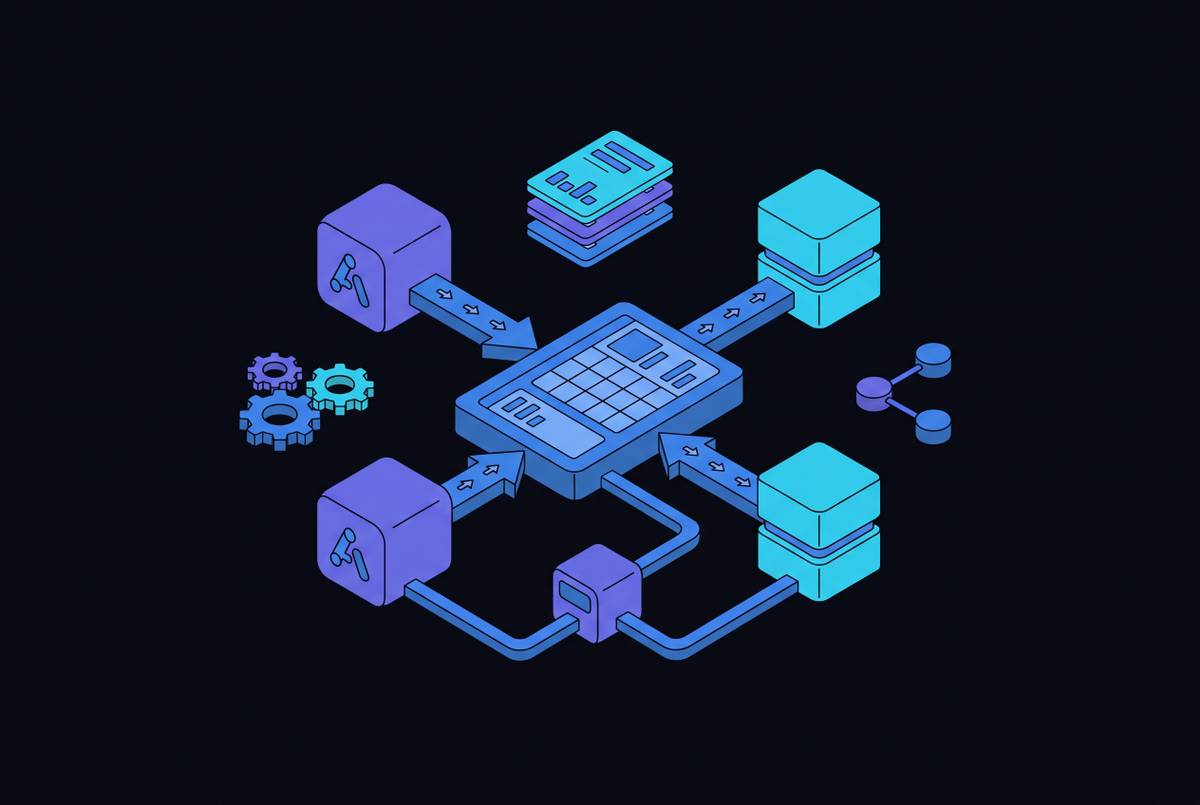
Sales qualification agents kept failing for a structural reason, not a model quality reason. Connecting an AI agent to a CRM, an enrichment tool, a conversation intelligence platform, and a routing system meant building separate, custom middleware for each pair of systems. That work was expensive to build, broke easily, and could not be governed the same way twice.
The outcome was AI that could talk but not act. So the qualification loop stayed manual.
None of these problems live in the model. They live below it, in the plumbing. What was missing was a standard way for an agent to find a tool, prove who it was acting on behalf of, and call that tool safely, without a bespoke adapter for every new system it touched.
MCP's Governance Trajectory and Enterprise Procurement
MCP is now worth building on for enterprise qualification workflows less because of what it can do technically and more because of who controls it. In December 2025, Anthropic donated MCP to the Agentic AI Foundation, a Linux Foundation directed fund co-founded by Anthropic, Block, and OpenAI. Platinum members include AWS, Google, Microsoft, Bloomberg, Cloudflare, Anthropic, Block, and OpenAI. That handoff took MCP out of any single vendor's hands and put it under the same kind of neutral governance that made other widely adopted open infrastructure standards safe bets for Fortune 500 procurement teams. A protocol one company controls is a feature of that company's product. A protocol a foundation controls, with competitors sitting on the same board, is infrastructure.
The technical mechanism that makes MCP worth standardizing on is what powers that governance story. MCP defines a single JSON-RPC 2.0 protocol so any compliant AI client can discover and call tools on any compliant server. The protocol splits responsibility across three parts: the host, which is the AI platform and enforces policy; the server, which exposes only the tools it is configured to expose; and the client, which manages the handshake between them. Each piece has one job, which is what lets the system scale without turning into the same tangle of bespoke middleware that broke the pre-MCP world.
The qualification workflow MCP makes possible: one loop across five systems
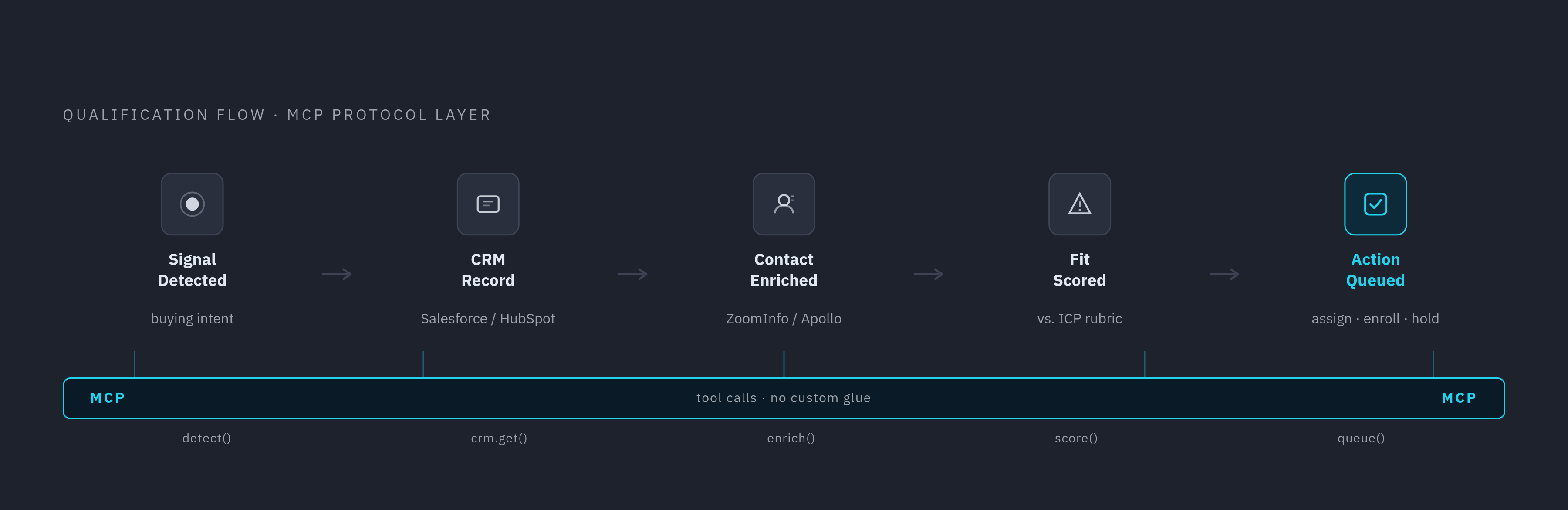
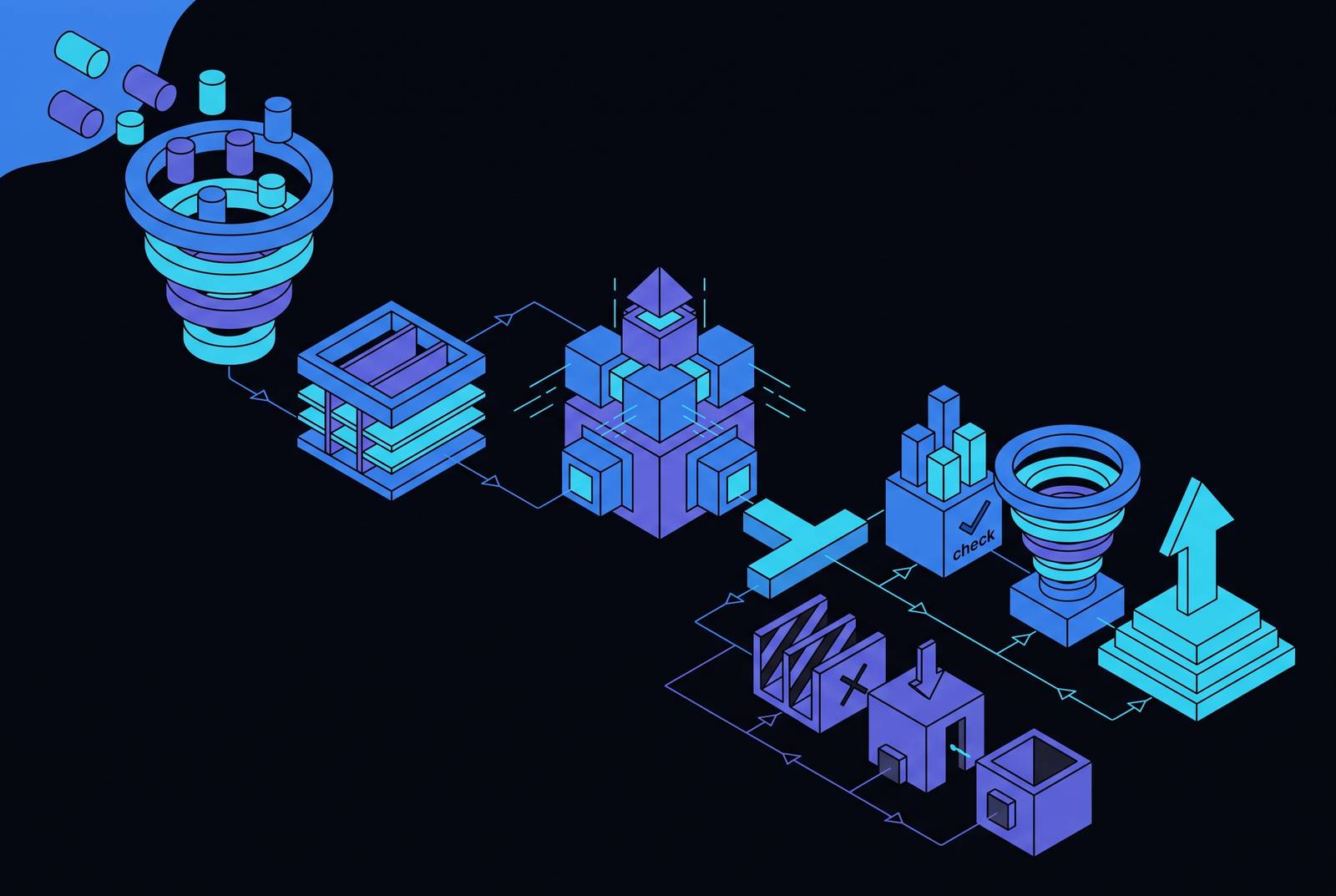
A qualification agent, with that infrastructure in place, becomes something closer to a case worker than a summarizer. It can watch for a buying signal, pull the matching CRM record, enrich the right contact, assess fit against a rubric, and queue a human-reviewed action, all inside one loop, across multiple systems, without custom glue code holding it together.
Trace a single event through that loop. If the lead clears the threshold, it gets assigned to a rep queue and enrolled in a sequence; if a business rule requires sign-off, it waits for one.
Microsoft's Dynamics 365 Sales shows this pattern running in production. The agent evaluates a lead and calls partner MCP servers inline, with results already sitting in the lead's record before a seller opens it.
This loop earns trust as a direct side effect of the architecture itself. Because every tool call runs through MCP, each step gets logged at tool-call granularity, what the agent read, what it wrote, what decision it reached, without any extra instrumentation work. That loop is the template. What fills it depends on which tools the agent is allowed to call, which is the subject of the next section.
The revenue stack of MCP servers a qualification agent needs to reason over
A qualification agent is only as useful as the tools sitting behind it, and by 2026 every layer of the revenue stack has at least one production-ready MCP server to draw from.
The CRM layer is where the agent reads and writes the system of record. Agentforce's native MCP client entered beta in January 2026 and handles session management, authentication handshakes, and tool invocations automatically within the Einstein Trust Layer. Both HubSpot and Salesforce show up in the ecosystem as CRM-layer servers reachable from Claude and other MCP-compatible clients.
The enrichment and signal layer fills in what the CRM doesn't hold: verified contact details and live buying signals. ZoomInfo's GTM.ai brings 400 million contacts, 100 million companies, and 120 million direct dials into Dynamics 365, enriching records inline with firmographics, technographics, funding history, and intent signals without manual entry. Draup adds account and market intelligence, hiring surges, funding events, shifts in IT spend, executive moves, and turns those signals into a clear next action, so every lead shows up already researched and paired with a recommended play. Apollo, ZoomInfo, and Amplemarket round out the layer as servers that let compatible AI clients pull live data and enrich contacts directly.
The conversation intelligence layer closes the gap between what was said on a call and what the agent knows going into the next one. Outreach is named as a platform offering an MCP server reachable from Claude and other clients, giving the agent a way to pull prior conversation context without a human digging through call recordings first.
All of this adds up to real abundance. There are enough mature servers now to build a complete qualification stack without writing a single custom connector. Abundance creates its own risk: handing an agent unscoped access to every server across every layer is an exposure waiting to happen. Which systems an agent can touch, and on whose authority, is the question the next section has to answer.
Permissions must be inherited, not redefined, when agents span multiple systems
The real security failure in a multi-system qualification agent rarely looks like a breach.
Salesforce's MCP architecture is built to close that gap specifically. Hosted MCP servers run through Salesforce's own authentication and permissions, so if a user can't see a record, field, object, or action through their configured access model, the MCP workflow isn't supposed to open a side door around it. Agentforce's Einstein Trust Layer enforces existing permission models across every tool invocation, even when the agent reaches out to external APIs through MCP, so data keeps flowing through Salesforce's own infrastructure and audit logs stay intact.
Slack makes the stakes of getting this wrong concrete. A support engineer with access to 50 channels hands an AI agent access to all 50 channels of regulated data the moment that agent connects, unless session scoping is actually enforced.
The architecture that avoids this is simple to state even if it takes real engineering to enforce: agents authenticate as the user, inherit that user's scoped permissions from every connected system, and can only ever surface what that user could already see on their own. Nothing gets redefined at the agent layer. Enforcing that principle at scale, across every server in the stack, is what a registry is for.
A governed MCP registry turns approved tool access into a repeatable company asset
A registry is what turns a pile of individually approved tool connections into something a whole company can actually trust and reuse, rather than a one-off project one team happened to wire up correctly.
A registry is a catalog that tells agents what tools exist and where to find them, while a gateway enforces policy at runtime, controlling how agents actually use those tools once discovered. Most enterprises need both. The official MCP Registry, maintained by the Model Context Protocol community, launched in preview in September 2025. It stores metadata for publicly accessible servers and exposes a read-only API, but it does not support private servers. Enterprises still need their own private registry or an enforced allowlist for internal use, treating the public registry as upstream intake.
GitHub's enterprise MCP controls show this operating model in practice. Organizations can set an MCP registry URL and restrict which clients are supported, so only servers listed in that registry are allowed to run. Salesforce's AgentExchange marketplace offers a different version of the same idea for teams that would rather Salesforce manage the vetting directly: a marketplace of vetted agents, apps, and MCP servers ready for enterprise deployment, giving admission control over to a known, already-reviewed set of options.
None of this works without named owners. Skip that step and the registry turns into a catalog of unmanaged exceptions, a list of servers the organization knows exist without anyone able to say who approved them, who's watching them, or who can shut one off.
The payoff appears directly in the qualification use case. Once a LeadIQ enrichment server, a Gong conversation server, and a CRM write-back tool have been admitted to the registry, every sales team in the company can build a qualification workflow on top of them without re-engineering the same connections from scratch. That's one approved skill the whole organization shares, instead of five teams independently rebuilding the same prompt and the same risk five separate times.
Deploying qualification context consistently across Claude, ChatGPT, Copilot, and Slack
The real question enterprise teams face isn't which AI client to standardize on, but making sure the same governed qualification context, the same permissions, and the same audit trail follow the agent to whatever surface a given team already works in.
The client landscape in 2026 is genuinely split across tools. That plurality is exactly why building the server once matters so much: a CRM enrichment server a RevOps team configured for Copilot Studio is the same server a sales engineer can call from Cursor or a support lead can query from Slack, with no rework required.
Atlassian built its MCP server with this in mind from the start, designed to meet teams wherever they already work, whether engineers are in Cursor, product managers are exploring ideas in Claude, or ops teams are running their own scripts. The organization's context travels with the user. ChatGPT added custom MCP support in September 2025, with strict auth requirements behind it: OAuth 2.1 is required, Dynamic Client Registration is supported but not mandatory, ChatGPT prioritizes Client ID Metadata Documents when they're available, and bearer tokens carry the access token once the OAuth flow completes.
Teams can also get their own scoped surface without duplicating infrastructure. A qualification workflow locked to one AI client stays fragile no matter how well it's built. One that travels across surfaces through a governed MCP server behaves like real infrastructure built for the whole company.
What auditability requires in a qualification agent
A qualification agent is auditable when it records not just that it reached a decision, but exactly which tools it called, with what arguments, what data came back, and who was positioned to approve or override the result. MCP's 2026 roadmap is direct about the fact that this doesn't come built in.
The roadmap names audit trails as one of four enterprise readiness gaps the protocol still needs to close. Logging tool calls is possible today; a standard way to do it consistently across every server is not yet in place.
A qualification-specific audit trail needs to capture which CRM record the agent read and when, which enrichment server it called and whether that data actually factored into the scoring decision, what action the agent recommended and whether a human approved, changed, or overrode it, and which version of the agent's tool configuration was active at the moment of the decision, so a reapproval event stays traceable if a server changed underneath it later.
Human checkpoints aren't optional for the actions that carry real weight. A policy like flagging any deal above a certain size for human review before the agent writes back to the CRM can be enforced through instructions on the MCP server itself, which makes the checkpoint part of how the tool behaves rather than something a prompt has to remember to ask for. Auditability is an architecture decided at registry setup, server configuration, and checkpoint design, before the agent ever touches a live deal.
A RevOps-grounded design checklist for a governed qualification workflow
A governed qualification workflow is never just a prompt wired to a CRM connection. It's a set of explicit decisions about tool scope, permission inheritance, checkpoint placement, registry ownership, and audit configuration, all of which need to get made before the agent ever runs against real pipeline.
Tool scope comes first. For qualification specifically, that means a CRM read tool, a contact enrichment tool, a conversation intelligence read tool, and a routing write tool, each scoped to the authenticated rep's own permissions.
Permission inheritance comes next, and it has to be confirmed system by system. Some systems enforce this natively; others need extra configuration to get there, and someone on the team needs to document which is which before launch.
Registry admission is the gate every server has to clear before it touches production.
Checkpoint placement is a mapping exercise: which qualification actions can run autonomously, and which need a human in the loop first. Routing a lead to an enterprise AE queue, enrolling it in a sequence, or flagging a deal as disqualified should surface for human review, enforced as a policy set on the MCP server itself rather than left to a prompt instruction that an update could quietly drop.
Audit configuration has to be decided at setup, not patched in after a question comes up about a specific deal.
Agentforce's architecture offers a working reference for the checkpoint layer itself: a policy like flagging invoices above a given threshold for human review can be written as a natural language instruction directly on the MCP server, keeping the guardrail where the tool executes.