Least-Privilege Data Permission Enforcement for Enterprise AI Deployments
Limit AI agent access to only the tools and data each task genuinely needs.
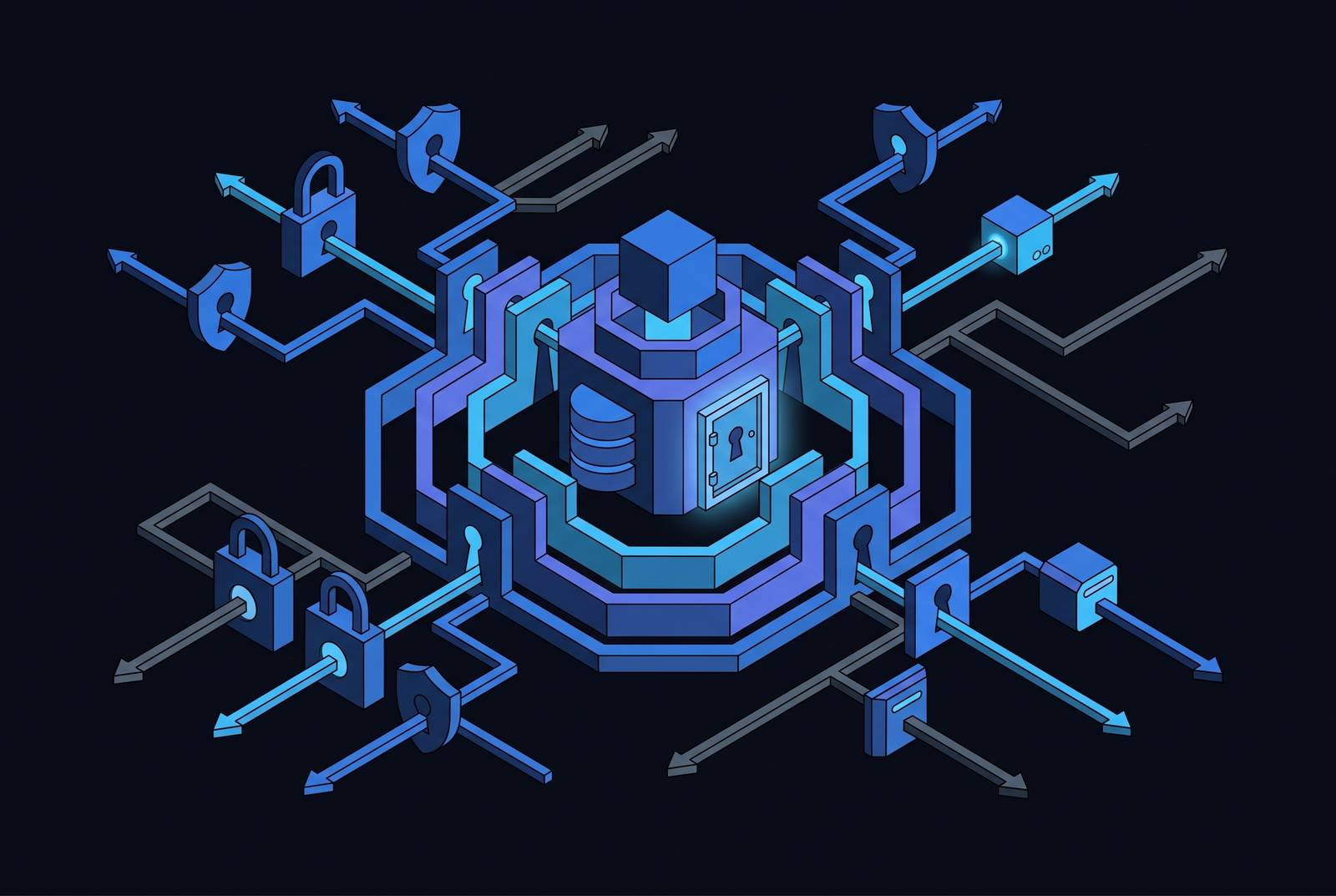
An MCP server inherits the permissions of every tool it exposes, so a single misconfigured credential can silently hand an AI agent far more access than any human reviewer intended. That's the flaw this whole piece is built around, and it deserves attention before getting to fixes.
MCP is genuinely useful connective tissue for enterprise AI, and it's grown fast: the public registry expanded roughly tenfold in about a year, and the protocol already runs in production at most enterprise AI teams. Think of it like USB-C for AI-to-system connections. One standard port instead of a drawer full of proprietary cables. That's the pitch, and it's a fair one.
But standardizing the connection doesn't standardize the judgment behind it. An MCP client isn't a developer hand-writing a fixed set of API calls reviewed in a pull request. It's a model picking tool calls at runtime from whatever list it's handed, composing its own arguments, shaped by whatever sits in its context window at that moment. The authorization boundary has to hold up against a caller that can be talked into things. That's a different security problem than anything traditional API access control was built for.
A structural gap sits underneath it. MCP's permission model is a set of primitives: an optional OAuth 2.1 authorization layer for remote servers, and tool guidance that recommends, but doesn't require, human ability to deny an invocation. Authorization itself is not mandatory. The NSA has documented the consequence: MCP lacks support for exchanging role-based access control permissions at instantiation, making it hard to enforce or verify access boundaries between tasks or services. The rules about who can do what don't travel with the connection, so each deployment invents its own answer, which is how cross-deployment access ends up inconsistent.
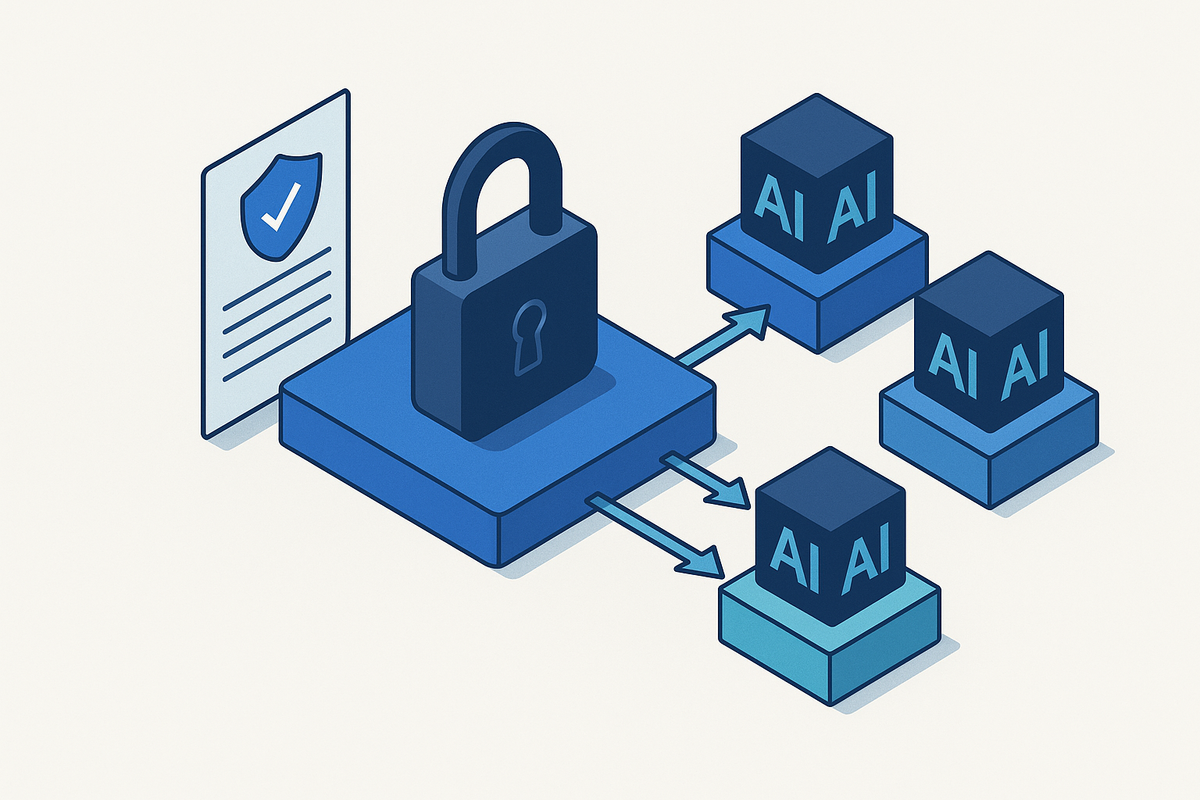
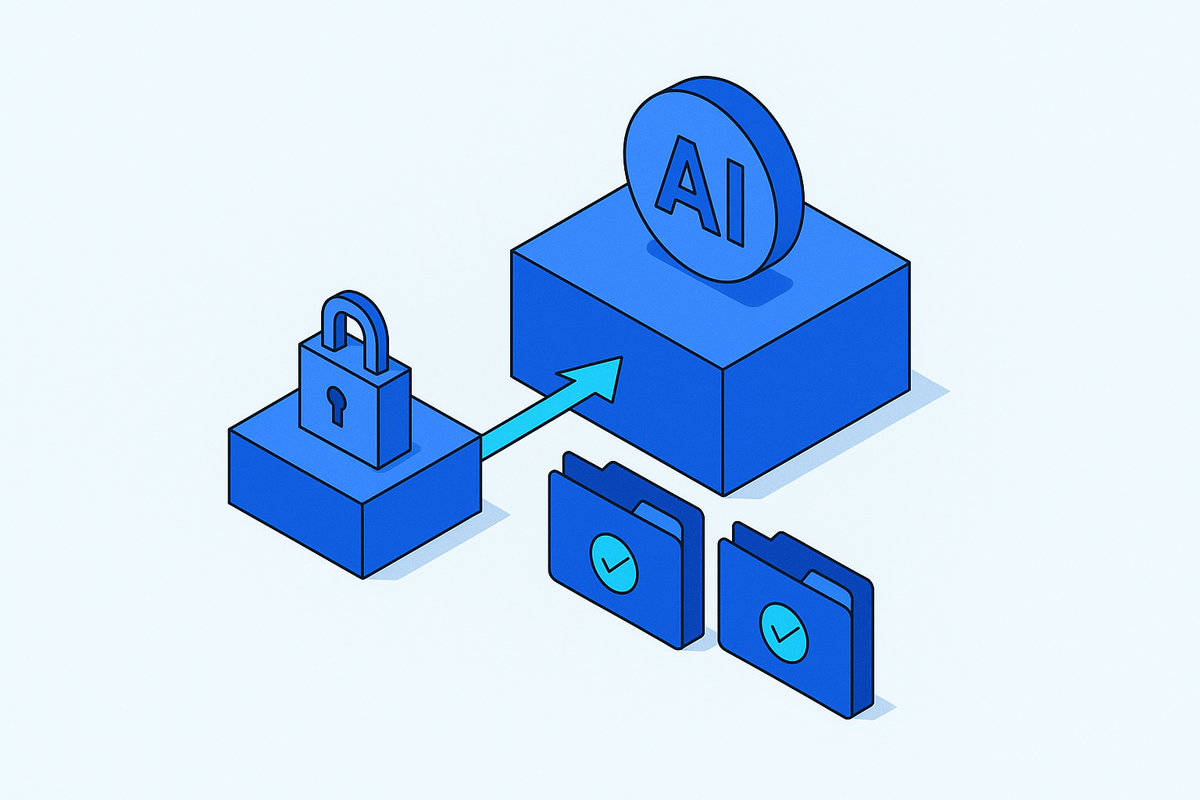
The fix is simple to state, if harder to build consistently: give an agent only the tools the task requires, scoped to the narrowest data and actions possible. A read-only tool that genuinely cannot write. A tool that reads one dataset and has no path to another. Do that, and the damage from any single failure gets bounded instead of unbounded. Everything that follows in this piece is one version or another of that idea, made concrete.
The five risk classes that least-privilege enforcement closes
Most enterprise MCP exposure traces to five configuration failures, not some exotic zero-day. Each one maps to a specific, known control rather than to vague "hardening".
Over-broad tool access: an agent can call every tool on every connected server because nobody applied an allow-list. This is the single most common failure in enterprise deployments.
Shared credential blast radius: one static token grants every user the same upstream access. Compromise or misconfigure that one key, and you've opened the full permission set of every tool the server exposes, not just one user's slice of it.
Prompt injection into tool calls: malicious text from an untrusted web page or email body gets ingested into the model's context and tricks it into calling a destructive tool with harmful arguments. The fix here is blocking at the tool boundary through argument inspection, not catching it after the fact.
Data exfiltration through tool results: a tool returns something sensitive, it lands in the context window, and from there can surface to the user or pass to a downstream agent with no business seeing it.
No attribution: tool calls that can't be traced to a person or application make post-incident review and compliance reporting essentially impossible.
Most of this exposure is sitting in pre-production right now. Roughly half of organizations are experimenting with MCP servers, but only a small fraction have reached production, meaning these deployments haven't had formal security review, and authorization gets bolted on rather than designed in. Independent scans found thousands of internet-exposed MCP servers in the wild, hundreds leaking API keys outright, and a meaningful share of public MCP packages carrying known security issues.
Enforcement outside the model
Because the model chooses tool calls at runtime and composes its own arguments, the authorization boundary can't lean on the model's judgment. That has to be the starting premise, not a footnote.
The specification separates concerns correctly on paper: an authorization server handles authentication and token issuance, while the MCP server acts as a resource server, validating tokens and enforcing access policy. The problem is that this separation is optional. Nothing in the protocol forces a server to implement it.
Where enforcement actually works, it lives outside the model entirely: in harnesses, in sandboxes, in scoped tokens, in confirmation policies that require sign-off before a state-changing action fires. The major client platforms bear this out. Claude Code and Visual Studio Code both document enforcement at the harness or sandbox layer rather than the model layer, and the broader pattern across enterprise clients agrees.
Some teams still treat the system prompt or agent instructions as if they were access control. They aren't, and can't be. A caller that can be persuaded by prompt injection is an unreliable gatekeeper, full stop. That's precisely the failure mode the model-external enforcement layer exists to close. Nothing downstream, not tokens, allow-lists, or audit logs, is enforceable until tool calls pass through a single point outside the model's own reasoning. That point is the gateway, and it's the subject of the next section.
The gateway-and-registry architecture that makes enforcement enforceable
Enterprise MCP governance needs two distinct pieces of infrastructure, and they do different jobs. A registry answers what tools exist, who owns them, and how to connect; a gateway answers who may reach which server, under whose identity, with what record left behind.
The registry isn't a community listing of available MCP servers. It has to be a governed internal catalog, with policy checks built directly into the software delivery pipeline. Community registries suit discovery and experimentation, but not a regulated bank or multi-team enterprise that needs to know what's connected to what. As one practitioner quoted by InfoWorld put it: put a private MCP registry, owned by platform engineering, at the heart of the AI runtime, governing how servers are built, tested, deployed, and monitored. Curated registries also act as a trust boundary, shaping what tools people are willing to bring into their workflows.
The gateway is the enforcement half. It's the single point through which MCP traffic has to pass before any tool becomes reachable. Skip it, and every other control, allow-lists, argument inspection, audit logging, stops applying uniformly, especially across servers the enterprise doesn't own. Bifrost, an open-source MCP gateway built in Go by Maxim AI, is one concrete example of this pattern, though not the only way to build one.
The order these controls run in isn't arbitrary either. Route traffic through the gateway first, then apply the authentication mode, then the tool allow-list, then argument inspection, then result inspection, then attribution. Each step narrows what the next one has to cover. Skip the gateway, and every step downstream of it is guesswork. A server exposing an entire database schema and every write operation on it is not a shortcut, but a liability. Split capabilities into small, granular, least-privilege servers instead.
Scoped tokens and authentication modes: the first enforcement layer
Authentication mode is a decision made per server, not a default applied across an entire deployment. Getting this wrong for a given server is the single most common enterprise MCP configuration mistake.
The specification itself moved on this. The 2025-06-18 revision reclassified MCP servers as OAuth resource servers and required Resource Indicators under RFC 8707, binding a token to one specific server rather than letting it float across several. That's the spec-level foundation token binding rests on.
Bifrost's six supported authentication modes illustrate the range, from shared static headers, fine for some servers but wrong for anything user-scoped, up through per-user OAuth and token exchange. The choice isn't cosmetic. It determines whose identity actually reaches the upstream system, and a compromised token opens the full permission set behind a server or just one user's narrow slice of it. Token exchange, for instance, carries the caller's identity-provider token on every call with no stored credential, but revocation only lands within the cached token's lifetime, up to five minutes, not instantly. That's a real tradeoff, and teams need to design around it deliberately rather than discover it during an incident.
Approve remote OAuth with scoped tokens, vault-issued dynamic credentials, workload identity, and scoped API keys as a last resort. Prohibit hardcoded credentials, shared credentials, personal access token reuse, and static connection strings, outright. Servers should reject any inbound request carrying a token not explicitly issued for them; audience validation is the control that stops a token being replayed against a server it wasn't meant for. And before touching a user's actual data, it should run through existing identity infrastructure, meaning SSO, before the agent acts on that user's behalf.
Tool allow-lists: scoping the agent's capability surface before any request is made
If authentication decides who's making the call, the allow-list decides what they're even allowed to try calling. Every tool an agent can't see is a tool it can't be talked into misusing.
The default failure mode is almost boring in its frequency: a static shared credential, no tool allow-list, full reach granted by omission rather than design. That's an ordinary attack. It's a checkbox nobody unchecked.
There's a context-window argument for scoping tools tightly that's easy to overlook. Every MCP server injects its tool definitions into the agent's context window; with five to seven servers connected, those definitions alone can eat up 10 to 20 percent of it. So a department-scoped server, surfacing only tools relevant to, say, a finance or engineering workflow, solves a security problem and a context efficiency problem at once. That's a rare case where the tidy answer and the safe answer are the same answer.
IntuitionLabs lays out the practical version: bind each token to one server and narrow scope, scope beneath the underlying API rather than the connection level, and require confirmation before any state-changing call gets write access. The Salesforce DX MCP server is the clearest working example of what this looks like when it's done right. Every transaction runs as the authenticated user, so existing CRUD permissions, field-level security, and sharing rules apply automatically. If a sales rep can't see a field in Salesforce, the AI connected on their behalf can't see it either. That's inheritance working exactly as intended, and it's the model the next section builds on.
Runtime authorization: inspecting arguments and results at the tool boundary
Model-composed arguments have to be treated as untrusted input. That means inspection at the tool boundary, before execution, not detection stitched on afterward once the damage is already done.
Two inspection points matter here, and they're distinct. Arguments get checked before execution, which is what blocks a prompt-injection attempt at the moment of the tool call. Results get checked before flowing back into context, redacting sensitive data before it reaches the model or user. Malicious text in an untrusted web page or email body can reach the model's context and shape its arguments; the defense lives at the gateway, inspecting arguments as they pass through, not at the point the content was first ingested.
Confirmation policy is also part of runtime authorization, and it's arguably the most important single control the protocol actually recommends. Autonomous execution is fine for reads. It's rarely fine for writes. Requiring human sign-off before a state-changing action executes is the one structural, protocol-recommended oversight mechanism here, even though the broader authorization framework stays optional.
This closes the situation where an MCP server acting on a user's behalf ends up with broader privileges than that user should have. Per-client security controls and visible consent management, a consent screen, a time-bound approval window, give the user a real chance to review the request before the client proceeds. Without that checkpoint, the server can't distinguish a request the user meant to make from one an injected instruction manufactured on their behalf.
Inherited source permissions: the control that scales across every connected system
Redefining access rules every time a new AI tool is introduced is a debt that compounds. Inheriting permissions automatically from the source system is the only approach that stays coherent as the number of agents and data sources keeps growing.
Salesforce DX is, again, the clearest production example of this working the way it's supposed to. Field-level security, sharing rules, and CRUD permissions already in Salesforce carry straight through to every MCP transaction without redefinition for the AI layer. The AI's access boundary simply is the user's access boundary. That's the mechanism turning "write once, govern once, deploy everywhere" from slogan into reality. Without inheritance, every new agent or data source means another manual permissions exercise, debt that eventually goes unpaid.
Environment isolation is the other side: separate credentials for production, staging, and development, plus a documented agent-to-MCP mapping recording ownership and business justification for every connection. It's unglamorous work, but it's what makes an audit possible six months later.
A broader identity shift is happening underneath all this too. MCP credentials are increasingly treated as their own category of non-human identity, requiring the same lifecycle discipline as any service account: provisioning, rotation, offboarding. Provisioning tends to get done carefully; testing revocation, confirming a credential actually stops working when it should, is where most programs still fall short.
Audit trails and observability: the enforcement layer enterprises are currently building by hand
Every control described above, scoped tokens, allow-lists, argument inspection, inherited permissions, only matters after the fact if there's a record of what happened. Attribution turns a policy into something a compliance team can actually verify.
That record is what's missing most often in practice. Enterprises stitch together logging, attribution, and review manually, server by server, because the protocol doesn't hand them a standard way to do it. Scoping an agent's tools and inherited permissions once, at registration, rather than auditing and correcting them afterward, keeps the blast radius bounded from the start rather than discovered after an incident.
Until the protocol itself standardizes this, and there's no clear sign yet that it will, audit and observability stay the layer enterprises have to build themselves. Credal, for instance, is built to provide exactly that layer, combining permissioned MCP servers with audit logging and centralized policy control so enterprises aren't assembling it by hand. That's not a footnote to the least-privilege argument. It makes every other control checkable.