Role-Scoped Prompt Access Without Governance Sprawl
Enterprises can now control which agents access which tools through role-scoped permissions.
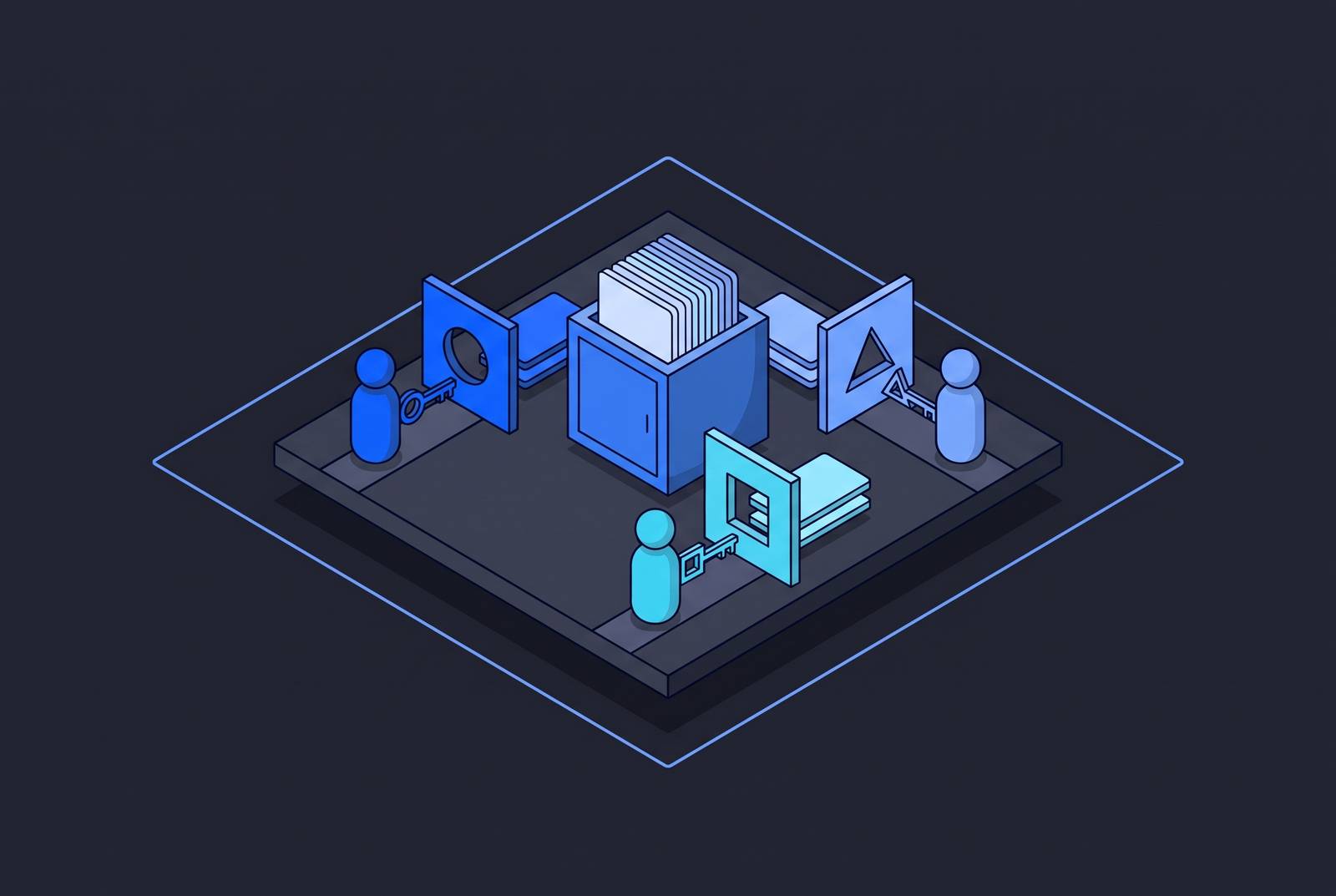
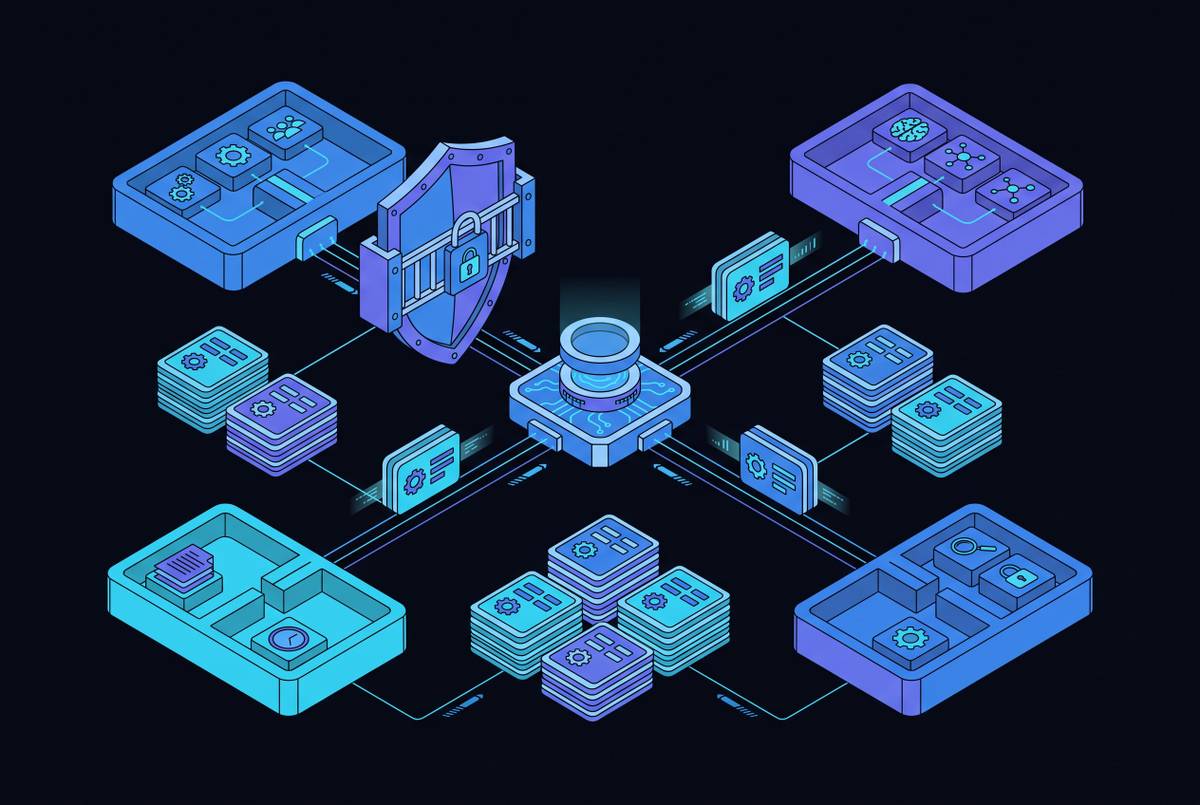
A governed AI agent skill registry for enterprises is a shared catalogue of approved prompts, workflows, and tools with ownership, version control, and role-based access. It prevents governance sprawl when permissions are inherited at the MCP layer across deployments. That lets teams share skills across AI clients without giving them access they should not have.
Why MCP creates a governance problem as it solves an integration one
MCP cuts the work of custom-integration from N×M to N+M. Teams build one server that every compatible client can use, so they do not have to build a connection between every AI client and every system. That is a genuine architectural win. The Linux Foundation's Agentic AI Foundation, co-founded by Anthropic, Block, and OpenAI, governs MCP as vendor-neutral shared infrastructure.
The 2026-07-28 specification also removed a major obstacle to scaling servers by introducing a stateless protocol core. Every request is self-describing, so any instance behind a plain round-robin load balancer can handle it. But making servers easier to deploy does not set the rules for access. The protocol allows servers with tight controls as well as servers that have no enterprise access controls or audit logging.
That neutrality shifts the hard problem from connecting systems to controlling what agents can do through those connections. Over-privileged service accounts can give AI tools broad access without per-user authorization, per-operation logging, or sensitivity label enforcement. Local servers create another blind spot. Developers can connect them to production data with personal tokens while security has no record of the connection. The integration works, but the organization cannot account for its use.
Why most enterprise MCP pilots stall before reaching production
A working server does not settle who approves access, how an agent establishes identity, or what gets recorded when it acts. These are production blockers. An agent that can retrieve test data presents a different approval problem from one that can change production records. Without an approval layer before write access, a successful demonstration can remain just that.
CData identifies three recurring obstacles to enterprise MCP adoption, including mapping tools to legacy systems, coordinating IT, security, and business stakeholders, and aligning deployments with regulatory requirements. These obstacles reinforce one another. A tool mapping sets what an agent can try to do, while the approval process decides whether it should be allowed to try. Audit requirements then set what the organization needs to explain what happened.
Controls within one platform do not resolve the whole problem. GitHub Enterprise controls, for example, do not cover every surface where teams mix Copilot with Claude, Cursor, or Windsurf. MCP adoption and MCP governance maturity need to be tracked separately, because the number of connected servers says little about whether rules govern their access.
What role-scoped access actually means at the MCP layer
A virtual MCP server scopes exactly which tools an agent can invoke for a given role, with the user's identity resolved at runtime. The agent sees only tools it is explicitly permitted to use. The boundary sits below the AI application. It does not depend on a prompt telling the model to avoid tools that remain callable.
There are three concrete reasons for this design. The first is agent overreach, because a model choosing among many tools has more opportunities to choose the wrong one. A summarizer that can also delete records and send mail has a different risk profile from one that can only fetch information. The second is context overhead. A large tool catalogue consumes context before useful work begins, while a role-specific catalogue limits that cost.
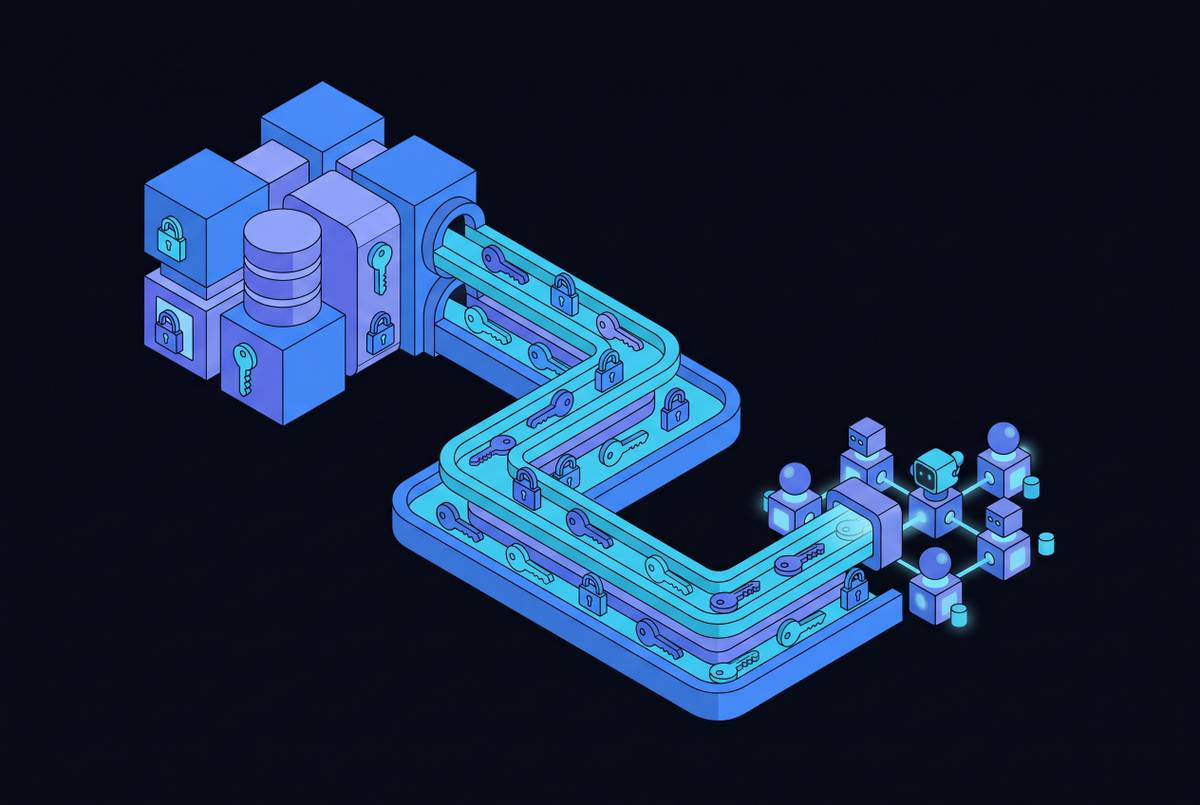
Third, credential isolation uses a short-lived session token minted per run, scoped to one user, and resolved server-side, keeping the user's actual OAuth tokens out of logs and agent context. The token expires when the run ends. This limits credential exposure without making the agent responsible for protecting reusable credentials.
Connection approval alone is still not enough. Per-session authorization checks whether the AI may connect, while per-operation authorization checks whether this user may take this action on this data. The specification supports gateway enforcement through Mcp-Method and Mcp-Name headers, allowing routing and authorization without parsing JSON bodies. Tool-level least privilege is therefore a property of the implementation.
The six controls that separate enterprise-grade MCP from developer-grade MCP
Enterprise-grade MCP requires six controls working together. OAuth 2.0 authentication establishes identity while keeping credentials outside AI context. Per-operation RBAC and ABAC apply role-based and attribute-based authorization to each call. Attribution-level audit logging records every MCP operation. Authentication alone cannot substitute for either authorization or attribution.
Path and scope controls set which data a server can reach, and rate limits set how much each user and each session can use. Sensitivity label evaluation, including MIP label evaluation, happens before data is returned to AI. These controls address different failure points. A user may be authenticated and authorized to use a tool without every reachable document being suitable for return to an AI client.
The June 2026 Enterprise-Managed Authorization extension deals with an identity problem that is especially costly. EMA makes the enterprise identity provider the authoritative provisioner of MCP server access, so users authenticate through their existing IdP and receive access to authorized servers. Access decisions are kept in the IdP admin console with one trail that can be audited. The specification formally includes EMA as an extension.
The specification also hardens authorization through RFC 9207 issuer validation, Client ID Metadata Documents replacing Dynamic Client Registration, and credentials bound to the issuer that minted them. These details support the broader access boundary. A governed catalogue can then expose GitHub and code-execution tools to engineers and ERP integrations to finance, with approval workflows for access requests. Because servers can aggregate credentials for multiple systems, credential isolation limits the reach available through a compromised server.
How a governed MCP registry prevents governance sprawl as skills multiply
Controls on each server cannot, on their own, give an inventory of servers across the organization. A governed registry records approved internal and external servers, who exposes their tools, how those tools are used, and under what access conditions. The identities of agents are linked to the enterprise identity provider. A simple approval step before access to production data gives security a way to control access that a loose collection of local servers lacks.
The registry also makes shared work reusable. Once a skill is published, engineering, RevOps, and support teams with access can use it without each having to rebuild its prompt or workflow. That reuse depends on ownership metadata, version control, and access scoping. A shared drive is not a registry. Storing prompts centrally does not establish who owns them, which version is approved, or who may invoke the tools they use.
The official MCP Registry has a REST API for programmatic discovery, meant mainly for downstream aggregators. Enterprises can use the same discovery primitives for their approved server set. Discovery is only part of the job. An internal registry must connect that inventory to approval and access rules, while scoped team endpoints make approved capabilities available without a separate interface to build and maintain for each team.
Delivering consistent role-scoped access across Claude, ChatGPT, Cursor, and Slack
Atlassian demonstrates the payoff of a shared MCP server across clients. Its server handles more than 15 million calls a day across Claude, ChatGPT, Cursor, and other compatible AI clients. Organizational context travels with the user across interfaces. The server is the governed layer. Changing the place where someone works does not have to mean creating a separate access design.
Microsoft Foundry illustrates a related consolidation pattern. Its Toolboxes share tools through a single managed MCP endpoint with centralized authentication, governance, and versioning. The emphasis is on a common control point.
A scoped endpoint that plugs into an agent or chat surface avoids making a custom interface the prerequisite for governed access. This is also a portability issue. Prompts, tool scopes, and access rules built by domain experts should still work when an organization changes models or clients. Model lock-in and surface lock-in create the same underlying risk when either traps the organization's business context.
What role-scoped MCP access looks like for four specific teams
RevOps needs useful CRM access without an open-ended right to change records. ZoomInfo's MCP capabilities support finding target accounts, researching companies, identifying contacts, enriching records, and returning structured business information for downstream workflows. Read and write access need separate treatment. A workflow that gathers account information does not automatically need permission to update the CRM, even when both operations serve the same business process.
Sales has a more direct information-retrieval case. SOQL queries and Salesforce report navigation let a user ask for pipeline by stage or account activity history without working through the Salesforce interface. The interface changes, but the entitlement should not. The MCP access scope must match what that user is authorized to see in Salesforce directly.
Engineering brings together GitHub or GitLab, Jira or Linear, Datadog or Sentry, and cloud infrastructure. A role-scoped registry limits each agent to the tools relevant to its job, separating infrastructure work from code review access. Code review assistance has a well-defined access scope. That makes it a concrete use case for connecting useful automation to straightforward audit requirements without granting every engineering agent the same capabilities.
Intercom's MCP server can search and fetch conversations, contacts, companies, and Help Center articles, allowing triage around those resources and a knowledge base. Workflows that need order context may also need a payment platform. That access can be scoped to support without opening up billing or engineering functions that have nothing to do with it. The agent's read and write rights should match those of a human support agent, with an audit trail.
Across these four teams, each scoped server has its own registry entry, owner, access rules, and audit trail. Permissions inherit from the identity provider and source systems rather than requiring IT to reconstruct them for every deployment. Domain experts can own their team's skills and context. The central layer makes that delegation safe by controlling access without taking ownership of every workflow.
Building an MCP governance layer that grows with the organization rather than against it
Without shared governance, five teams that need a CRM skill can end up with five prompts, five access designs, and five separate audit gaps. The cost goes beyond duplicated work. Each deployment splits up the record of who may do what, so teams have to coordinate again when access next changes. A registry with inherited permissions gives new deployments an existing access foundation.
CData's implementation sequence moves from identifying a workflow and mapping endpoints to tools, through defining authentication and permissions, then sandbox deployment, model connection, monitoring, and expansion. Permissions enter before production use begins. Auditability then supports delegation by making approval and action visible, rather than serving only as evidence collected after something goes wrong.
A governed MCP platform brings these pieces together through approved skills, version control, synchronized permissions, and scoped endpoints. It is more than a prompt library. Its defining capability is allowing teams to reuse business context across models and surfaces while preserving the source systems' access boundaries. That is the practical distinction between a catalogue of useful content and a governed enterprise skill registry.
Can a new team find, request access to, and deploy an existing skill without rebuilding it? Can security see every server, every tool scope, and every operation in one place? Can a change to an access rule reach every agent that uses the affected source without someone having to reconfigure each one? A registry with inherited permissions and version control is what makes all three answers yes.