Role-Based Access Control in Enterprise MCP Server Deployments at Scale
Enterprise MCP needs tool-level permissions designed in, not bolted on later.
An enterprise MCP server with built-in access controls needs more than authentication. It needs tool-level permissions, a verifiable user identity on every call, and server access governed through a shared gateway and registry. Role-based access control, or RBAC, needs to be there from the start because waiting to add it until a pilot works stalls production and makes it unsafe to bring in more teams.
Why most enterprise MCP deployments stall before they reach production
A working integration proves that an agent can reach a system. It remains to be proved that the right person can call the right tool, that access can be revoked, and that a write operation can be traced to a human. Those are different tests. When teams postpone them until production review, security becomes a retrofit.
MCP does not define a role-based access control model, require authentication in the base protocol, or specify how a request maps to a verifiable enterprise identity. Teams can therefore build a functioning pilot without resolving any of those questions. Once agents need write access to business systems, deployment can stop because identity binding, an audit trail, and permission boundaries are missing. The obstacle is not getting another connector to work but governing what the working connector allows.
What the protocol actually does and does not provide on access control
MCP standardizes communication between AI clients and tools through JSON-RPC. Instead of building a separate connector for every pairing of client and server, implementers build against a shared interface. That reduces integration work, but not policy work. The protocol does not supply a role hierarchy or decide which tools a particular identity may call. The organization that deploys it must make those decisions.
Without that separate design, early deployments commonly use one credential that gives an agent access to everything a connected server exposes. Discovery returns the full catalog, and every tool is executable. Local deployments using standard input and output streams make central oversight harder still. When developers install and configure servers on their own, configurations drift and credentials spread, and IT has no centralized audit trail or shared way to revoke access when someone leaves. A standard connection does not create a standard control boundary.
The 2026-07-28 specification strengthened authorization with RFC 9207 issuer validation, issuer-bound client credentials, and formal deprecation of Dynamic Client Registration in favor of Client ID Metadata Documents. These changes harden the OAuth flow. They do not decide whether a Sales employee may update CRM records or whether Finance should see only accounting read tools. Secure authentication establishes a basis for trusting the caller, while RBAC determines what that caller may do.
Why the stateless switch raised the RBAC stakes rather than lowering them
The July specification also retired the initialize/initialized exchange and the Mcp-Session-Id header. Each request now travels independently, with its protocol version, client identity, and client capabilities in _meta. Any request can reach any server instance behind a plain round-robin load balancer, with no need for shared storage. This makes horizontal scaling much simpler. It also removes the session as a natural anchor for monitoring and rate limiting.
As a result, an authorization check at session establishment cannot govern subsequent calls. Each request needs a check of its identity and permissions. The same release introduced Mcp-Method and Mcp-Name HTTP headers, which let gateways route and authorize requests without parsing their JSON bodies. Those headers provide a practical enforcement point for the stateless design. The scaling benefit and the governance requirement come from the same change.
The Enterprise Managed Authorization extension, which stabilized on June 18, 2026, offers a way to turn enterprise identity into scoped access. It implements the Identity Assertion JWT Authorization Grant, exchanging the user's identity token through RFC 8693 for a grant scoped to a target server. The client then presents that grant through an RFC 7523 JWT-bearer flow to obtain a scoped access token from the MCP server's authorization server. The groups and roles in the organization's existing identity provider control who has access. This flow gives organizations identity and scope, but they still have to define the permissions each request needs.
The blast-radius problem that RBAC is actually solving
An MCP server can hold credentials for several enterprise systems at once. A compromised agent or a misconfigured allowlist can therefore expose more than one application through the same server. The risk follows the server's reach. Without tool-level restrictions, an agent that can discover and execute every tool has the effective access of the service account behind it.
The National Vulnerability Database contained 382 CVE records mentioning “Model Context Protocol” or “MCP server” as of October 2026, including remote code execution vulnerabilities. That record makes the security concern concrete, but excessive permissions can exist without a software vulnerability. An overbroad credential already grants excessive access. If a model processes a malicious prompt, it can try to use any exposed tool, including tools that have nothing to do with its assigned task.
Tool-level RBAC narrows that scope to what a role needs. Filtering discovery keeps forbidden tools out of the model's context, while execution controls constrain what it can actually invoke. Even with these controls, a compromised server can cause harm, and other security controls are still needed. They reduce the authority available through an agent, so permission boundaries belong in the initial design.
How do you enforce tool-level RBAC at an enterprise MCP gateway?
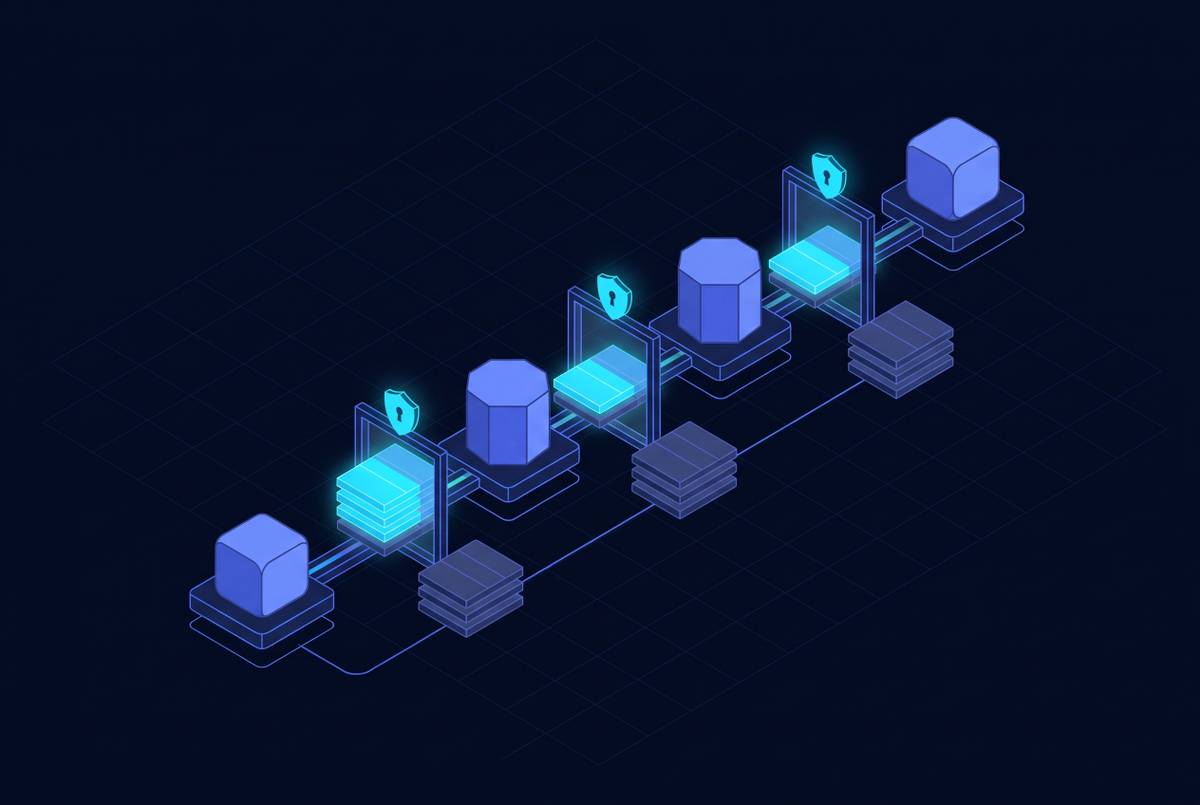
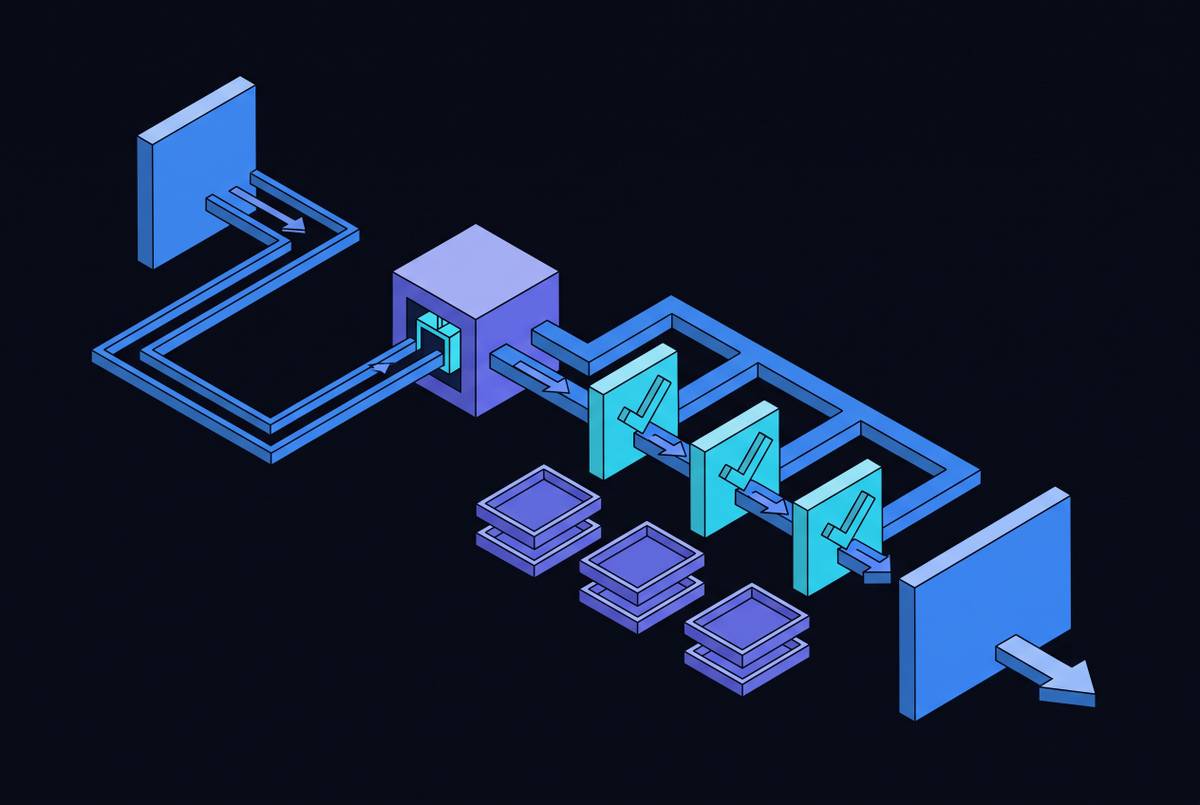
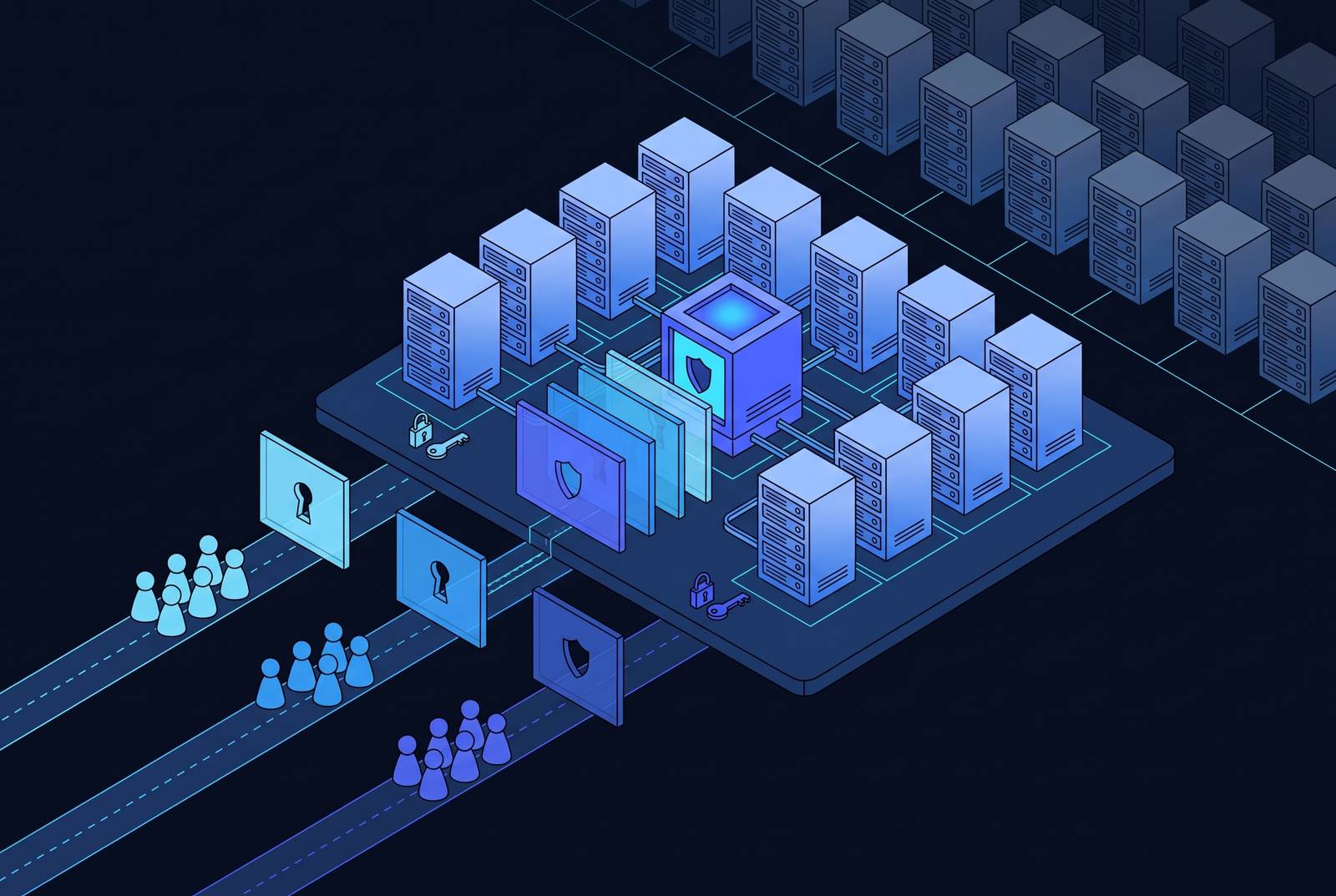
Route MCP traffic through a centralized gateway and enforce tool allowlists at both discovery and execution. The gateway handles OAuth 2.1 token issuance and validation, routes calls to backend servers, applies team and role policies, and logs invocations with user identity and timestamp. Mcp-Method and Mcp-Name make those request-level checks practical without body parsing. This is the point where identity becomes an enforceable permission decision.
Discovery and execution serve different purposes. Filtering discovery prevents forbidden tools from being presented to the model, while execution authorization allows or denies a submitted call. Both layers must use the caller's permissions so that the catalog offered to an agent and the authority granted to it agree.
For provisioning, administrators should define team profiles. Sales gets CRM read/write and Slack tools, Engineering gets GitHub, Jira, and CI tools, and Finance gets accounting read tools. Developers then use an internal portal to find servers they can access. Roles such as “support-read-only” or “ops-deploy” group tools from one or more servers and attach those permissions to keys, teams, or consumers. That lets platform teams define access once for all those keys.
TrueFoundry, Lunar.dev MCPX, Kong AI Gateway, and Cloudflare AI Gateway are enterprise gateway options in this space. Lunar MCPX has role-based profiles, rate limits and budget constraints for each user agent or MCP client, an immutable audit trail of every action an agent takes, and DLP through integration with the Lunar AI Gateway. These features give teams specific things to compare, but ranking the products would need the same level of detail on what each can do. Tool allowlists also should not be mistaken for per-user data scoping. Permission to call a CRM tool does not, by itself, specify which records that user may access.
Operational enforcement needs more than a product selection. Every call should bind to a human identity, with SSO identity propagated through the agent session to the gateway on each call. The logs for each call should record the user identity, tool name, how long it took, and its outcome. Quarterly access reviews and mandatory removal for departed employees keep permissions current, while irreversible actions require human-in-the-loop approval.
Building an internal MCP registry that governance can actually use
With a private registry, teams have an approved place to find servers with policies that the gateway can enforce. The public MCP Registry software can run privately with the same search and discovery features, limited to the organization's approved servers. This turns reuse into a governed workflow. Instead of rebuilding a capability in each department or importing an untrusted community server, teams can discover an existing, reviewed implementation.
Pinterest runs domain-specific servers for Presto, Spark, and Airflow, plus a general-purpose knowledge server, with a central registry for discovery. It also uses human-in-the-loop approval for high-risk operations. Before a server goes into production, it must pass security and legal/privacy reviews, along with generative AI compliance review where that applies. The review gate is attached to deployment.
Focused servers make those reviews and their resulting permissions easier to reason about. A Salesforce server handles CRM operations, while a GitHub server handles repository operations. A server with access to everything erases that useful boundary and conflicts with least privilege. The single-responsibility principle is therefore a governance aid.
Each registry entry should show its approval status, which team owns it, the date of its compliance review, and the access scopes it exposes. Knowing who owns a server tells reviewers where to send questions, while the scope metadata shows the approved boundary as the number of servers grows. Quarterly reviews become more tractable when those facts live with the server record. A registry is not merely a directory of URLs but a governed discovery surface against which the gateway can enforce access.
Keeping permissions consistent when the same MCP server serves multiple AI surfaces
A well-written MCP server can run unmodified across Claude Desktop, Claude Code, Cursor, Codex CLI, Windsurf, and VS Code with GitHub Copilot agent mode. That portability saves connector work. Without shared governance, though, each new client can be another place where teams have to set and maintain permissions.
ChatGPT Enterprise supports MCP read/write connectors, while collaboration workflows extend the same question beyond coding tools. The Slack MCP Server enables ChatGPT, Claude, Cursor, and custom agents to read messages, search conversations, post replies, and manage files. Approved connectors can sit next to personal workflows. Policy inside any one AI tool is therefore necessary but insufficient to govern the full set of enterprise connections.
A shared gateway and scoped registry move the access decision out of each individual surface. When CRM and Slack access both pass through that gateway, the same governance layer can control both. Tool curation, credentials, access policies, and audit remain centralized and independent of a model provider. A new supported surface connects to that endpoint, inherits the existing policies, and writes to the same audit trail. The saving is not just another integration avoided but another round of permission design that does not have to happen.
How to sequence RBAC implementation across an MCP rollout without slowing the first team down
Teams want a first deployment with governance that fits within the integration timeline. RBAC does not need to be fully built before the first server reaches production, but identity binding, gateway routing, and the registry structure do need to exist. Establish a small governed path first, then expand that same path.
Before the first server goes live, teams should stand up a lightly configured gateway and connect it to the organization's identity provider so that every call is traceable to a human. They should also create the registry stub and approval workflow, even for one server. For that first production deployment, the team profile comes before the published server URL. A Sales CRM server needs its tool allowlist at launch.
As more teams join, they should inherit the same infrastructure. Their servers pass through the existing review gate, their profiles live in the same gateway, and their calls enter the same audit trail. Focused servers keep this manageable because a single-system boundary is easier to review, scope, and replace. As the shared infrastructure matures, the cost of governance for each new team falls.
Teams must keep up quarterly access reviews and mandatory off-boarding removal. They should be built into team profile definitions and registry records from the start. That makes the approved route useful to the next team as well as safe for the first. Governance scales when using the registry and gateway is easier than bypassing them, because governance that is easy to comply with is the kind that gets followed.