Institutional Knowledge Capture Before Employee Turnover
Capture expert judgment as AI skills before employees leave.
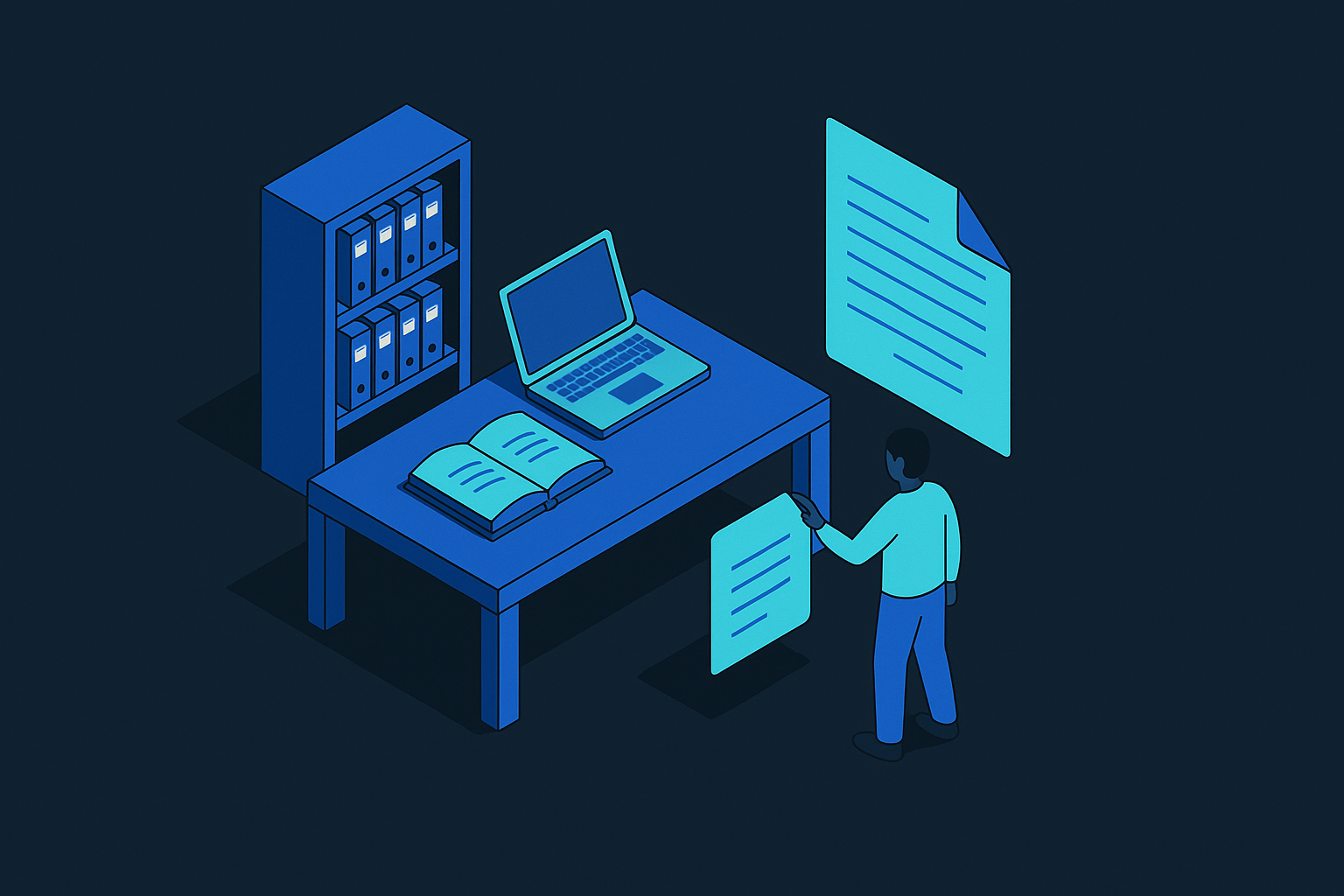
Gartner's research on enterprise knowledge management found that most of what a company knows is tacit. It lives in people, not in a system the next hire opens on day one and reads cover to cover.
Think about the folder structure that encodes ten years of decisions nobody wrote down. The email thread, three replies deep, holding the entire negotiating history behind a vendor contract. A tool configured back in 2019 against requirements that might not even apply anymore, untouched since. Or the quiet fact that a certain kind of ticket always lands on one specific person's desk, because they've fixed forty of them before and nobody else has.
That last one gets underrated, honestly. So much of how work actually gets routed and prioritized runs on trust built up over years, and none of it makes it into a wiki, because nobody ever called it a "process" to begin with. It was just judgment, earned slowly, ticket by ticket, and it doesn't show up on an org chart anywhere.
Bloomfire's research on enterprise intelligence found knowledge workers lose a real chunk of their week just searching for information they should already have. Then they lose another chunk recreating information they gave up searching for. That's a knowledge architecture problem, not a search problem, and generalist roles getting automated away only makes it worse. Expertise keeps concentrating into a smaller, more mobile pool of specialists, which means fewer people carry more of what a company actually knows.
Tacit knowledge and documentation are not the same thing, and solving for one doesn't solve for the other.
Why documentation has always been the wrong answer
Someone announces they're leaving. The instinct kicks in fast: schedule the knowledge-transfer sessions, update the wiki, record a few Looms. All of it captures the surface. The judgment underneath goes untouched, mostly because nobody thought to ask for it in a way that would actually pull it out.
Documentation is a snapshot. Expertise is a living model that keeps updating itself against new information, and a runbook can't do that. A runbook gives you five steps; it won't tell you when to break from them, or which two alternatives got quietly rejected before the team settled on step three. Wikis rot the moment the team that wrote them moves on. Nobody owns keeping them current, so the gap between the doc and reality widens every month until the doc is actively lying to you.
Retrieval is its own separate failure, and a bad one. Even a well-kept wiki falls apart if nobody can find the right page fast enough, or if the answer sits scattered across four documents that were never meant to be read together. That search-and-recreate tax isn't bad luck; it's the predictable cost of storing knowledge in a format built for browsing, not for answering questions under time pressure.
Knowledge-transfer sessions have a blind spot of their own. They capture what the expert thinks to say when someone points a camera at them, and they miss what the expert does automatically, without narrating it. Ask a ten-year support engineer why they escalated one particular ticket instead of resolving it themselves, and half the time you get "it just felt off." That instinct is real. It's valuable. No recorded session pulls it out of them on command.
There's a newer idea worth naming here: AI agents that watch documentation and update it on their own, sometimes called self-healing knowledge bases. Genuine progress over a static wiki. It produces a better-kept shelf, current maybe, but still passive. It waits to be opened. It doesn't do the work alongside you.
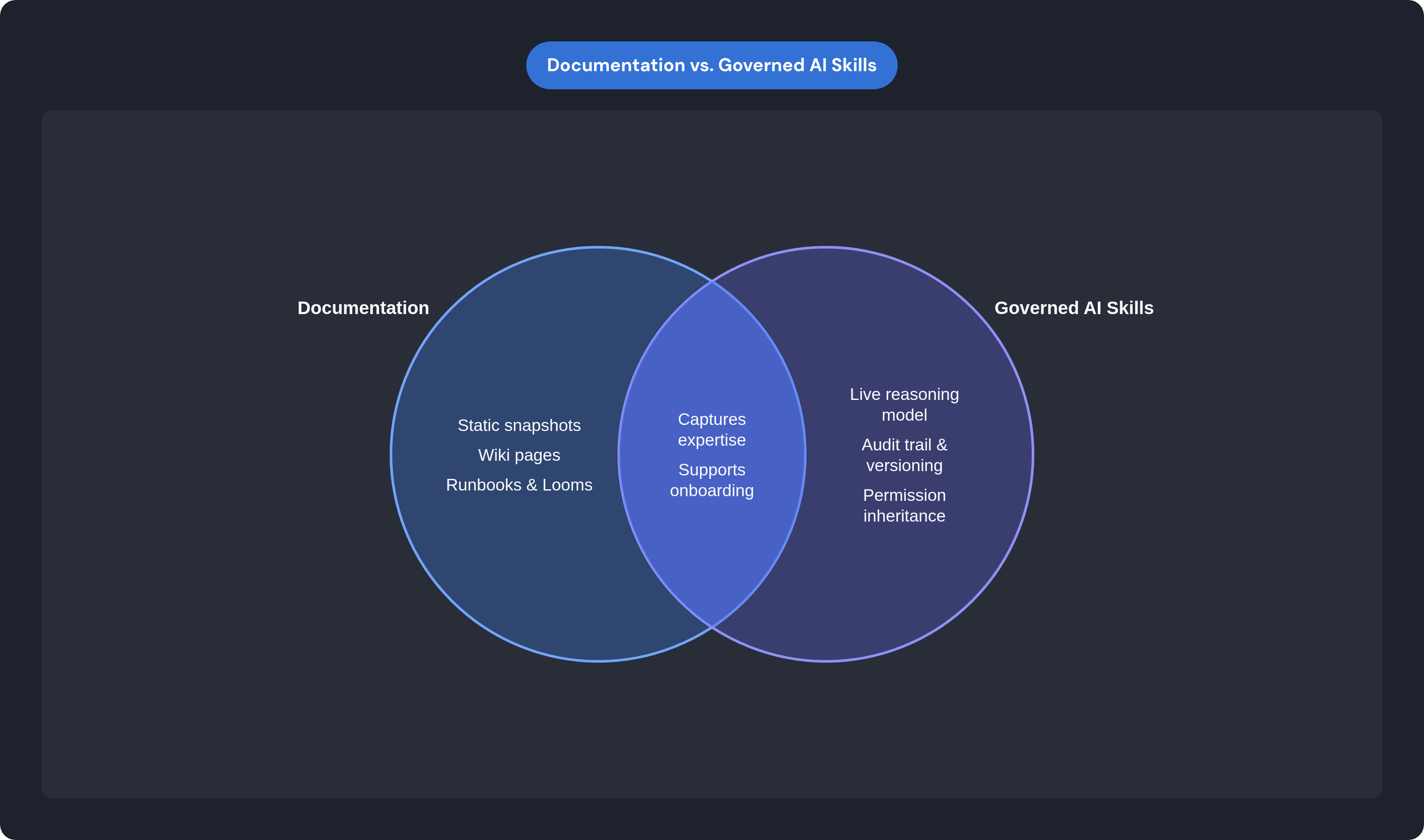
What it means to capture knowledge as a governed AI skill instead of a document
A document sits in a folder waiting for someone to open it. A governed AI skill answers questions, produces outputs, takes part in the actual workflow while it's happening.
Building one comes down to a few concrete moves. You connect the agent to the same systems the expert actually used: the CRM, the ticket history, the contract repository, the codebase, whatever raw material they touched every day. You encode the reasoning itself, not just the steps: the decision rules and judgment calls, the "when" and "why" sitting behind the "what." And you scope what the skill can see to what that person's role was already authorized to see, so permissions travel with the skill instead of getting reinvented every time someone deploys it somewhere new.
Governance is what separates a real skill from a chatbot wearing a nametag. A governed skill has an owner, a version history, an access policy, an audit trail, and it behaves the same way whether one person is querying it or a hundred people across three departments are hitting it at once.
When the employee finally walks out, the skill stays behind as working infrastructure, something the next person builds on instead of a hole they fill from memory. Atlan AI Labs ran this against Workday and found a sizable jump in AI query accuracy once institutional context got delivered through a structured context layer. The model didn't change. The context around it did. Enterprise AI usually doesn't underperform because the model is weak. It underperforms because it's missing the governed context an expert would otherwise supply on instinct, without even thinking about it.
How MCP provides the infrastructure to encode and share that context
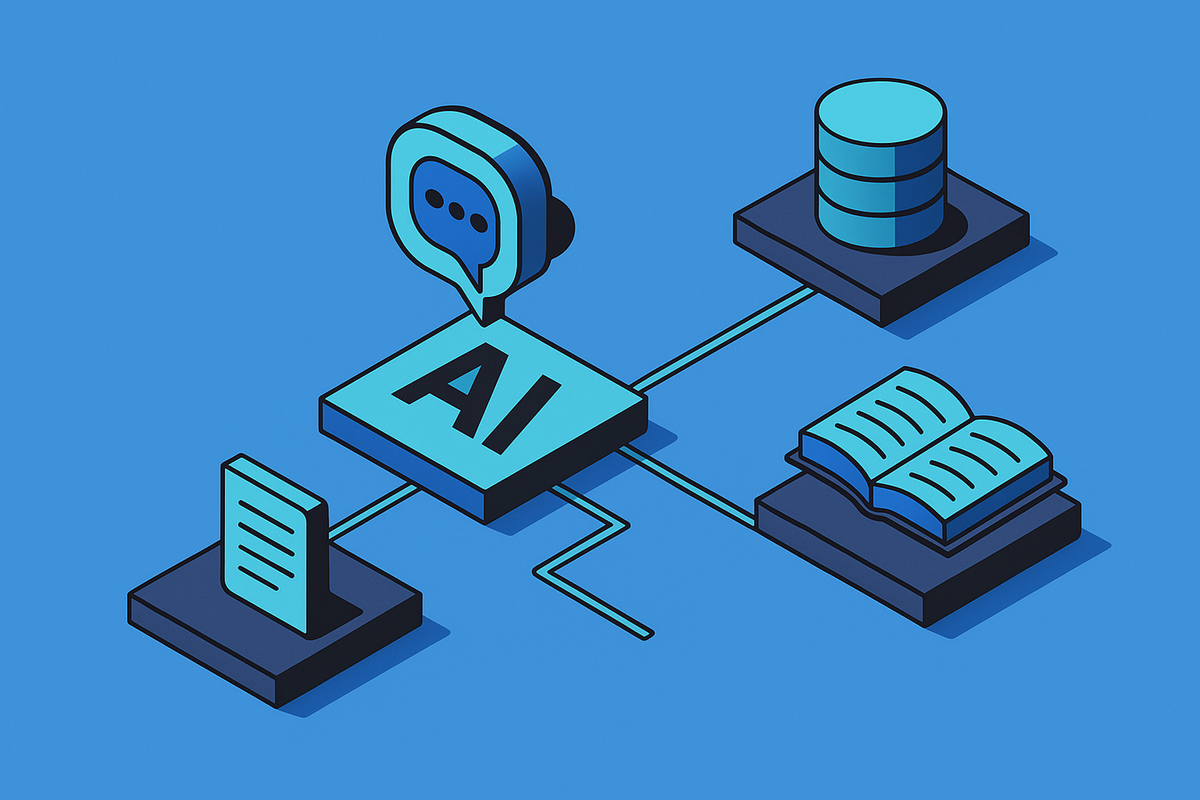
MCP, short for Model Context Protocol, is an open standard for connecting AI assistants to the systems where a company's real data actually lives. Think of it as the layer that lets an agent reach into a CRM, a support ticket history, a contract repository, a codebase, all through one consistent interface instead of five clunky, custom ones.
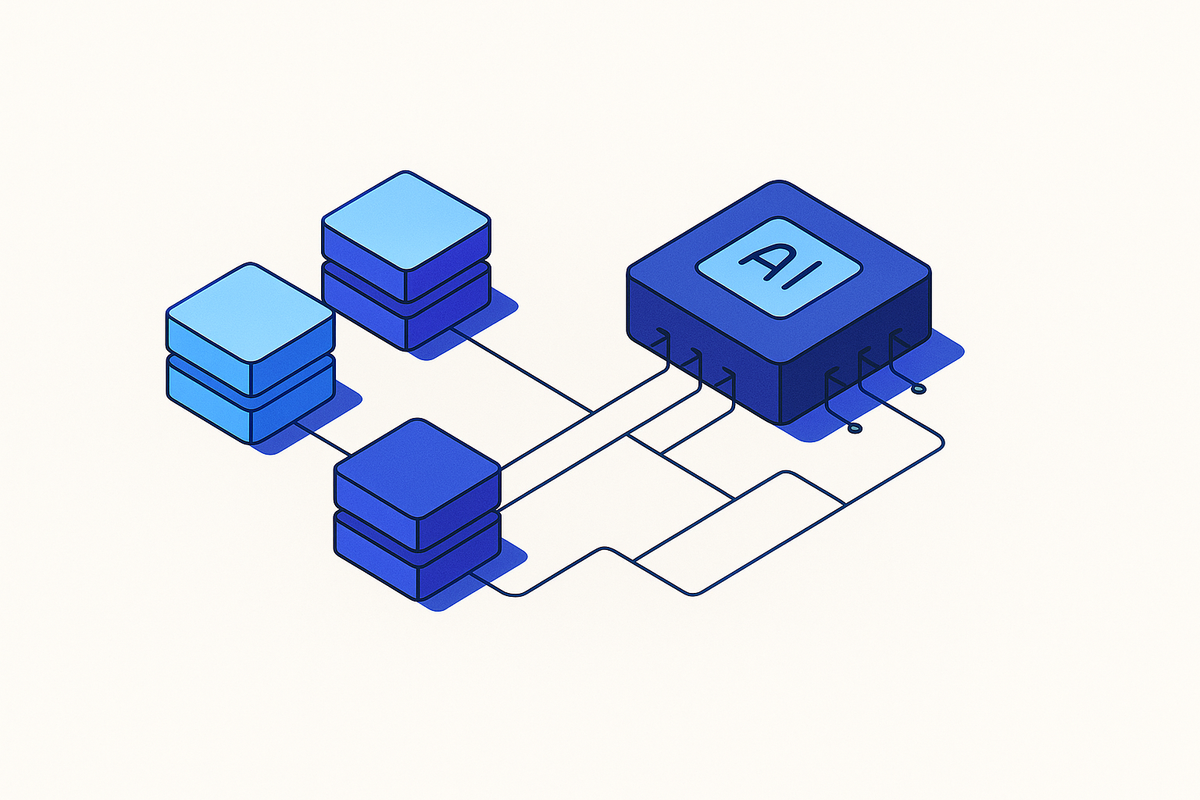
Before MCP, hooking an AI system up to your business tools meant a custom integration for every single pairing. That matrix of one-off connections grew faster than any team could keep maintained, and most companies just quietly fell behind on it. MCP swaps the tangle for one standard connection point on each side, which is a fairly boring way to describe something that changes a lot about what's actually feasible to build.
This matters a lot for knowledge capture specifically, because an expert's knowledge is never sitting in just one system. It's scattered across several, and capturing it well means wiring an agent into all of them at once without hand-building every single link. MCP makes that multi-system connection reproducible, auditable, and transferable. The same governed context layer moves from one AI tool to another without getting rebuilt from scratch each time.
Permissions flow through from the source systems themselves rather than getting redefined at the skill level. So when someone queries a skill, they see exactly what their role already lets them see in the underlying system. Nothing new to configure, nothing new to get wrong.
MCP launched in late 2024, and within roughly a year, every major AI platform had adopted it. That speed doesn't happen often, and procurement teams should read it as a sign this is durable infrastructure rather than a bet on one vendor's roadmap. Its donation to the Linux Foundation's Agentic AI Foundation removes single-vendor risk outright: MCP now sits under the same governance model as Kubernetes and Node.js.
What a governed MCP registry does for the organization that a shared drive cannot
Without a registry, MCP servers spread the same way shadow IT always has. A developer wires up a quick integration because the tooling makes it easy, and within a few months platform engineering has no real idea what's running or what data it's quietly touching.
This already happened, recently, at scale. Over the last couple of years, enterprises rolled out AI agents fast, saw real productivity gains, and built the governance framework afterward, if they built it at all.
A real registry keeps structured metadata on every MCP server in the company: what tools it exposes, where it's deployed, who's allowed near it, what authentication it needs, whether it's healthy right now. It keeps version control, so when a skill changes there's a record of what changed and who signed off. It assigns ownership: a named team or person accountable for keeping the skill accurate. And it enforces scoped access, so a RevOps skill stays visible to RevOps and doesn't accidentally leak to a contractor whose permissions look nothing like a full-time employee's.
The sharing payoff is what actually changes how a company runs day to day. Once a skill lives in the registry, any authorized team can find it and reuse it, instead of five teams independently rebuilding the same prompt or workflow from zero. One team builds it once; everyone else inherits the work. That's the point where the institutional knowledge problem stops being a technical fix and turns into an organizational one, and the registry is what makes expert-encoded skills discoverable across the whole company instead of trapped inside the one team that happened to build them first.
In this approach, a governed registry lets domain experts themselves, not central IT, own and publish their skills, with permissions and access scoping enforced automatically underneath. Every team gets its own scoped MCP surface that plugs into whatever AI tools they're already using, so nobody switches platforms just to get the benefit.
How this plays out by department when an expert's context is encoded before they leave
A senior account executive in Sales carries years of pattern recognition: which objection sequences predict a stalled deal, which mix of stakeholders in a room signals real buying intent, how to read a procurement cycle at a particular kind of enterprise buyer. Encode that as a governed skill wired into CRM history, call recordings, and closed-won and closed-lost data, and that judgment doesn't leave when the AE does. It's sitting there for the next hire on day one instead of month nine.
Support runs on the same kind of quiet expertise, just aimed at different problems. A long-tenured support engineer knows which documented fixes don't actually work in the field, which escalation paths genuinely move fast versus which ones just look official on paper, and which edge cases need a workaround that never made it into the knowledge base because nobody had the time to write it up. Connect that judgment through MCP to the ticket history and product docs, and new agents can query it directly instead of rediscovering it the hard way, one annoyed customer at a time.
Engineering might be the toughest one to picture, but it's arguably the highest stakes. The person who architected a core system five years ago carries reasoning that's invisible if you just read the code. Why this data model over the obvious alternative? What broke in production that pushed the team toward this particular caching strategy? None of that lives in the repo. An MCP-connected skill grounded in that engineer's design docs, code history, and documented reasoning gives the next team an actual starting point for safe changes, instead of forcing them to reverse-engineer a decision made half a decade ago.
What connects all three: the knowledge that mattered most was never sitting in one system to begin with. It was the synthesis across systems that the expert did quietly, in their head, every single day, without anyone noticing the work involved. An MCP-connected agent does that synthesis out loud now, on demand, for anyone who needs it.
What to capture while the expert is still there, and how to structure the handoff
Timing decides most of the outcome here. The highest-value capture happens before a departure gets announced, not during the scramble of a two-week notice, because under deadline pressure a knowledge-transfer session only captures what the expert happens to think to say out loud that day.
A tiered approach beats one frantic push at the end.
Tier one is connecting the systems. Map everything the expert's work touches and get those connections built into the MCP layer while they're still around to confirm you got it right. That's the data foundation everything else draws from.
Tier two is capturing judgment, not process. Sit down with the expert and get them to actually articulate their decision rules. When do they escalate instead of resolving it themselves? What signals do they watch for that a newer hire wouldn't even know to look for? Which exceptions have they learned to expect over the years, the ones that never made it into any doc?
Tier three is testing the skill against real questions before the person is actually gone. Run it against the exact queries the next employee will ask. Gaps show up fast this way, while there's still time to fix them and the source of truth is still in the building.
Ownership matters more than most teams assume going in. The domain expert should own the skill they're encoding, not IT, not some central knowledge management function, because they're the only one who can tell you whether the agent's answers actually match their real judgment or just sound plausible enough to pass.
A skill also needs a successor owner, the same way a project needs a successor lead. Without one, it decays exactly like an unmaintained wiki does, and the registry should build that handoff into the offboarding checklist as a matter of course, not an afterthought. The goal was never a perfect capture on day one. It's a live, queryable starting point the next person sharpens through actual use, instead of rebuilding from nothing the way everyone always has.
The governance conditions that make shared skills trustworthy across the organization
A skill your own team trusts won't get adopted company-wide until three questions have clear answers. Who approved this? What data does it touch? Can I see exactly what it returned and why?
Auditability sits underneath all three. Every action a skill takes should be traceable: who called it, what they asked, which data sources got touched, what came back out the other end. Without that trail, governance is a policy document sitting in a drive somewhere, not something that functions when someone actually needs to check it.
Permission inheritance beats permission redefinition every time. A company that redefines its access controls with each new AI rollout is multiplying its own compliance risk, since every redefinition is a fresh chance to misconfigure something. MCP's architecture sidesteps that entirely: permissions inherit straight from the source system, so a skill connected to customer data shows a user only what they already had access to in that system in the first place.
Version control functions as trust infrastructure here, not just record-keeping. When a skill updates, the registry keeps the prior version and logs exactly what changed, so teams adopting that skill can look back at its history and roll it back if a change quietly starts degrading accuracy.
The July 2026 update to the MCP specification formalized a minimum deprecation window, and that matters more than it sounds like it should. It gives enterprise engineering teams a guaranteed stability period to build against, so they're not left guessing whether the protocol shifts out from under a system they've already pushed into production.
This approach bakes governance in rather than bolting it on after something goes wrong. Every team gets a scoped MCP surface, inherited permissions, version-controlled skills, and full audit logs as part of the infrastructure itself, applied from day one instead of layered on once the damage is already done.
Why the organizations that solve this now will compound the advantage over those that wait
The math compounds quietly at first. Every encoded skill is infrastructure the next expert builds on rather than something they reconstruct from scratch, and the gap widens every quarter it goes uncorrected. A company that started capturing expert judgment two years ago isn't just ahead on paper; it's operating on a fundamentally different base of institutional memory than the company still running on tribal knowledge and hope.
Gartner projects that a large share of agentic AI projects will get canceled for lack of structured context to run on. That points to an organization that never built the layer connecting its AI systems to what its own experts actually know, far more than it points to weak models.
That gap doesn't close in one good quarter. It's structural. Companies that treat expert knowledge as infrastructure, something captured, governed, and shared on purpose, are building an advantage the companies still relying on wikis and exit interviews won't catch up to.