AI Agent Token Usage Tracking Across Deployments
Enterprises need agent-level token tracking, not just API-level cost monitoring.
Enterprises tracking AI agent spend at the API level are answering the wrong question. Knowing what a project cost last month says nothing about which agent spent it, on whose authority, or whether that agent was even supposed to touch the tools it touched. That gap between cost data and governance data is widening fast: Gartner puts agentic token consumption at 5 to 30 times higher than chatbot workloads per task, and the reason has nothing to do with model pricing. It has everything to do with how agents actually work.
The difference between LLM cost monitoring and AI agent cost tracking, and why conflating them leaves governance blind
LLM cost monitoring lives at the API layer. It counts tokens per request, cost per token, total spend per project or workspace. It answers "what did we spend?" That's a fine question for a finance team reconciling an invoice. It's a useless question for anyone trying to run a fleet of agents responsibly.
AI agent cost tracking asks something harder: what spent it, and why? That means tying every token back to a specific agent, a specific user, a specific workflow, a specific conversation. Skip that link and three things break almost immediately.
Cost optimization turns into guesswork, since there's no way to isolate which agent or workflow is actually the outlier burning through budget. Chargeback across teams can't be run fairly either, because nobody can prove which department's agents drove which spend. And runaway agent behavior stays invisible until it shows up as a surprise on the monthly bill, by which point the damage is already done.
Token anomaly detection is the piece most teams skip entirely, and it's the one that matters most. A sudden spike in tokens per session or per agent is usually the first sign something's wrong, well before any functional failure shows up on a dashboard. A loop, a retry storm, a context window that's ballooned past what the task needs: these show up in token telemetry first, not in error logs. That means token usage has to get captured as telemetry, per session and per agent and per task, not billed as a lump sum at the end of the cycle.
The scale of the blind spot is worth sitting with for a second. If, per synvestable.com, roughly 80% of Fortune 500 companies already run active AI agents in production, most of them are almost certainly still watching spend at the API layer only. The attribution layer, the piece that actually makes governance possible, is simply missing across the majority of enterprise deployments. That's not a minor gap. It's the whole ballgame.
How multi-agent architectures and MCP tool registries introduce new layers of attribution complexity
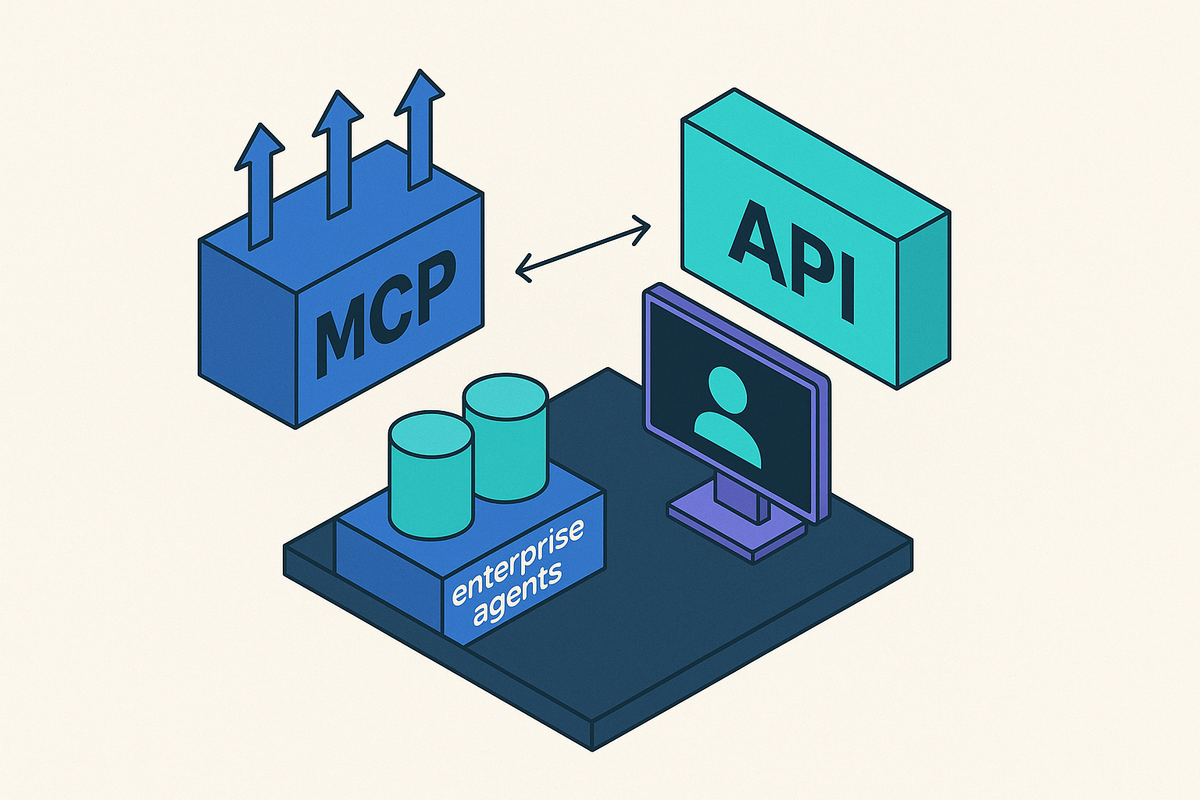
Add a second agent to the picture and attribution stops being simple. In a hierarchical setup, an orchestrator calls worker agents, worker agents call MCP tools, and the results flow back up into the orchestrator's context window, growing it with every step. Standard monitoring has no answer for the obvious question this raises: when a worker agent fires off 10 MCP tool calls and hands a large result set back to the orchestrator, who owns those tokens? The worker? The orchestrator? The user who kicked off the task? The team whose MCP server got called?
MCP architecture actually offers a clean answer, if anyone bothers to wire it up. Every MCP server call is a discrete, logged event, with a known tool, a known caller, and a known result size. That makes the MCP call itself the natural place to pin down tool-driven token overhead, instead of trying to reconstruct it after the fact from aggregate API logs.
Without a central registry, none of that discreteness gets captured, and this is where most organizations quietly lose the thread. Teams spin up their own MCP servers because it's faster than waiting for a shared one. Integrations go undocumented. The platform team loses track of which agents call which tools, with what permissions, at what cost. This is shadow AI, and it isn't a hypothetical risk on a slide somewhere. It's the default outcome of MCP adoption without governance built in from day one.
GitGuardian's MCP governance framework lays out the fix plainly: a registry should track which agents connect to which MCP servers, what permissions ride on each connection, and who owns it. That registry is also the only mechanism that makes cross-agent token attribution workable at any real scale, and there isn't a good substitute for it.
There's a cost mechanic underneath all this that's easy to miss. Tool definitions, meaning the name, description, parameters, response schema, and usage examples an agent needs to call a tool correctly, run somewhere between 200 and 500 tokens per tool. Stack up 50 MCP tools and an agent can burn 10,000 to 25,000 tokens before it does a single second of actual reasoning. In practice, that metadata can eat 40 to 50% of a context window, structurally, before any real work gets done. A registry that pre-negotiates which tools an agent actually needs, rather than dumping the full catalog into context every time, cuts that discovery cost out completely. CLI-first or skills-based approaches do the same job for production workloads.
What a governed tracking architecture actually looks like across agent deployments
Three layers have to work together here, and none of them can substitute for the other two.
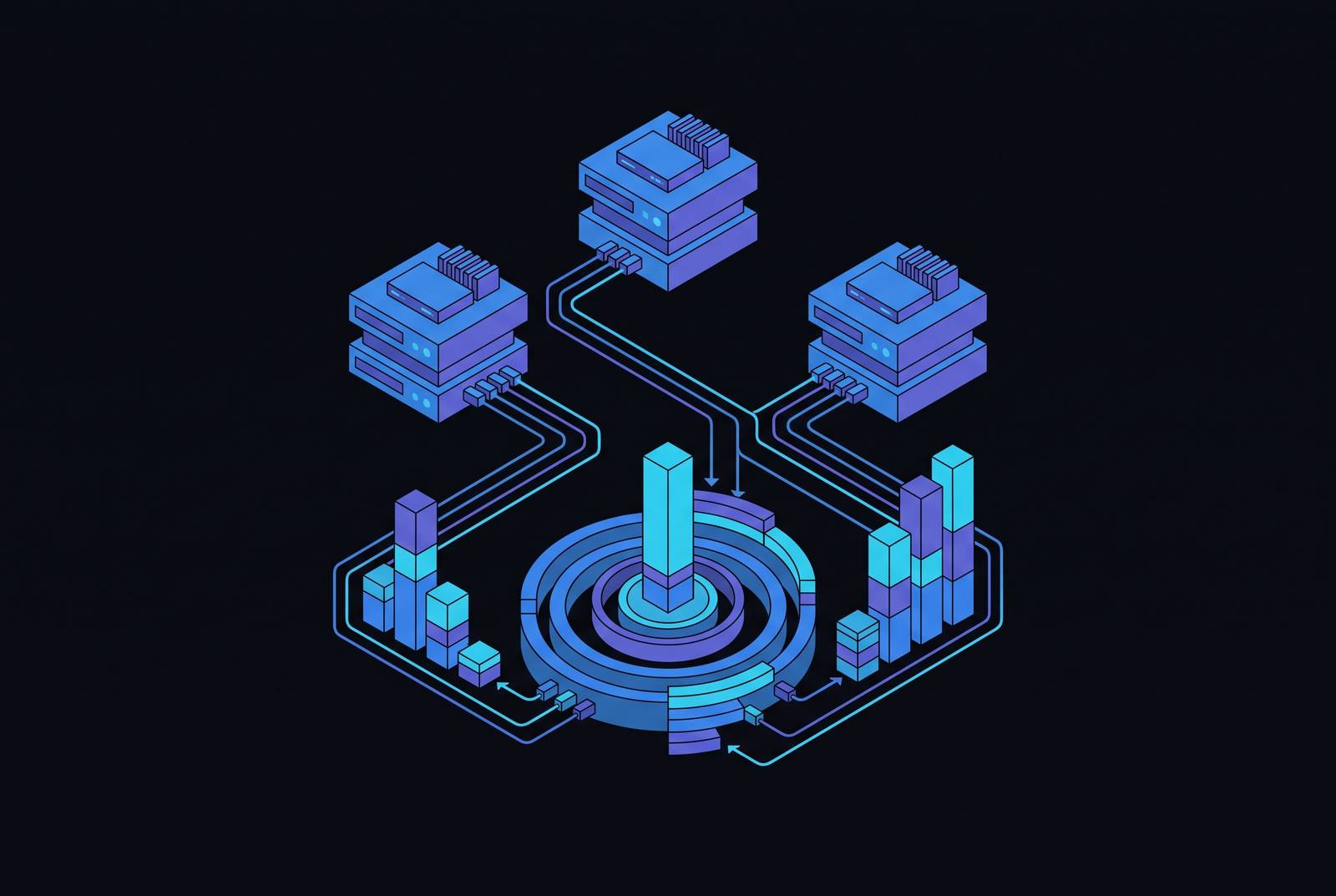
The instrumentation layer captures tokens consumed per session, per agent, per task, and per MCP tool call, not just per API request. The attribution layer ties each of those token events to an agent identity, a user identity, a workflow, and an owning team, using the same identity system that already governs data access. The registry layer is the source of truth for which agent is authorized to call which tool. A token event with no matching registry entry isn't just a cost anomaly. It's the signal of an unsanctioned connection, and it should get treated that way.
None of this works without authentication underneath it. The MCP spec additions from November 2025, SEP-1046 for OAuth client credentials in machine-to-machine authorization and SEP-990 for enterprise IdP policy controls on MCP OAuth flows, enable a single sign-on model where a user's enterprise identity propagates automatically to every MCP server they're authorized to touch. That's the foundation. Skip it, and attributing token spend to a specific person or team isn't just inconvenient. It's technically impossible.
The MCP Gateway pattern is where this turns operational. A gateway that handles authentication, routing, security policy, and observability for every agent-to-tool interaction becomes the one enforcement point where token telemetry, access control, and audit logging converge. Every agent action running through it should leave a record: who approved what, and when. Token events with no provenance attached are cost data. They are not governance data, and treating them as though they were is how enterprises end up with spend they can explain but can't defend.
AWS's MCP Server, which went generally available on May 6, 2026, is a useful reference point here. It describes its governance architecture in terms of IAM-based guardrails, Amazon CloudWatch metrics, and AWS CloudTrail logging, which is roughly the shape any infrastructure-layer instrumentation needs to take. Built this way, the architecture catches things API-layer monitoring simply can't see: agents overcalling tools through runaway retries, workflows accumulating context they don't need across long multi-step chains, and teams duplicating MCP servers while paying twice for the same context.
Model routing and context discipline as the operational levers that tracking data unlocks
Once attribution exists, it opens up two real cost levers. The first is model routing: sending simple tasks to budget-tier models and saving frontier models for the tasks that actually need them. Production data cited by iternal.ai suggests roughly 85% of enterprise queries can be handled by budget-tier models without any real quality loss. A rough split of 85% budget, 10% balanced, 5% frontier works out to about 92% in savings compared to running everything on frontier models by default, which is still the lazy default at most organizations.
That routing decision only works, though, if per-task attribution data exists to inform it. Without knowing which task types consume which token volumes across which agents, a routing rule is just a guess dressed up as policy. In a hierarchical multi-agent setup, running budget models for worker agents and reserving the frontier model for the lead orchestrator can hit roughly 97.7% of full-frontier accuracy at about 61% of the cost. That's a concrete target tracking data should be validating in production, not a number assumed in a slide deck and never checked again.
Context discipline is the second lever, and it's less about model choice than plain hygiene. Trim conversation history at defined thresholds instead of dragging the full accumulated context into every step. Use skills-based or CLI-first tool approaches in production so the agent isn't paying that 40 to 50% tool-metadata tax on every single call. Cache repeated tool results instead of re-fetching identical data at every step of a chain.
Routing carries a governance dimension too, and it's the part teams overlook first. Sending a task to a model that lacks the organization's security controls or audit trail breaks the governance chain, even if it saves money on paper. The routing layer has to respect the same permission inheritance that governs data access everywhere else, full stop. The same goes for model-agnosticism as a design principle: business context, permissions, and guardrails need to travel with the organization, not get welded to one specific LLM. Build a tracking architecture around a single model, and it becomes a migration headache the day that model gets swapped out.
How token tracking ties into the broader question of whether agents are running within sanctioned boundaries
Token consumption is a behavioral signal, not just a financial one. An agent burning far more tokens than its baseline for a given task type is doing something worth investigating: looping, retrying past the point of usefulness, pulling in context it wasn't meant to have, or calling tools outside its intended scope.
Properly attributed, token data surfaces three distinct governance signals. Boundary drift shows up when an agent calls MCP servers it isn't registered to use, visible the moment token events stop matching the registry's authorized connection map. Effort duplication shows up when multiple teams run near-identical workflows, visible in attribution data as parallel spend on the same tool calls across different team namespaces. Privilege creep shows up when an agent accumulates context from sources the initiating user shouldn't have access to, detectable when token events reference resources outside that user's permission scope.
None of that holds up, though, unless permission inheritance gets enforced consistently at the MCP server level, so whatever an agent returns only draws on what the requesting user already had rights to see. Skip that enforcement and the attribution data itself can't be trusted, because it might be reflecting unauthorized context leaking through the pipeline.
GitGuardian's governance framework calls for an MCP connection request workflow where teams document the agent, the target tool, and the required permissions before anything goes live, with an approval process rigorous enough to match how organizations govern sensitive access grants. Under that model, token data that doesn't map to an approved connection isn't a line item to question quietly. It's an anomaly that needs a name and an owner.
The registry is the anchor holding all of this together. JFrog's enterprise MCP Registry and Kiro's MCP server registry, which lets administrators allowlist approved MCP servers and enforce model governance deterministically across IDE and CLI, both build registry governance and token attribution together from the start rather than bolting it on after launch. That distinction matters, because roughly half of organizations are actively experimenting with MCP servers right now, yet only 11% have reached production. The gap between those two numbers is, in no small part, a confidence gap: teams don't trust their own visibility enough to ship. Token tracking that surfaces real behavioral signals is one of the few things that closes it.
Building the operational practice: what teams need to instrument, own, and review
None of this matters if it doesn't turn into a repeatable practice. From day one, teams need to instrument tokens per session, per agent, per task type, and per MCP tool call, not just total spend at the API layer. Every token event needs an agent identity and an owning team attached to it. Every event needs a registry match flag: a clear answer to whether the MCP server the agent called actually appears in the approved registry. Context window utilization needs its own metric too. What share of the available window is tool metadata, versus the actual task at hand?
Ownership should sit close to the work. Domain experts, not central IT, are the ones who should own the skills and context relevant to their own team's agents. But the token and audit data from all of it needs to flow into one shared observability layer that platform or governance teams can review across every deployment, not five different dashboards that never talk to each other.
Before a new agent-to-MCP-server connection goes to production, the requesting team should specify the agent, the target tool, the required permissions, and the credential lifetime, with an approval that mirrors IAM role provisioning. Treat it as a ritual, not paperwork to rubber-stamp on the way to launch.
Review cadence matters just as much as instrumentation. Anomaly alerts should fire in real time for spike detection. Weekly attribution reports support chargeback and budget conversations. Monthly behavioral reviews catch drift before it turns into a compliance problem nobody saw coming. Skip any one of these three and the data just piles up unread, which defeats the entire point of collecting it.
There's a concrete payoff worth naming directly here: when attribution data shows two teams burning similar token volumes on identical tool calls, that's the cue to consolidate into one shared skill in the registry, governed centrally, reused across departments instead of rebuilt from scratch by every team that hits the same wall.
Agents don't stay confined to one surface, either. They run across Claude, ChatGPT, Cursor, Slack, and whatever comes next, and all of that telemetry has to feed into the same attribution layer. Credal, for instance, is built specifically to unify that telemetry across surfaces through a governed agent registry with audit logging attached. A fragmented setup where each surface reports its own numbers in isolation defeats the entire purpose of tracking in the first place. The MCP layer sits below all of those client surfaces, which makes it the right collection point precisely because it doesn't care which surface the request came from.
Last piece, and it's the one teams skip when they're in a hurry: version everything. Every change to an agent's tool configuration, its model routing rule, or its context policy belongs in the registry with a version attached. When token behavior shifts, a team should be able to trace it back to the exact configuration change that caused it, rather than staring at a graph and calling it an unexplained anomaly.