Tracking AI Agents Deployed Across Enterprise Teams
Enterprises must inventory AI agents before governance frameworks can work.
By the end of 2026, close to 40% of enterprise applications will have a task-specific AI agent built into them. That's up from under 5% in 2025. The pace itself is the real story, because most enterprises still can't see, govern, or audit what's already running inside their own walls. Agents are querying databases, sending emails, executing code, and touching cloud configurations right now, often carrying the same permissions as whoever set them up and forgot about them. Before any of that gets governed, someone has to know it exists in the first place. Tracking isn't a nice-to-have layered on top of governance later. It's the precondition for governance to mean anything at all.
What "tracking" actually means across an enterprise agent deployment
Tracking isn't one dashboard, and treating it like one is where most programs fail before they start. It's four separate questions, and skipping any one of them means an organization isn't tracking anything, just pretending to.
First: what's actually deployed? Not just the agents IT signed off on. The ones auto-created by SaaS platforms, the ones someone wired up through an MCP server extension over a weekend, the ones nobody remembers approving and no one wants to admit exist.
Second: who owns each agent? A team, a named person, an escalation path for when it does something it shouldn't. Third: what data can it touch, and are those permissions scoped to the actual person using it, or inherited wholesale from some broader credential sitting in the background? Fourth: how does it actually behave? What has it done, has it escalated its own privileges, do its outputs match what it was built to do?
Most enterprises already have agents running that IT doesn't know about, which means discovery can't be an audit step scheduled for next quarter. It's the first job, full stop, before anything else on this list matters. The pattern should feel familiar: it's shadow IT, the same risk that came with ungoverned SaaS adoption a decade ago. Except agents don't just store data quietly in some unsanctioned folder. They act. They send the email, they modify the config, they run the query. Same root cause, much higher stakes.
According to a 2026 KPMG survey, the biggest bottleneck organizations report as they move from pilot projects into production is the sheer complexity of coordinating multiple agents at once. And research suggests a large share of organizations haven't even started scaling AI enterprise-wide. The tracking problem is arriving before most companies have built the muscle to deal with it, and that gap is the whole reason this piece exists.
How MCP changes the surface area that needs to be tracked
Anthropic launched the Model Context Protocol in November 2024 as an open standard: a universal, two-way interface built on JSON-RPC 2.0 that lets any compliant AI client talk to any compliant server. Before MCP, every agent-to-tool connection was a custom job. The old math worked out to N agents times M tools, meaning a GitHub integration built for Claude did nothing for Cursor, and a Slack integration built for ChatGPT didn't carry over to Copilot.
MCP turns that multiplication into addition: N plus M. The integration math gets dramatically simpler, and that part is a genuine win worth taking seriously. But it comes with a side effect too many teams are glossing over: agents can now reach far more tools, far faster, with almost no friction slowing them down.
By early 2026, the ecosystem had over 10,000 active public MCP servers and roughly 97 million monthly SDK downloads across Python and TypeScript combined. Put plainly, the number of possible agent-to-tool connections inside any given enterprise has exploded. About 28% of Fortune 500 companies already have MCP servers running, in most cases faster than governance frameworks have been built to watch them.
MCP servers expose tools, resources, and prompts as distinct capability categories an agent can access. Each of those three is a category of action or data access, and each one needs a line in a complete agent inventory, not a shrug because "it's just a prompt template." In December 2025, MCP was donated to the Linux Foundation's Agentic AI Foundation, backed by AWS, Anthropic, Block, Google, Microsoft, OpenAI, Bloomberg, and Cloudflare. It's open infrastructure now, not one vendor's roadmap, which means adoption is moving faster and far more unevenly than any single company could have pushed it alone.
The permissions problem: why agents don't automatically inherit the right access boundaries
This is where things get genuinely dangerous, and it's worth saying plainly: the default architecture is wrong. Agents often run under the credentials of whoever set them up, not the person actually invoking them in the moment. That's a privilege escalation risk baked into the foundation, and it compounds with every agent added on top of it.
The fix isn't complicated in concept. Agents should follow the same access model as human employees: defined roles, defined access levels, approval workflows, the same role-based controls a company already runs for its people. MCP supports this in theory. It has OAuth flows, API key management, hooks into enterprise identity providers. None of it happens automatically, though. It only works if someone deliberately scopes permissions at the MCP server level, which is a step teams routinely skip because it slows down the demo.
Federated access patterns let an agent reach governed data without copying or moving it, and permission inheritance is supposed to make sure an agent respects the same limits its human user has. Again: none of this is a default setting. It's an architectural decision someone has to make on purpose, every time. Enterprise auth extensions, including OAuth client credentials for machine-to-machine authorization and enterprise IdP policy controls, let a user sign in once and get access to every server they're authorized for. That convenience only holds up if the list of authorized servers is itself governed and kept current, which is exactly the part organizations tend to let slide.
The security stakes aren't abstract, either. Security research cited in Deepak Gupta's enterprise guide found that 43% of MCP servers carry command injection flaws, and once an environment has 10 active plugins, the probability of a successful exploit climbs above 92%. An unaudited server, connected to an agent nobody's tracking, doesn't just add risk. It multiplies the two failures together. Tracking has to surface tool poisoning attacks (malicious manipulation of an agent's context), unauthorized access from misconfigured permissions, and compliance gaps against applicable regulatory frameworks. Anything less is a false sense of coverage.
What a governed agent registry actually requires
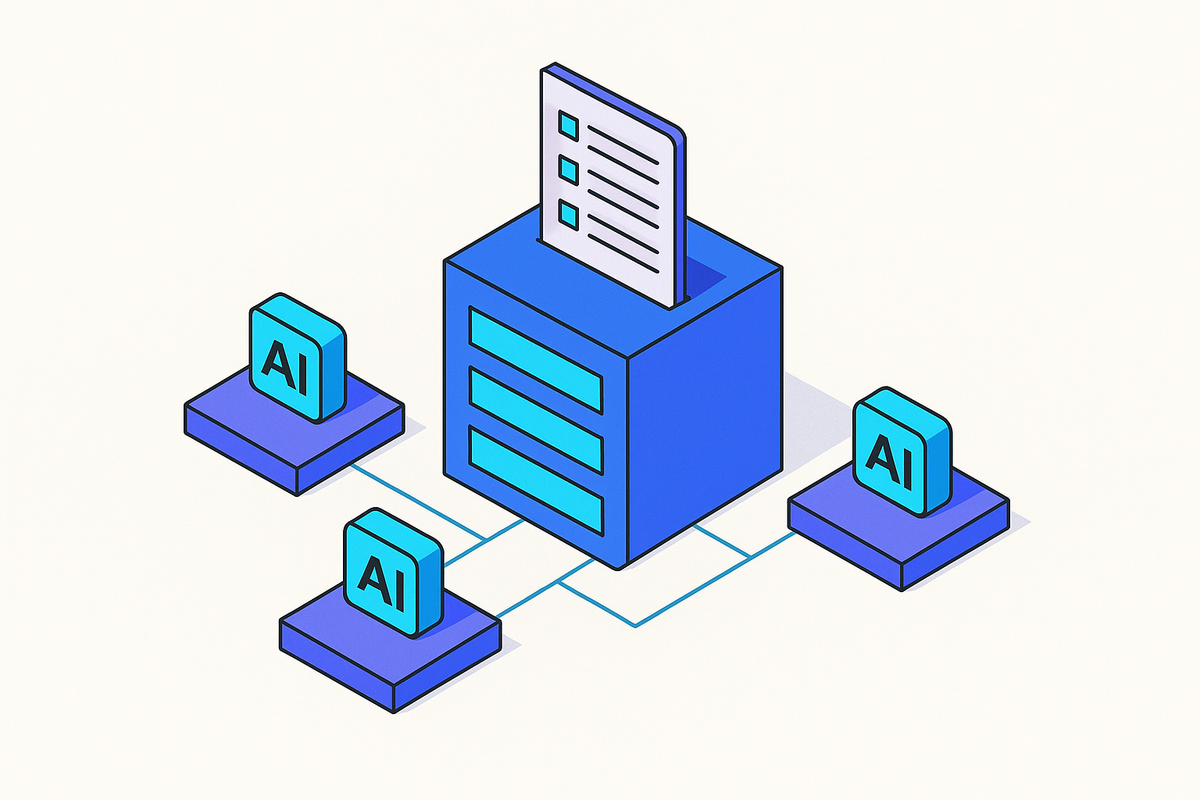
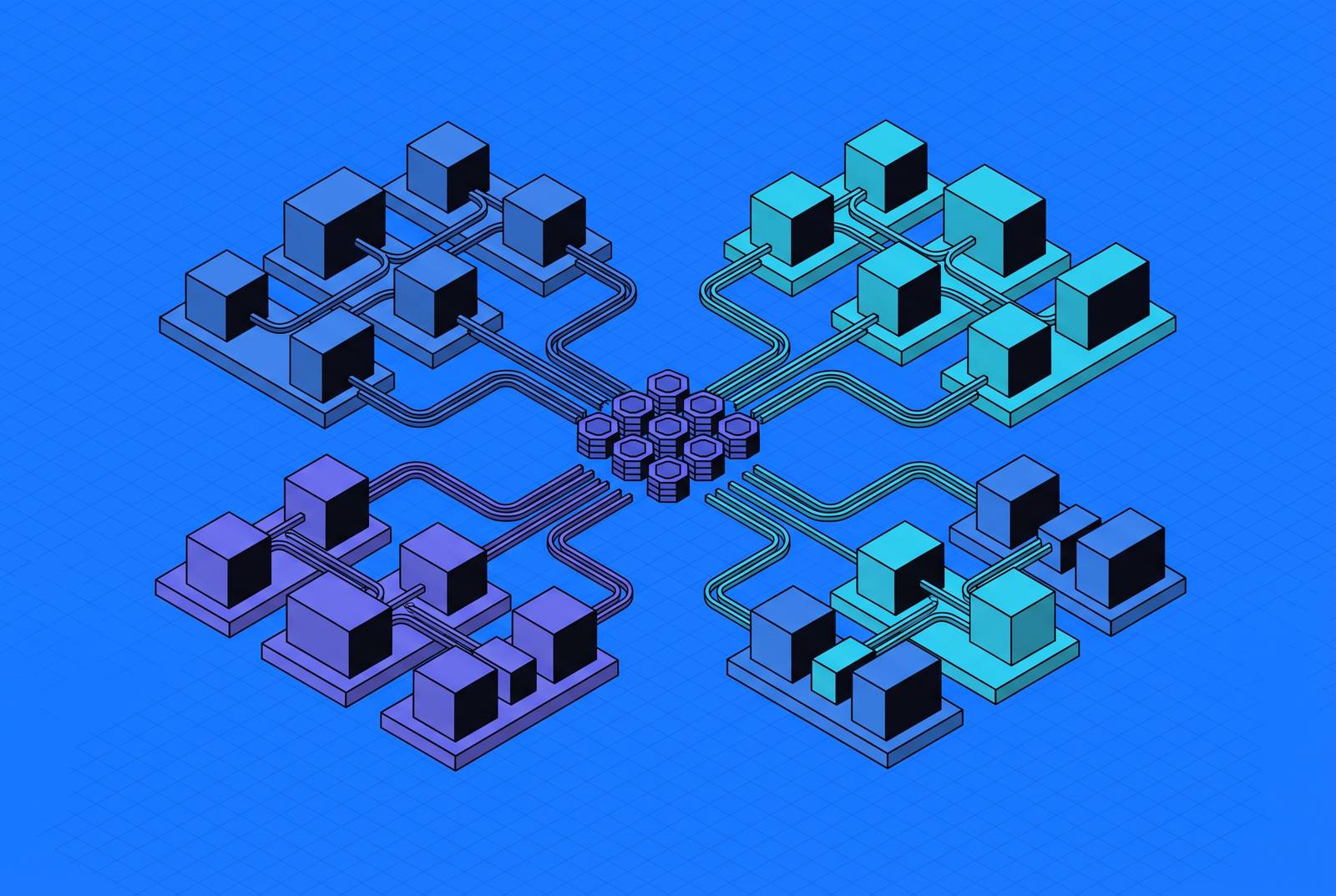
An MCP registry is a central catalog: every MCP server, what it can do, and how to connect to it. It's the discovery layer that makes tracking possible once an organization is past a handful of agents, and past a handful is where most enterprises already sit.
Skip the registry and every connection gets built by hand. Two developers who both need Slack, Jira, and a database each write three separate configurations, unaware the other one exists. Multiply that across teams, and the result looks exactly like the point-to-point integration sprawl companies dealt with before API gateways existed. That history should have taught this lesson already.
Registry and gateway are not the same thing, and conflating them is the most common mistake teams make here. A registry is a catalog: it tells agents what tools exist and where to find them. A gateway enforces policy at runtime: it controls how an agent actually gets to use those tools. Most enterprises need both running together, and neither one alone is sufficient. A registry without a gateway has no enforcement behind it. A gateway without a registry has no inventory to enforce policy against.
The open-source MCP Gateway & Registry project, released under Apache 2.0 in May 2025 by the Agentic Community and backed by AWS, covers deployment, authentication, access control, and security scanning. The pace of iteration on that project reflects how unsettled this space still is.
Every entry in a real registry needs the server's identity and owner, what it exposes (tools, resources, prompts), its authentication method, a risk tier, which environment it lives in (dev, staging, prod), which team owns it, and a version history. Enterprise registries also need to run privately: self-hosted, access-controlled, environment-separated, invisible from the open internet.
There's a hard technical ceiling here too, and it's the part most teams don't budget for. Once an agent has several MCP servers active, tool definitions begin consuming a meaningful share of its context window, and past a certain threshold both model performance and cost start degrading noticeably. That's why dynamic tool loading, where a gateway only exposes the tools relevant to the current conversation, isn't a nice feature. It's a requirement the moment deployment reaches any real scale. For a sense of how fast an ungoverned catalog can grow: the public MCP Registry run by the MCP project itself hit close to two thousand entries by November 2025, a 407% jump from its first batch. That's the growth curve enterprises are racing to get ahead of internally, and most aren't winning that race yet.
The two-layer governance model that separates domain autonomy from central standards
Snowflake's governance framework offers a useful comparison from an earlier shift. When data analytics decentralized about a decade ago, every team started building its own dashboards and extracts. Genuine innovation followed. So did fragmentation: divergent metric definitions, inconsistent access rules, and governance that arrived years later as an expensive retrofit nobody wanted to pay for. Agent governance is headed toward the exact same retrofit unless it's built in from the start.
The fix is a two-layer model, and it splits responsibility cleanly between the two things enterprises keep trying to solve with one team.
Layer one is domain autonomy. Business units design their own agent workflows, define their own business logic, and measure their own outcomes. Governance shouldn't force a team to file a ticket and wait three weeks just to get permission to build something useful.
Layer two is centralized governance authority. A dedicated function owns the canonical data models, classification standards, tool registration and certification, risk-tier definitions, and the cross-domain policy rules. This group isn't approving every single agent one by one, and it shouldn't try to be. It's curating the standards every agent has to inherit, which is a very different job than gatekeeping.
In practice, that means central IT keeps an approved list of MCP servers and skills for the whole organization, while individual business lines publish their own agents to their own teams, and often to the broader company too. The registry is what makes both of those things possible at once, without one undermining the other. Build a skill once, publish it to the registry, and any team can find and reuse it instead of five teams separately rebuilding the same prompt from scratch. New budget belongs there: new capability, not duplicated effort disguised as five different projects. The cost of skipping this step is well-documented: without something like an internal agent marketplace, organizations end up with sprawl and inconsistent security policies scattered across the business. The two-layer model is the direct answer to that exact risk, not a theoretical nice-to-have.
What auditability requires beyond knowing an agent exists
Knowing an agent is registered tells someone almost nothing about what it's actually done. That distinction matters more than most registry projects admit. Auditability means a continuous record of action, not a one-time entry in a catalog that gets updated once and forgotten.
Real observability covers performance metrics, error rates, policy violations, which data sources got queried, what actions got taken, and who invoked the agent and when. Every action an agent takes should trace back to an approval chain, and if that chain isn't visible in a log somewhere, governance is a policy document sitting in a shared drive, not something actually operating.
Version control inside the registry matters just as much. When an agent's underlying skill or prompt changes, the registry needs to record what changed, who changed it, and when it happened. That's what lets a compliance team reconstruct exactly which version of an agent was running during a specific incident or reporting period, months after the fact, instead of guessing.
None of these are read-only events. Querying a database, sending an email, executing code, modifying a cloud config: these are all actions with consequences, and the audit trail has to capture the full range of them, not just who looked at what. Managed MCP platforms that centralize provisioning, registry management, and team-based access are what make it feasible to govern hundreds of servers and thousands of agents at once. Without that kind of central tooling, audit coverage erodes quietly as deployment scales, and nobody notices until something breaks in a way that gets attention.
The Shakudo whitepaper puts the AI project failure rate somewhere between 70% and 95%, and attributes a good chunk of that to what it calls the integration bottleneck. A governed audit layer is what closes the distance between a demo that impresses a room and a production system an organization can actually stand behind when something goes wrong.
Putting it together: the tracking practices that scale as agent deployment grows
Start with discovery, every time, no exceptions. A full inventory of what's actually running, including the agents nobody approved, the ones a SaaS platform spun up on its own, the ones connected through some MCP extension a developer added without asking anyone.
Then registration becomes the gate, and it has to be a real gate, not a formality. No agent goes to production without an entry in the registry: owner, data sources, permission scope, risk tier, environment, version. Permission inheritance has to be an explicit design choice, agents inheriting access from the actual user invoking them rather than some shared credential sitting unnoticed in the background. Deploy an MCP gateway with dynamic tool loading so agents only see the tools relevant to the task in front of them, not every registered server all at once.
Registration is a snapshot in time, and treating it as the finish line is the mistake. What matters more is what happens after: continuous monitoring of error rates, policy violations, and action logs feeding back into that same registry record. Every change to a skill or workflow needs a version and an owner attached, never a silent overwrite nobody can trace back later.
There's a real payoff waiting on the other side of all this work, and it's not just risk reduction. A governed registry means a working agent skill gets shared across teams instead of rebuilt five separate times by five separate groups who never talked to each other. Forrester found a 30% reduction in development overhead tied to structured MCP adoption, and that number exists because reuse depends on discoverability, and discoverability depends entirely on having a registry worth trusting. Tracking isn't overhead bolted onto the process afterward. It's the infrastructure that makes everything else, security, compliance, reuse, actually possible.