enterprise platforms for governed multi-context prompt management
Connecting enterprise AI across surfaces requires governance infrastructure, not scattered prompts.
Prompt engineering now eats up 30 to 40% of the time teams spend building AI applications. That's a second full-time job stacked on top of the first, and it needs real infrastructure, not whatever a team hacks together before lunch.
In most companies, prompts end up scattered and unmanaged — spread across personal files, shared drives, or hardcoded straight into application code. There's no version history, no owner listed anywhere, and no audit trail if something breaks or a regulator comes asking questions.
That setup barely survives contact with a second team. Once a company scales past one group building with AI, the same prompt gets reinvented five separate times, each version carrying its own undocumented assumptions about tone, data access, and edge cases. Call it what it is: fragmentation. It shows up as inconsistent outputs, duplicated spend on tools solving the same problem twice, and zero ability to point to which version is actually the right one.
Prompt management tools existed before this got bad. The real question is always the same: were they built for governance at scale, or just to make one person's Tuesday easier? That's the gap between a prompt library and prompt infrastructure a whole company can run on.
What "multi-context" actually means in an enterprise AI deployment
Take something simple: drafting a deal summary before a sales call. That one task might need to run inside Claude Desktop, ChatGPT, Cursor, Slack, and some internal tool built three years ago that nobody wants to touch. Each surface has its own quirks and its own way of talking to the outside world.
Multi-context isn't about supporting multiple models. It's about the same business context, the same permissions, the same guardrails following the work wherever it happens. That's a much harder problem than picking a model and calling it a day.
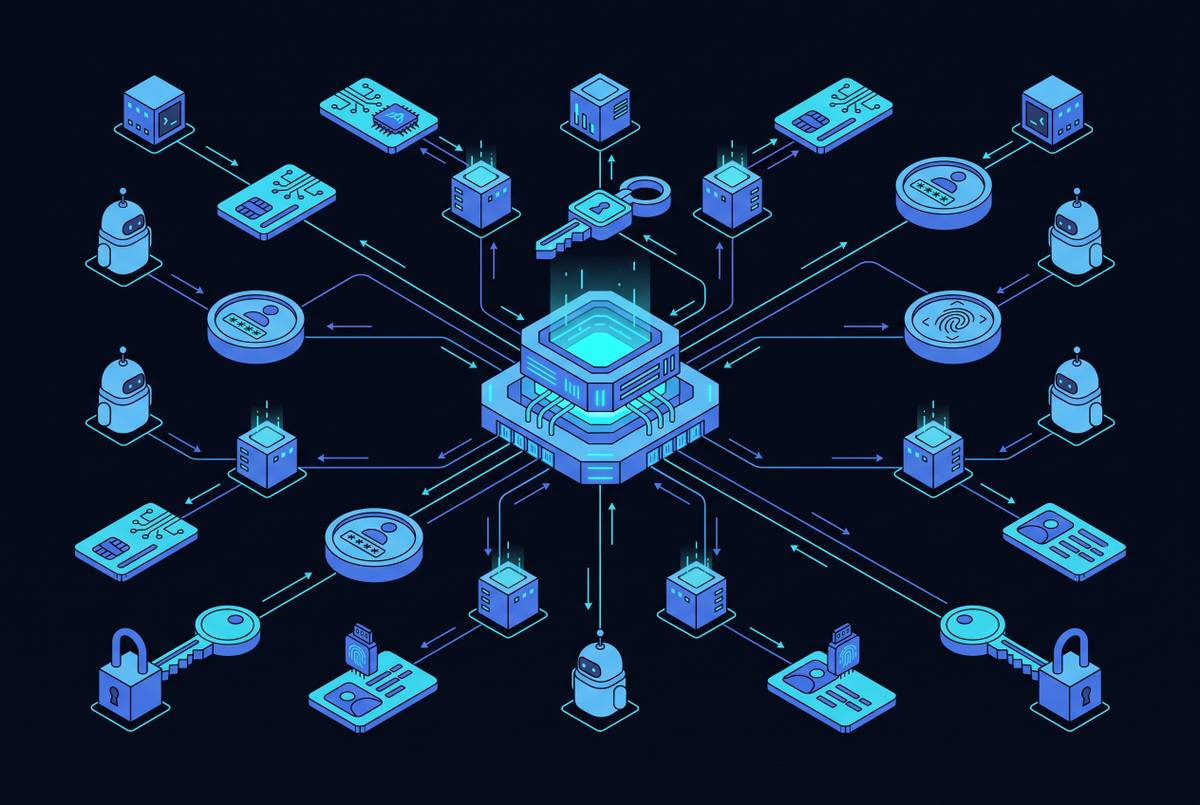
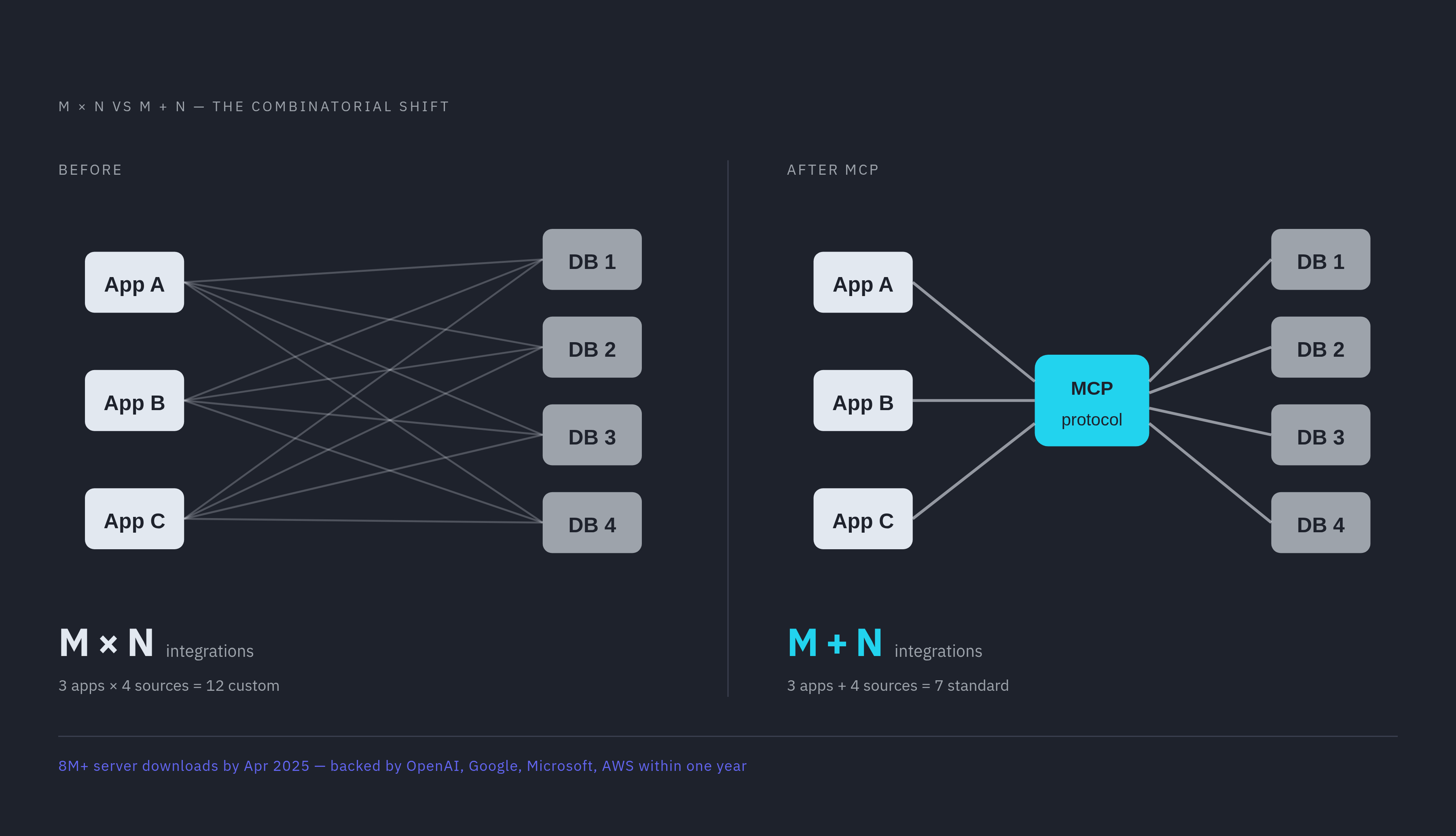
Model Context Protocol, or MCP, is the infrastructure layer that makes this possible: a universal, stateful, two-way interface built on JSON-RPC 2.0, so any client that speaks MCP can talk to any MCP-compatible server. Before this, connecting M applications to N data sources meant something close to M times N custom integrations, and that number gets ugly fast. MCP turns the math into M plus N: each side builds one standard interface instead of a pile of one-off wires. It has been described as a deceptively simple idea with outsized implications, and that framing is exactly right. Without a shared protocol, integration complexity grows on its own as agents multiply, and nobody chose that outcome on purpose; it just happens.
The adoption curve backs this up. MCP server downloads grew to over 8 million by April 2025. Within a year of Anthropic launching the protocol, OpenAI, Google, Microsoft, and AWS were all backing it, and it now sits under the Linux Foundation.
For prompt governance, this changes what "a prompt" even is. It's no longer a string of text sitting inside one app, but a protocol-layer artifact, and it needs versioning, scoping, and permissioning the same way any other piece of company infrastructure does.
The governance gap that opens as agents proliferate across teams
Here's the mismatch: 80% of Fortune 500 companies now run active AI agents in production, but only 28% have set up MCP servers. The agents got out ahead of the governance layer, and by a wide margin.
A survey of 360 IT application leaders conducted between May and June 2025 found that only a small minority strongly agreed they had the right governance structures in place for AI agents, while a large majority viewed agents as a significant risk to their organization. Sit with those two numbers for a second, because they tell you almost everything about where this stands today.
Scale makes the gap worse, not better. The average organization now manages 37 deployed AI agents, and that count climbs every quarter as teams spin up new automations without anyone at the center reviewing them. Without a control plane, the pattern repeats every time: separate credentials buried in separate config files, no shared list of what actually exists, no audit trail, no way for anyone to discover what's already running before they build a duplicate of it.
Permissions fragment right along with it. Each team ends up redefining access rules from scratch, because there's no mechanism for inheriting them from the source systems that already know who's allowed to see what.
And this isn't just an internal mess anymore. It's a compliance exposure. More than 75 countries had adopted or were drafting AI legislation as of mid-2025, making a structured governance approach increasingly unavoidable. The EU AI Act requires documented, auditable change trails for high-risk systems, full stop. IBM's 2025 Cost of a Data Breach Report found that the vast majority of organizations hit by AI-related breaches were missing proper AI access controls, so that gap has a price tag on it now, not just a risk rating.
A policy memo circulated over email won't fix any of this. It takes infrastructure, built the way software infrastructure always gets built: with primitives.
The four primitives that separate a governed prompt registry from a shared folder
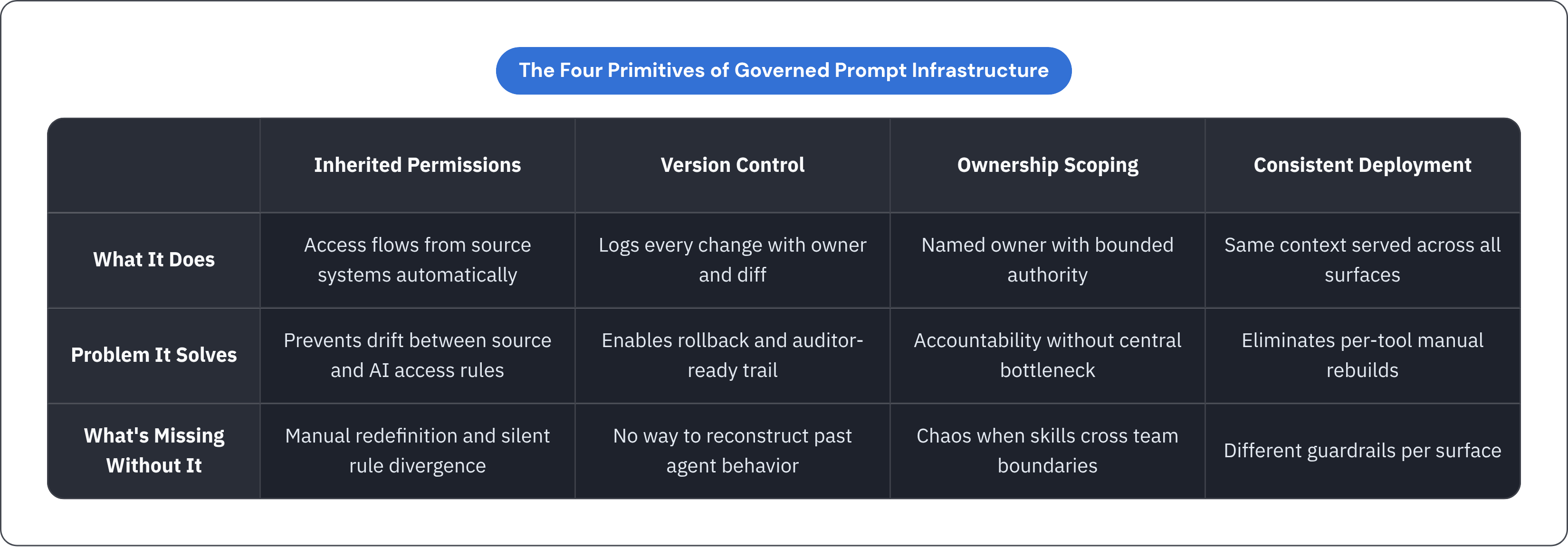
A shared drive gives you storage. A governed registry gives you four things a shared drive structurally cannot.
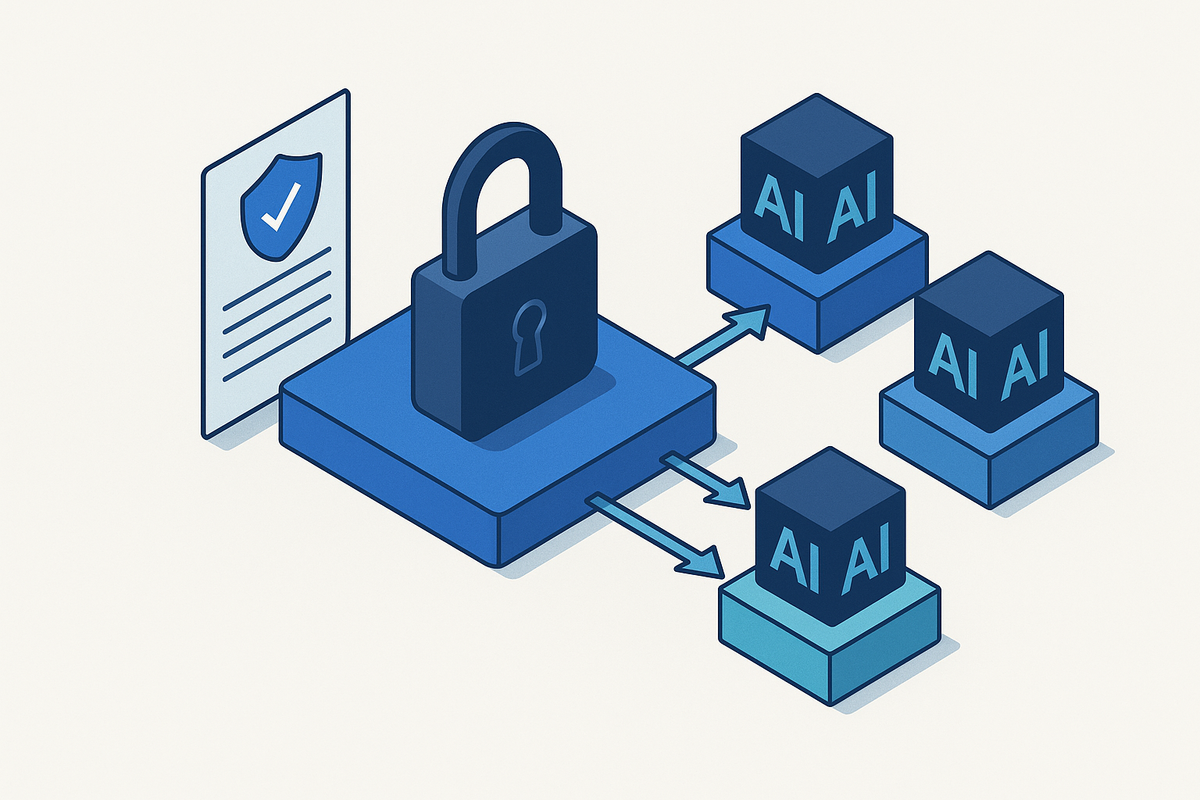
Inherited permissions. Access flows automatically from the source system; nobody redefines it by hand every time a new AI tool touches a prompt or a data source. When someone asks an agent a question, the answer should only pull from what that person already has clearance to see, enforced at the moment of the query. Manual redefinition isn't just slow; it's a drift machine, where the source system's access rules and the AI layer's rules quietly grow apart over time until nobody's sure which one is real anymore.
Version control with an approval trail. Every change to a prompt gets logged: who made it, when, and exactly what changed. Add an approval workflow on top and you've got a record an auditor can actually use, one that lets anyone reconstruct what the agent was told to do at any point in its history. If a change causes a regression, rollback means reverting to a known-good version, not rebuilding it from someone's fuzzy memory of how it used to work.
Ownership scoping. The people who understand a business area, not central IT, should own the AI skills tied to that area. But ownership without limits just creates a different kind of chaos, since a skill one team owns still needs to be usable company-wide without losing accountability for how it behaves. Scoping means every skill has a named owner, a defined boundary of authority, and a clear record of who signed off on releasing it into the wider organization.
Consistent deployment across surfaces. A skill built for Claude Desktop needs to work the same way in ChatGPT, Cursor, and Slack: same context, same guardrails, same permission edges. The registry has to be surface-agnostic, serving context to whatever client asks for it through a standard interface instead of getting rebuilt by hand for every new tool. In practice, each team gets a scoped MCP endpoint that plugs into any agent, and the registry handles the versioned context sitting behind it.
None of this is exotic, honestly. It's the same set of ideas software engineering worked out decades ago with source control, code review, and package registries. This is just that discipline applied one layer up, to instructions instead of code.
Why a federated registry design handles enterprise scale better than a central monolith
One giant, centralized registry sounds tidy on a slide. In practice it's a bottleneck: every prompt tweak from every team waits in a queue for central IT approval, and innovation slows to whatever pace compliance can grind through.
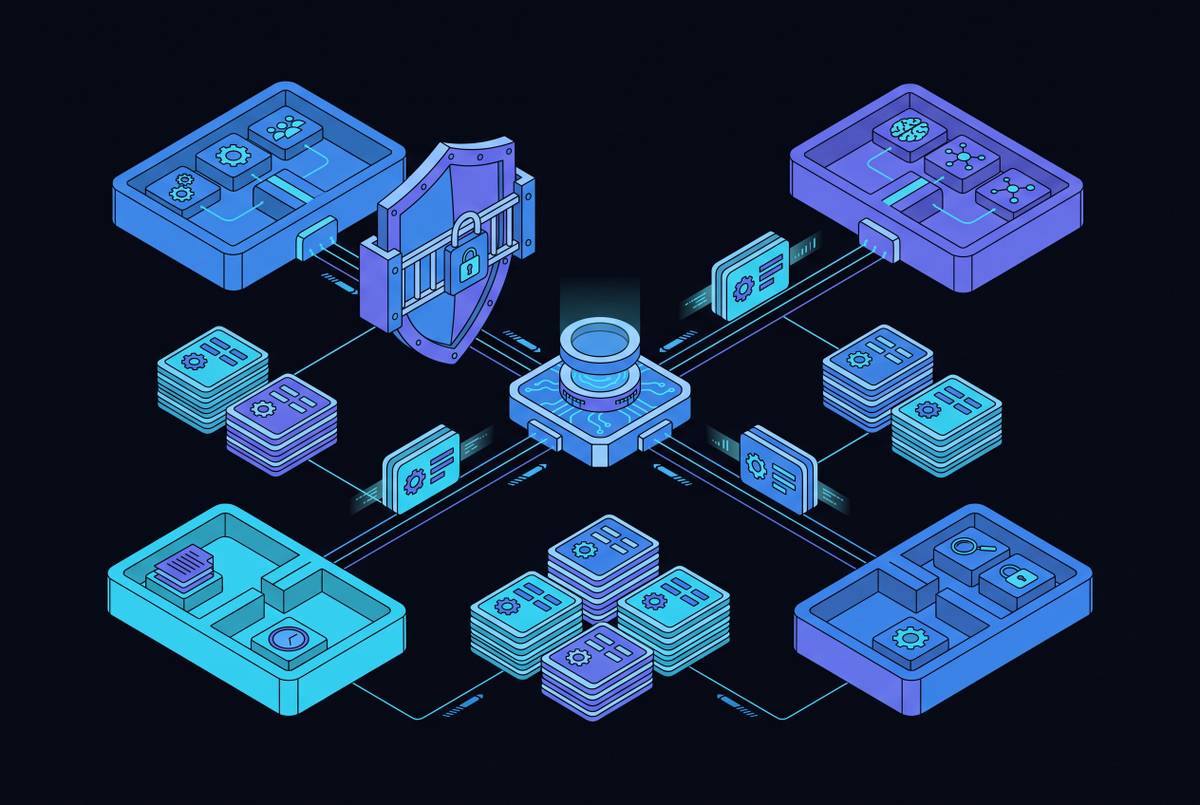
The federated model splits the job differently. An upstream registry sets the interoperability standard and the policy floor, and each department publishes its own skills into a scoped sub-registry underneath it. The MCP Registry working group launched a preview in September 2025, an open project under a permissive license that offers an upstream API spec sub-registries can inherit for compatibility.
Enterprise registries build on top of that with governance features the community version skips: access control, separate dev, staging, and production environments, policy-based visibility, allowlisting, audit trails. Central IT's job shifts from gatekeeper to librarian, maintaining the approved list of skills and servers, setting the guardrails, and keeping the whole inventory discoverable, rather than signing off on every individual skill before it ships.
Each line of business publishes into its own registry, promotes a skill up to the org-wide registry when it's ready for broader use, and keeps ownership accountability the whole way through. Workato's Enterprise MCP Registry is a working example of this pattern: a governed system of record for every MCP server across a company, built so teams can discover and reuse what already exists instead of rebuilding it from scratch. The MCP team itself has said that discovery and management of internal registries is a key piece of the MCP story, and the direction the ecosystem is heading backs that up.
How department-scoped servers prevent context-window bloat and permission bleed
Every MCP server an agent connects to injects its own tool definitions into that agent's context window: parameter schemas, descriptions, the works. Connect five to seven servers and a meaningful chunk of that context window is already spent just describing tools, before the agent has done a single piece of actual work. That's a hard technical ceiling, not a matter of taste.
A single universal server exposing every capability in the company to every agent runs into two problems at once: it chews through context window space, and it hands agents visibility into tools they were never supposed to touch in the first place.
Department-scoped servers fix both at once. Context stays manageable because each server only exposes what that team actually needs for its own workflows. Permissions stay bounded by design, since a support team's server simply has no path to the CRM write access that belongs to RevOps; the capability isn't there to misuse in the first place. Most production setups connect somewhere between three and seven servers covering the core of a team's work, and scoping is what keeps that number sane instead of sprawling into dozens of overlapping connections.
IBM's enterprise MCP blueprint lays out layered security to match: verify agent identity, grant least-privilege tool access, run execution in a sandbox, route everything through an MCP Gateway that centralizes authorization, policy enforcement, rate limits, and audit logging. Governed catalogs at the department level then track what matters: owner, version, the full tool inventory, the boundaries of what that skill is allowed to do, data handling rules, and any evaluation evidence tied to it.
What falls out of this is domain-driven, plain and simple. Engineering, RevOps, support, finance: each gets its own scoped server, wired into its own systems of record, governed by its own team's ownership, and published to the registry so the rest of the company can find it without reinventing it.
What governed prompt infrastructure looks like in RevOps, engineering, and support
RevOps and sales. Salesforce announced MCP support in June 2025, and by 2026 it's set to be the default way AI agents interact with Salesforce orgs, with native support built into Agentforce and a marketplace of verified MCP servers through AgentExchange. HubSpot's MCP server, generally available in 2026, gives agents real read and write access to CRM objects (contacts, companies, deals, tickets, invoices), so an agent can pull a full account briefing before a call and move a deal stage without anyone opening the app. Apollo's MCP server, launched February 2026, lets sales teams run entire outbound workflows from inside their AI client: search, enrich, create or update a contact, drop a prospect into a sequence, all syncing back to Apollo as the system of record.
The governance question underneath all of this is simple to ask and hard to answer without a registry: who controls the prompt defining how deal data gets summarized, and which version of it is actually running right now? Without one, different reps work off different prompt versions with different assumptions baked in, and nobody notices until two reps quote a prospect two different numbers.
Engineering. A common production stack pairs a GitHub MCP server, a Sentry MCP server, and a Linear MCP server, giving an agent the ability to read pull requests, run static analysis, flag risk patterns, and route issues to the right place. There's a gap this doesn't close, though: the agent can write code that looks correct on its face while having no idea which customer the feature is actually for, what they need, or whether they're at risk of churning. Today that gap gets bridged manually, with an engineer messaging a PM, who then digs through call recordings and CRM notes to answer a question the code review shouldn't have raised in the first place. A customer-context MCP server, carrying deal data and churn signals and feature requests, closes that gap at the protocol layer instead of adding another meeting to everyone's calendar. As of late 2025, the ecosystem includes more than 5,800 MCP servers and over 300 MCP clients, covering every major AI tool from Claude Code to Cursor to GitHub Copilot to Gemini CLI to Windsurf. That means engineering teams can pull the same governed context into whichever of those tools they happen to be using that day.
Customer support. Support platforms including Plain, Intercom, and Pylon have built MCP servers exposing their data and actions to outside AI tools. Zendesk sits on the other side of that line: it's building an MCP client, not a server, which means Zendesk's own AI agents can reach out to other platforms, but Zendesk doesn't expose its own ticket data to external AI tools reaching in. Any team planning to hook an outside agent up to Zendesk needs to understand that boundary before they build around a wrong assumption. IBM points to complex multi-step decisions in support, document-heavy processes, and knowledge work as the highest-value places to deploy agents, and all three demand context that's governed: versioned, permissioned, auditable. Otherwise nobody can explain, after the fact, why the agent decided what it decided.
Evaluating enterprise platforms for governed multi-context prompt management
The evaluation criteria fall straight out of the primitives already covered. A platform earns a serious look only if it handles inherited permissions, version control, ownership scoping, and deployment across surfaces. A prompt library missing any one of those is just a nicer shared folder, not governance infrastructure.
Here's what I'd actually check. Does the platform inherit and sync access controls from source systems automatically, or does every new deployment mean someone manually redefining permissions again? Is every prompt change versioned with an owner, a timestamp, and a diff, backed by an approval workflow that leaves an auditable record? Can a skill be scoped to one team, promoted to the whole organization when it's ready, and found by other teams without anyone rebuilding it, all while keeping a named owner attached? Does the platform serve identical context to Claude, ChatGPT, Cursor, Slack, and any custom surface through one standard interface, or does each surface need its own separate setup? And can it work as a real MCP registry, tracking servers by owner, version, tool inventory, and the boundaries of what each one is authorized to do?
A couple of named platforms are worth knowing here. Workato's Enterprise MCP Registry focuses squarely on the registry layer: a governed system of record for MCP servers across a company, built for discovery and reuse rather than rebuilding the same thing five times. It's the strongest fit for organizations that already have an agent ecosystem running and need a control plane over it. LangSmith, from LangChain, covers prompt versioning and dataset management, useful ground for teams building and testing prompts before they ever reach production.
Whichever platform a team lands on, the test stays the same: does it treat a prompt as a governed artifact with an owner and a history, or as a piece of text that happens to live somewhere convenient? Credal, an enterprise platform for building and governing AI agents that enforces inherited permissions, audit logging, and version control across a shared agent registry, is built to meet exactly that bar. Only one of those approaches survives past the second team that starts using it.