Scaling Agent Fleets Without Scaling Permission Overhead
Inherited source permissions and a governed gateway let agent fleets grow safely.
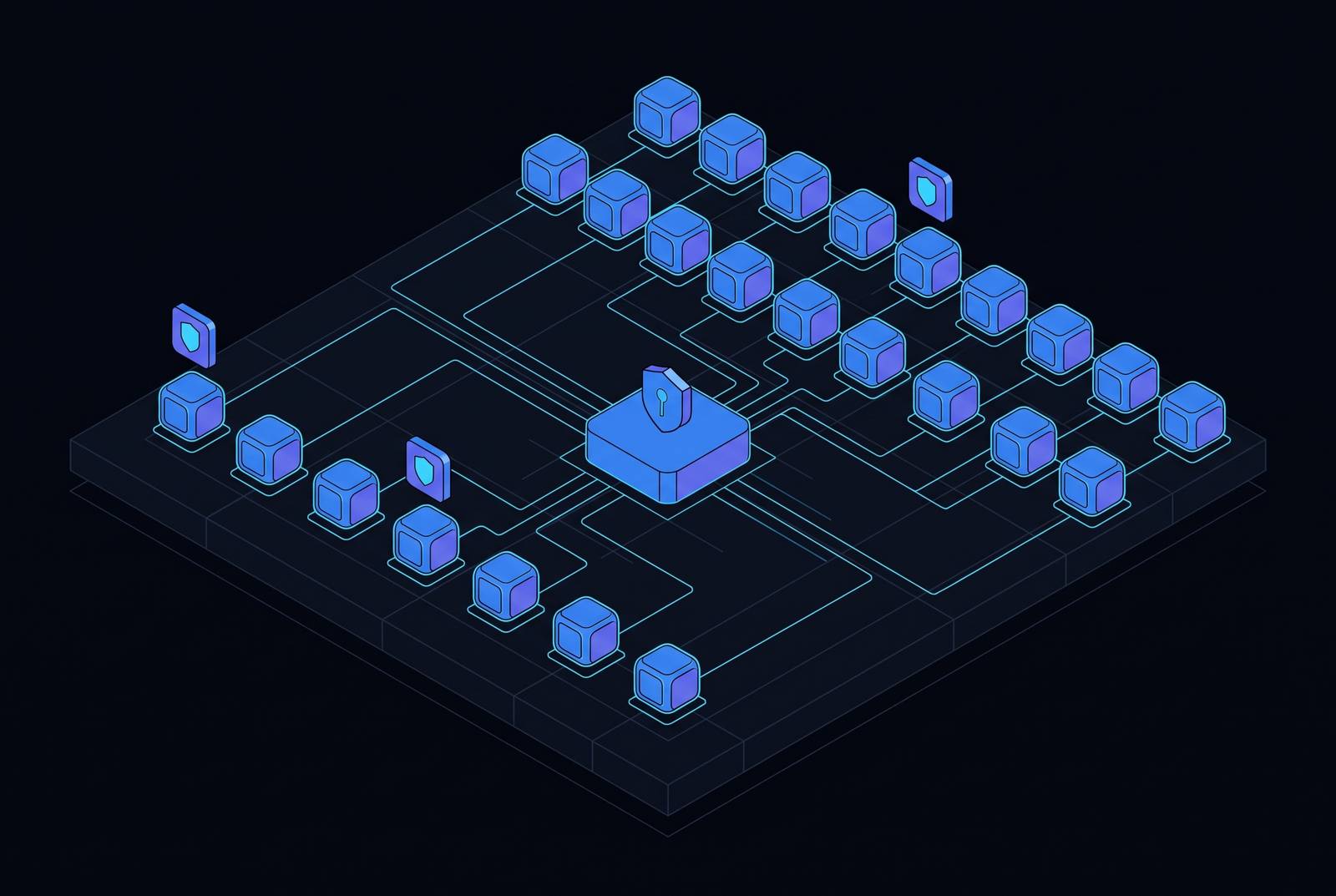
Scaling an agent fleet without scaling permission overhead requires automatic permission inheritance across enterprise AI data sources. Remote MCP servers can use the user’s existing source-system permissions, while a governed registry and gateway control which tools agents may invoke. The source system remains the authority on data access, so adding an AI tool does not mean rebuilding its permission model.
Why permission overhead becomes the limit on agent fleet growth
A team starts with a handful of agents and a couple of data systems. As more teams join, the fleet expands across CRM, ERP, ticketing, and document systems. Each new agent needs connections, and each connection needs rules about who can reach what. Soon, maintaining those rules competes with building useful agents. The work grows with every pairing.
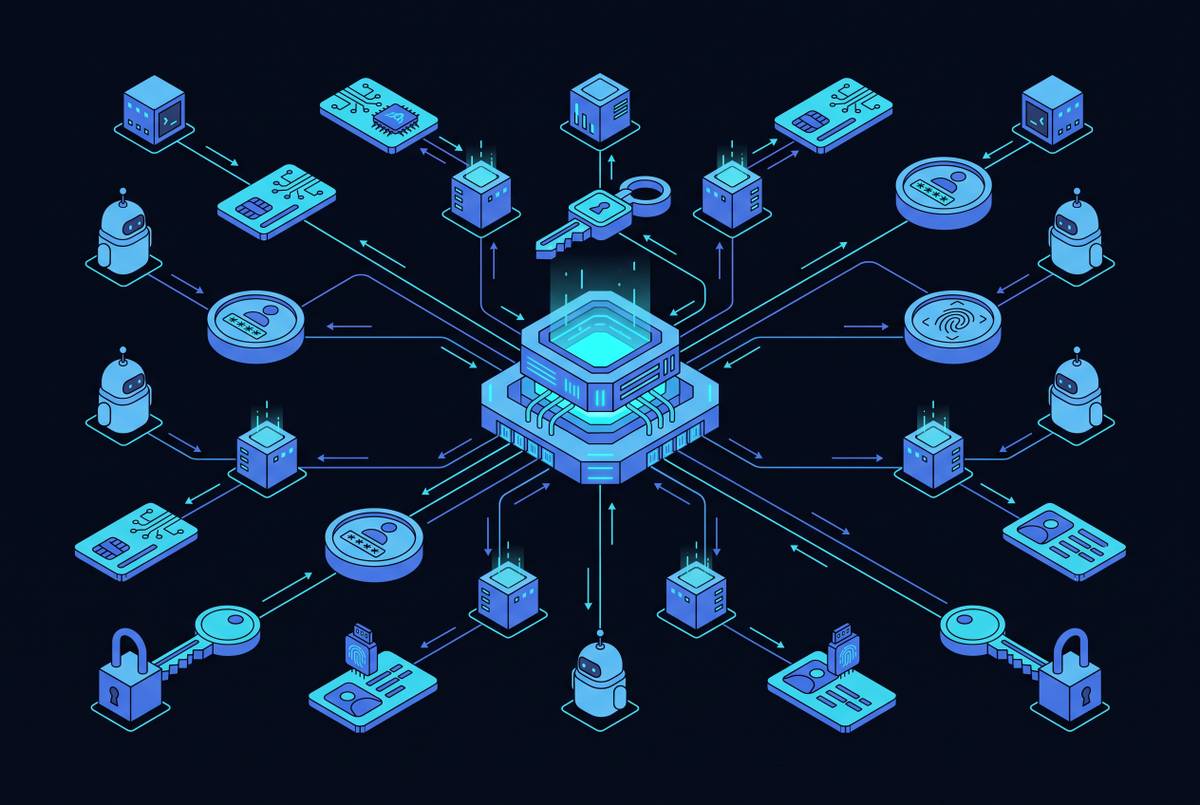
This is the N×M problem at the permissions layer. Without a standard interface and inherited access, each pairing of an agent and a system needs a custom connector or a permission definition written by hand. The structural mistake is defining access at the agent layer when the source system already defines it. Those copies then fall out of step with the source permissions as users change roles and permissions change. Security gaps and compliance debt follow, leaving teams to audit manually whether an agent’s access still matches the user’s authority.
What MCP is and why its architecture changes the permission calculus
Anthropic introduced Model Context Protocol, or MCP, in late 2024 as an open standard connecting AI agents to external tools and data. Teams can build a server once and use it with every MCP-compatible client. That changes the integration pattern from N×M to one integration per server and per client. When those shared servers also inherit source permissions, teams can use the same permission definitions across those pairings. MCP supplies the interface, but the deployment must supply governance.
The 2026-07-28 MCP specification removes protocol-level sessions from Streamable HTTP, making the protocol core stateless. Each request includes its protocol version, client identity, and capabilities, so it can be authorized independently. Application state is still possible through explicit server-minted handles. Any request can reach any server instance behind a plain round-robin load balancer, with no need for Redis session stores or sticky routing. That removes session management as a scaling constraint.
Google’s engineering team co-founded and led the Transports Working Group because it needed MCP to support millions of concurrent queries on Google Cloud. The same specification puts Mcp-Method and Mcp-Name in HTTP headers, allowing gateways to route and authorize without parsing JSON bodies. This lets the infrastructure layer enforce access rules for each request, so each agent can rely on it to do that work.
Why local MCP deployments break governance before the fleet scales
Adopting MCP does not automatically produce that architecture. STDIO-based local servers run on developers’ machines, where independently configured connections create credential sprawl and configuration drift. They do not provide a central audit trail or a shared way to revoke access. If a local server touches a production database, a compromised laptop becomes a path for credential theft. The protocol has changed, but the governance gap remains.
For enterprise deployments, the rule is direct. A server that connects to a shared database, internal API, or SaaS system must run as a remote Streamable HTTP service with authentication and access controls in place. The 2025-03-26 specification introduced that transport, and the 2026-07-28 release hardened it with stateless handling and authorization changes. Those changes include RFC 9207 issuer validation, Client ID Metadata Documents in place of deprecated Dynamic Client Registration, and credentials bound to their issuing authorization server. Running the service remotely gives teams one place to enforce access rules that would otherwise be spread across laptops.
How can AI agents inherit existing permissions without reconfiguring everything?
The durable fix is to stop creating independent grants of data access for agents. A remote MCP service authenticates through enterprise identity infrastructure and uses the user’s existing source-system access scope. OAuth 2.1 supports the authorization connection, while SAML/OIDC federation connects enterprise identity providers. An MCP server’s inheritance of existing permissions depends on its architectural choices.
Salesforce makes the distinction concrete. A sales agent calling a Salesforce MCP server authenticates as the user, and Salesforce’s own permission model determines which data the agent can reach. When the user’s role changes, the inherited scope changes without a manual revocation sweep through agent configurations. There is no second set of data-access rules to reconcile.
A user may have database access while an analysis agent should be allowed to call only specific read-only tools. The trust boundary principle addresses that gap. Each MCP server should have the minimum permissions needed for its purpose, with one server per trust boundary. Read-only analysis and production writes must not share a connection. Source permissions define what the user may access, while scoped tools constrain what the agent may do with that authority.
What a governed MCP registry does that a simple server catalog cannot
A metadata catalog tells developers what servers there are. It does not decide whether an agent may invoke them, enforce that decision, or record the call. The production risk starts at invocation. A governed registry therefore needs server ownership, approval status, tool definitions and schemas, version history, permission scope per tool, and the agents or teams authorized to call each server. Together, those records make approval and responsibility auditable.
The gateway performs a different job from the registry. The registry names approved servers and their policies, while the gateway controls routing, enforces identity, and logs each invocation. Neither replaces the other. Governance needs both an approved definition and runtime enforcement that follows it. The resulting audit trail must show who called what, when, and under which policy.
The 2026-07-28 specification supports this division through header-based routing, deterministic ordering and cache hints in list responses, and a formal extensions framework that includes Enterprise Managed Authorization. These features provide a standard surface for governance controls. Registry ownership and version history also make rollback and deprecation manageable. A published skill has a known owner and production version.
Platforms that provide governed MCP registry infrastructure today
The platform comparison turns on where governance is enforced and what boundary it protects. Project-level controls, network residency, and inherited source permissions each meet a different need. They are not interchangeable claims. A platform can govern access to approved servers without automatically inheriting every connected system’s data permissions. That distinction is central to evaluating the available options.
JFrog MCP Registry targets developer-centric coding agent workflows. Its Agent Guard is a lightweight proxy that handles authentication and project-based permission checks on the developer’s machine through the JFrog Agent Plugin. Coding agents can connect only to servers authorized for the user’s project, providing governed local enforcement. Its stated control boundary is the development project.
TrueFoundry supports registration of self-hosted and public MCP server instances within the user’s own VPC across AWS, GCP, Azure, or on-premises infrastructure. It keeps interactions within the network perimeter. That makes the way it is deployed a fit for teams that have to meet GDPR or data residency requirements. Microsoft, meanwhile, is developing a Dataverse MCP management server as an API registry for custom AI tool endpoints with DLP and access controls. Its GA target is December 2026, so it is a planned option for organizations invested in Microsoft 365 and Dataverse.
For teams trying to eliminate permission redefinition, the evaluation criteria go further. The target architecture inherits connected source permissions, publishes scoped MCP endpoints without separate team-built user interfaces, and versions skills in a shared registry. Those properties should be explicit first-class features of a platform described as a “registry.
Deploying governed context consistently across Claude, ChatGPT, Cursor, and Slack
The value of that architecture grows when teams use several AI surfaces. Business context and tool policy belong in shared infrastructure, while data permissions remain authoritative in the source systems. Claude, ChatGPT, Cursor, and Slack can then use governed context without each keeping its own access rules. Switching models should not require rebuilding those rules.
Slack’s official MCP server provides a concrete example of standardized access. It exposes Slack capabilities as MCP tools callable by Claude, Claude Code, Cursor, Perplexity, and custom agent frameworks, avoiding a custom Slack integration for every client. The stateless, header-routable protocol also lets one gateway serve requests from any MCP-compatible client. Each team can get a scoped endpoint without having to build or maintain its own UI.
The alternative recreates the original problem across interfaces. If teams configure permissions independently in each AI surface, an agent in Slack may reach data that an agent in Cursor cannot, with no clear record of why. The model can change without becoming another permission boundary to maintain.
Department-specific MCP servers as the unit of governed context at team level
Department-specific servers make shared governance useful without forcing every team into the same workflow. Domain experts define and own their context, then publish it through the registry. RevOps provides a clear example. Salesforce’s official MCP server gives agents natural-language access to pipeline by stage, contact activity history, and account data without using the Salesforce UI. Salesforce enforces the user’s permissions through the connection, while sales experts define which fields serve the workflow.
Coding agents in Cursor or VS Code can connect to internal repositories and CI/CD systems through governed servers that inherit repository permissions. A junior engineer’s agent cannot push to production branches if the developer cannot. Read-only analysis remains separate from deployment tools. For Support, a server scoped to ticketing and knowledge systems supplies open-case context without exposing billing or engineering data, with the registry defining scope and source systems enforcing access.
This replaces a familiar duplication trap. Five teams building separate prompts against the same Salesforce instance can end up with five different permission assumptions and no shared auditability. A shared skill published once replaces those copies with one governed permission policy. Domain ownership keeps the context accurate, while registry publication makes it discoverable and reusable. Central IT does not have to become the expert on every department’s working data.
The implementation sequence that avoids building permission debt into the foundation
The practical sequence starts with read-only servers, each limited to a single trust boundary. Teams should use official SDKs to connect high-value systems such as CRM, ticketing, and internal knowledge bases before introducing write-capable tools. That establishes permission inheritance without the risk of write access. Even the first server should sit behind a centralized gateway that authenticates requests and logs every invocation. Starting there avoids retrofitting enforcement onto an existing fleet.
Once that path works, the skill should enter a governed registry before a second team needs it. Otherwise, the second team rebuilds the connection and permission drift begins. Shared publication then provides the foundation for adding write-capable tools incrementally. Each write action should require explicit registry approval and a new version of the server configuration. Version history becomes the record of who approved what and when.
Before the fleet grows beyond a handful of agents, SSO and SAML/OIDC federation with existing identity providers should be in place. The 2026 MCP authorization standard supplies OAuth 2.1 with PKCE and resource indicators for that authorization path. Identity is harder to retrofit once agent configurations have multiplied. The permission-definition workload can stay flat as the fleet grows because adding an agent no longer means redefining who may access the data.