Marketing Agent Deployment in Content Approval Workflows
AI agents in marketing need governance infrastructure built before they scale further.
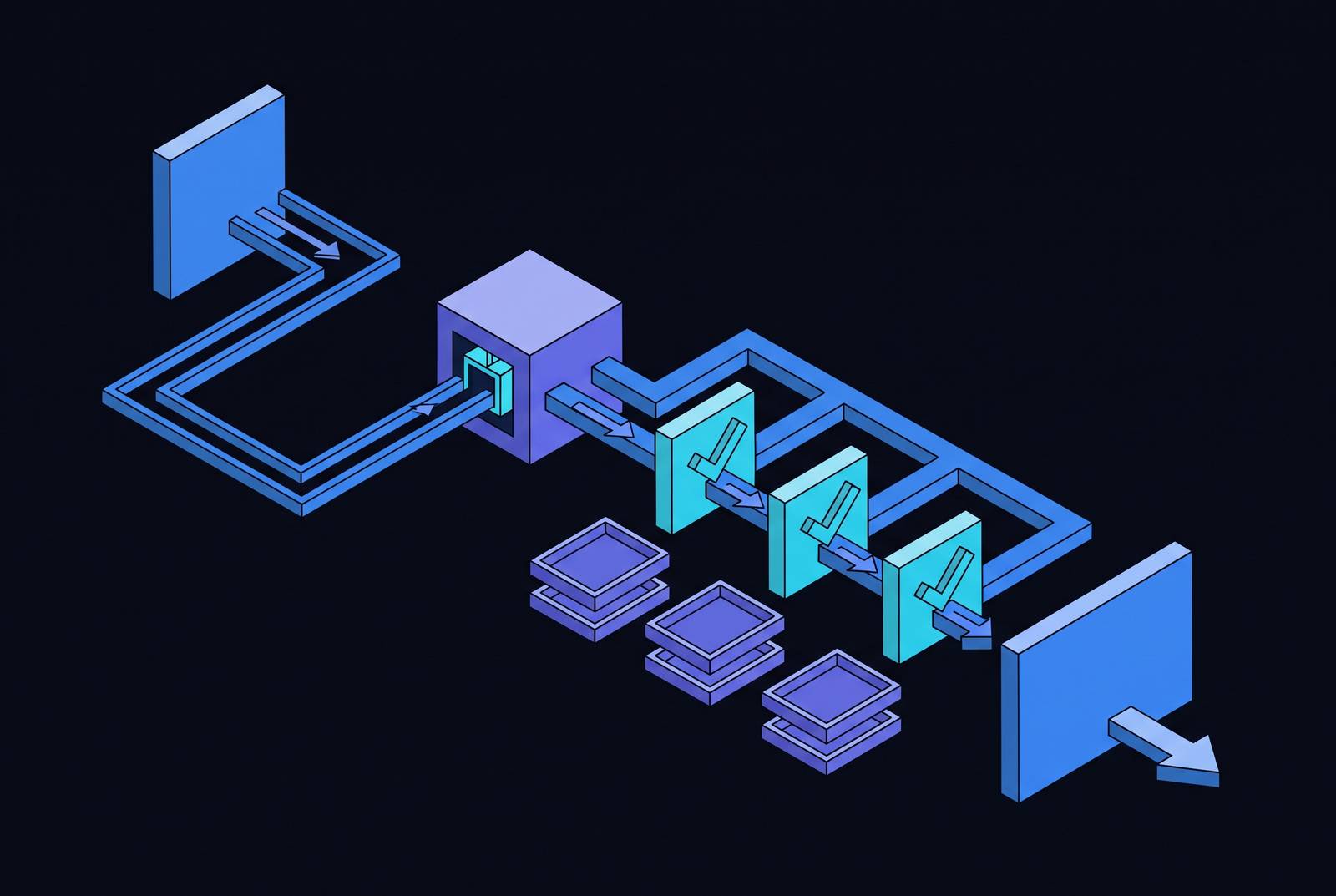
Marketing teams are putting AI agents into content approval work faster than anyone is building the infrastructure to govern them. The trade being made, often without anyone naming it, is simple. Teams give up the old manual bottleneck, the slow human review queue, and pick up a new set of failures that are harder to see.
Some of those failures are plain and immediate. An agent given write access to a publishing system can push content live without anyone reviewing it first, simply because nothing in the setup forces a stop before "publish" fires. Permissions get defined a second time, inside the AI tool itself, instead of pulling from the access rules IT and security teams already maintain in the source systems. Those two permission sets start aligned and drift apart within weeks. Meanwhile, the agent's own actions, what it drafted, what it changed, what it scheduled, and which tool did the work, often leave no record anyone can later pull up and check. And without a shared way to build these workflows, every marketing sub-team ends up building its own version of the same approval process, each one slightly different, each one a little less consistent with the last.
A common response to all this is that the team already has a safeguard: a human signs off before anything goes live. That step alone does not amount to governance. A sign-off with no log behind it cannot tell anyone what the agent reached before the human saw it, whether a draft slipped through without review, or whether the approval that's recorded actually happened before the content moved forward. Without scoped permissions and a traceable record of agent actions, the human checkpoint is a gate with no way to prove it was ever closed.
None of this is an argument against using AI agents in marketing. It is a sequencing problem. The agents have arrived well ahead of the infrastructure that would make them trustworthy, and the rest of this piece is about closing that gap.
MCP: the standard integration layer for enterprise agent deployments
MCP exists to solve a specific wiring problem that made governed agent deployment hard to scale. Before a shared protocol like this existed, every AI application needed its own custom connector built to every tool it touched. A team running five AI tools against ten marketing systems needed up to fifty separate connectors, each one built by hand, each one breaking in its own way whenever a model or a data source changed. That setup does not scale, and it cannot be governed consistently, because every connector is its own one-off integration with its own quirks.
MCP turns that into a much smaller problem. As WorkOS explains it, a system builds one MCP server, and from then on every MCP-compatible client, Claude, ChatGPT, Gemini, Cursor, VS Code, or a custom-built agent, can talk to it without anyone rebuilding the connector for that pairing. Ten systems and five AI tools stop needing fifty connectors and start needing fifteen: one server per system, plus the clients that already speak the protocol.
Three building blocks make that reduction possible, as WorkOS lays them out. Tools are the actions an agent can take: sending, creating, querying, triggering something in another system. This is the write side of MCP, and depending on how the host is set up, a user can approve or deny any given tool call before it runs. Resources are the data an agent can read: files, database rows, documents. This is the read side, lower-risk by nature since it does not change anything. Prompts are reusable templates that guide how the AI behaves for a given task, giving teams a standard way to shape the agent's behavior inside a particular domain instead of leaving it to improvise.
MCP also defines how all of this moves across a network, and that choice carries real weight for anyone running it at scale. Streamable HTTP is the transport mode built for remote servers deployed anywhere on the internet, and it works with the load balancers, proxies, and CDNs organizations already run. Any server touching a resource shared across a team needs this mode. None of this would matter much if MCP were still a niche experiment, but it is not. The protocol has become the integration layer that cross-vendor agent deployments are built on, with a formal deprecation policy and a growing base of production use behind it, which is exactly the kind of foundation a governed marketing workflow needs under it.
The 2026-07-28 specification: auditable, load-balanceable MCP deployments
The 2026-07-28 MCP specification is the update that turns MCP from a working protocol into one an enterprise can actually govern. Its biggest change is a stateless protocol core: every request now carries its own protocol version, client identity, and capability flags in its metadata, so no server needs to remember a client from one call to the next. There is no handshake to maintain, no shared session store to keep in sync, and no sticky routing required to keep a conversation alive. A plain round-robin load balancer can hand any request to any server instance and the system still works correctly. By the time this specification shipped, MCP's SDKs were already seeing close to half a billion downloads a month, with both the TypeScript and Python SDKs having crossed a billion total downloads, a scale that puts MCP solidly in infrastructure territory rather than early-adopter territory.
That statelessness is what makes governed deployment practical, not just reliable. Because every request describes itself, a gateway can route it, rate-limit it, and decide whether to authorize it just by reading HTTP headers, without ever opening up the JSON body or tracking a session across requests. Method and tool names now travel in dedicated Mcp-Method and Mcp-Name headers, so a gateway or a web application firewall can watch those headers directly and enforce which tools a given team or a given agent is allowed to call. That is the mechanism that makes "this agent can read campaign data but cannot publish" something a gateway can actually check and log, rather than something written down in a policy document and hoped for.
The specification also gives human approval its own place inside the protocol. Multi Round-Trip Requests, or MRTR, replace the old pattern of holding a bidirectional stream open while waiting on a person. When an agent hits a point in a workflow that needs a human decision, the server responds with resultType: "input_required," and the client comes back with the human's response attached before the workflow continues. Approval becomes a pattern the protocol itself supports, rather than something a team bolts on with custom logic.
Authorization gets tightened at the same time. The spec adds RFC 9207 issuer validation, binds client credentials to the specific authorization server that issued them so they cannot be reused elsewhere, and shifts the ecosystem away from Dynamic Client Registration toward Client ID Metadata Documents. None of these are small technical footnotes for a security team to shrug at. They close off ways a credential meant for one system could end up working somewhere it should not. And because MCP now carries a formal twelve-month minimum deprecation window, teams can plan an infrastructure upgrade on a schedule instead of scrambling when something breaks without warning. The design philosophy behind all of it, as the Agentic AI Foundation's migration guide frames it, is pay-as-you-go complexity, driven by the principle that statelessness is the default and a feature only introduces state, through something like the Tasks extension for long-running work such as multi-step campaign provisioning, when that feature specifically needs it.
Put together, these changes are what make the permission-scoping and registry patterns in the next two sections possible to enforce rather than just recommend.
Inherited permissions as the correct access model for marketing agents
A second permission system creates a quiet risk in a lot of agent deployments. The moment a team defines access rules inside the AI tool itself, instead of pulling those rules from the systems the agent actually touches, it has created a parallel record of who can do what. That record starts out matching the real permissions IT and security maintain, and it drifts from them almost immediately, because nobody updates two systems at the same pace. Marketing agents should inherit permissions from the systems they connect to. They should not declare their own.
The failure this causes is not hypothetical to anyone who has managed access across a sprawl of SaaS tools. If a team member loses access to a CMS or an ad platform in the actual source system, but an agent carries its own separately declared permission, that agent can keep acting on the person's behalf long after the person themselves has been locked out. A new hire can face the mirror-image failure: they get set up properly in the CMS and the ad platform, and still cannot get their agent working because someone has to remember to configure a second, unrelated permission layer just for the AI tool. Inheritance removes both failure modes at once, because there is only ever one place permissions live.
WorkOS describes the scoping pattern that makes this work in practice. Tools are the write side of MCP, and depending on how the host is configured, a user can approve or deny any tool call before it executes. That means a marketing agent can be set up so that write actions, publishing, scheduling, changing anything already live, sit behind an explicit human approval step, while read actions, like pulling brand guidelines, campaign data, or audience segments, move through automatically. Nobody has to hold up a safe, low-risk read just because a different part of the workflow carries real risk.
At the organizational level, this plays out as an enterprise gateway pattern. Administrators assign specific MCP servers to specific teams: a content team gets CMS read and write access along with brand asset resources, a paid media team gets ad platform tools, and neither team can see what the other has access to. None of this requires redefining permissions for each individual agent. It requires assigning the right servers to the right teams once, and letting inheritance carry the rest. Publish actions stay behind human review the whole time, enforced at the protocol level through the MRTR approval pattern the 2026-07-28 specification introduced.
A governed MCP registry against duplicated approval skills
Permission inheritance solves the problem of a single agent's access. It does not solve what happens when five different marketing teams each try to build the same approval workflow on their own. Without a shared registry, the content team builds a review workflow, the demand-gen team builds a slightly different one a few months later, and each regional team adapts its own version on top of that. Eventually nobody can say with confidence which version reflects the brand and legal requirements the company actually holds today. The same prompt logic, the same integrations, and the same guardrails get rebuilt constantly, consuming engineering time that never needed to be spent; every rebuild is also a chance for something to fall out of sync with what legal or brand actually requires.
A governed registry is the fix. Tool metadata lives in one place, and agents query that registry at runtime to discover what is available, so publishing an approved tool or retiring one does not require touching every agent's code or redeploying anything. Every entry carries a record of who published it, what changed between versions, and who approved the current version, giving the audit trail that governance actually requires instead of a verbal agreement that someone checked it once.
Discoverability stays scoped, the same way permissions do. Servers in the registry are not visible to everyone by default. Administrators assign them to specific teams, so a content production team sees the servers approved for its own work, and a paid media team sees a separate set, with no overlap or cross-contamination between the two.
The public registry at registry.modelcontextprotocol.io is the authoritative upstream source for publicly available MCP servers, but being listed there does not mean a server is certified safe. It does not confirm the server's security posture, confirm that its tool descriptions are honest, confirm that its permissions are appropriately scoped, or confirm that its runtime behavior is stable. The enterprise pattern is to treat that public registry as intake rather than approval. Servers pulled from it go through a controlled admission process, get enriched with organization-specific trust metadata, and get forced back through reapproval any time the artifact, its tool definitions, its permissions, its endpoint, or its publisher changes. Built this way, an email campaign approval skill, with its frequency caps, its eligibility rules, its no-send conditions for refunds or legal holds, and its template governance, gets built once, published with a clear version history, and reused by every team running email campaigns instead of rebuilt from scratch by each one.
The required guardrails for autonomous marketing content agents operating inside an approval workflow
Permission scoping and a shared registry set the boundaries an agent operates inside, but neither one tells the agent what to actually do at the moment it is deciding whether to send, publish, or escalate something to a person. That requires a defined set of operating rules, and five categories of guardrail cover the decisions that have to be settled before a marketing content agent goes live.
Frequency controls come first: caps on how often a given audience segment, message type, or account can be contacted. An agent that sends without any awareness of frequency will exhaust an audience and trigger deliverability penalties that take real effort to undo. Eligibility rules come next, and they matter just as much: explicit no-send conditions for any account with an open refund request, an active escalation, a legal hold, or an ongoing direct sales conversation. These conditions have to be checked against live CRM and support data at the moment of send, not against whatever the data looked like when the content was first drafted, because an account's status can change in the gap between those two moments.
Template governance is the third guardrail, and it keeps an agent from composing outside what has actually been approved: only sanctioned copy blocks, defined personalization fields, and specified fallback content are in play, and anything outside that set has to trigger a human review instead of going out on its own. Fourth are the human review checkpoints themselves. New content branches, sensitive audience segments, and any change to offers or pricing need to route to a named reviewer before the agent moves forward, and this has to be enforced through the MRTR mechanism at the protocol level rather than left as an advisory step someone might skip under deadline pressure. Last is monitoring cadence: regular checks for edge cases, suppression failures, and deliverability drift, problems visible at the margins of a system rather than in its main path, caught only if someone built in a habit of looking for them.
MCP's tool-approval mechanism is what makes the human review checkpoint real rather than a policy written down somewhere and hoped for. Write-side tool calls can be held for explicit user approval before they execute. The specification describes this using "SHOULD" language, a strong recommendation rather than a hard constraint, and it deliberately does not mandate one particular user-interaction model, leaving room for different hosts to implement the approval step in the way that fits their own workflow.
None of these guardrails work well if the data behind them is scattered across disconnected systems that might disagree with each other. A marketing analytics MCP server can expose a single, unified view of go-to-market data, pulling together CRM records, marketing automation data, ad platform data, and website activity, so that an agent's eligibility checks and audience targeting pull from one consistent, governed model instead of several sources that may not agree on basic facts like whether an account currently has an open support case.
Slack and multi-surface deployment without fragmenting the permission model
The governance built into a marketing agent's backend only holds up if it travels with the agent to every surface a team actually works from. A content strategist drafting in one model, a demand-gen manager reviewing from another, a developer testing a new workflow in a third, and a brand manager approving a send from a messaging platform all need to be operating against the same rules, not five slightly different versions of them. The same governed MCP server can serve all of these surfaces at once, because the permission scoping, the audit logging, and the approval checkpoints all live on the server side of the connection, not inside whichever client happens to be making the request.
That matters most for a messaging platform, since it is where a lot of marketing approval conversations already happen day to day. An approval request that surfaces in a messaging platform, asking a reviewer to sign off on a new content branch or a pricing change, is the same MRTR-based checkpoint, hitting the same MCP server, under the same scoped permissions a content team was assigned through the gateway. A reviewer approving from a messaging platform and a reviewer approving from inside a CMS dashboard are going through the identical protocol-level gate, logged the same way, in the same registry-governed system.
This is what keeps multi-surface deployment from turning into permission fragmentation. Adding a new surface for a marketing team to work from does not mean building a new permission model to go with it. It means pointing one more client at a server that already knows which teams can read what, which actions need a human in the loop, and which approvals have already happened. The infrastructure described across this piece, inherited permissions, a stateless and auditable protocol, a governed registry, and protocol-native human review, is what makes that possible at any scale a marketing organization is likely to reach.
Sources
- The 2026-07-28 Specification
- MCP 2026-07-28: From Local Tool to Distributed Protocol - Agentic AI Foundation (AAIF)
- Governing AI Assets at Scale with MCP Gateway and Registry
- modelcontextprotocol/blog/content/posts/2026-07-28-spec-ga/index.md at main · modelcontextprotocol/modelcontextprotocol
- Scaling AI Agent Infrastructure with the MCP Stateless updates - Google Developers Blog
- The 2026-07-28 MCP Specification Release Candidate
- Introducing the Model Context Protocol \ Anthropic