permission-aware data access approaches in multi-agent orchestration
Enforce permissions at every layer of your agent chain, not just at the top.
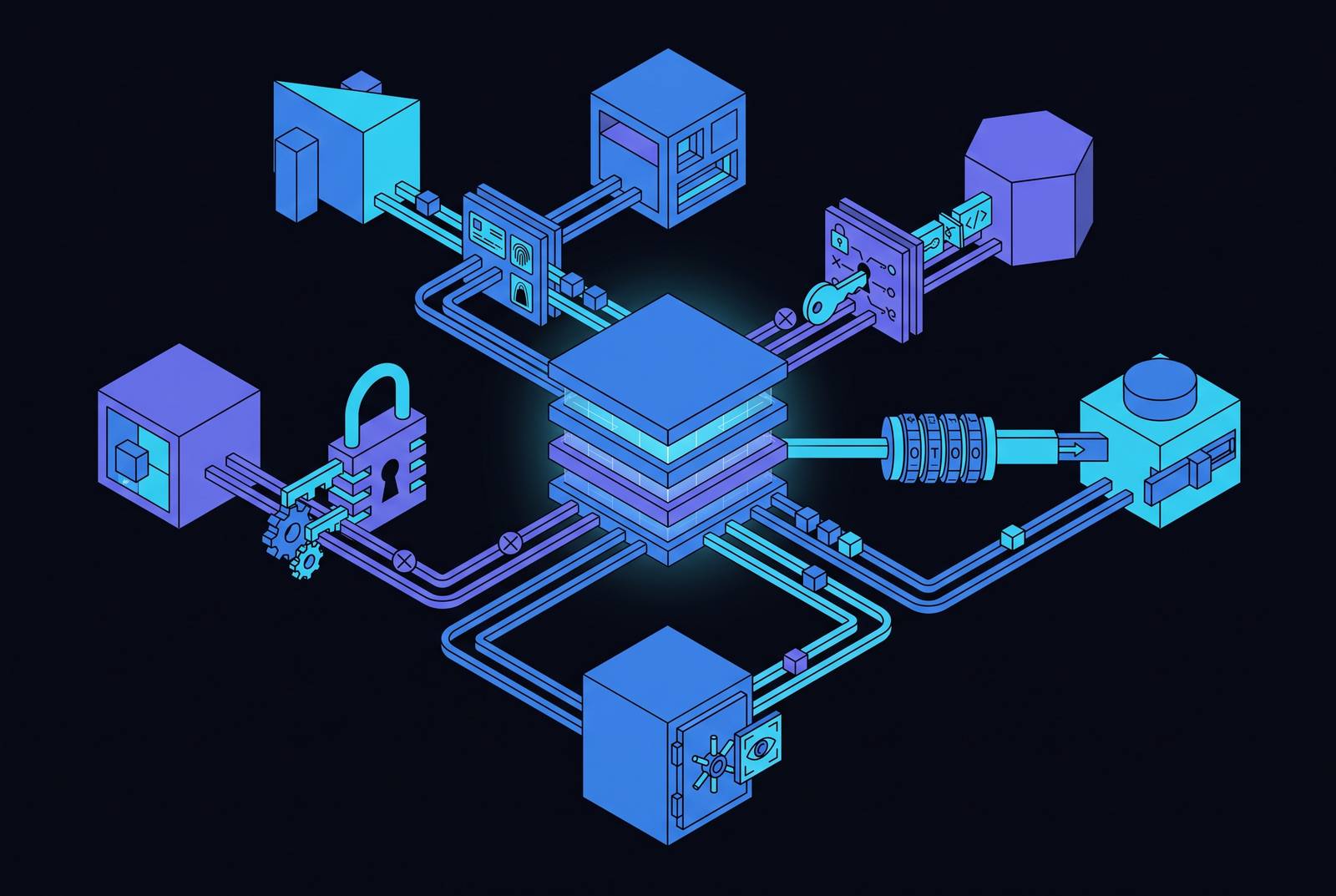
Permission handling in multi-agent orchestration needs enforcement at every layer of the chain, from the orchestrator down through each sub-agent to the individual tool call. Most teams get this backwards: they trust a single gatekeeper, assuming a clean, authenticated orchestrator makes every downstream call trustworthy. That assumption doesn't hold, and systems built on it fail in the same predictable ways, over and over. Get the layering wrong, and no amount of polish at the top of the chain saves you.
Here's the intuitive mistake. If the orchestrator agent has been authenticated and cleared to act, the thinking goes, then whatever it delegates downstream should carry the same clearance. That logic holds in a single-agent system. It falls apart the moment you introduce chains.
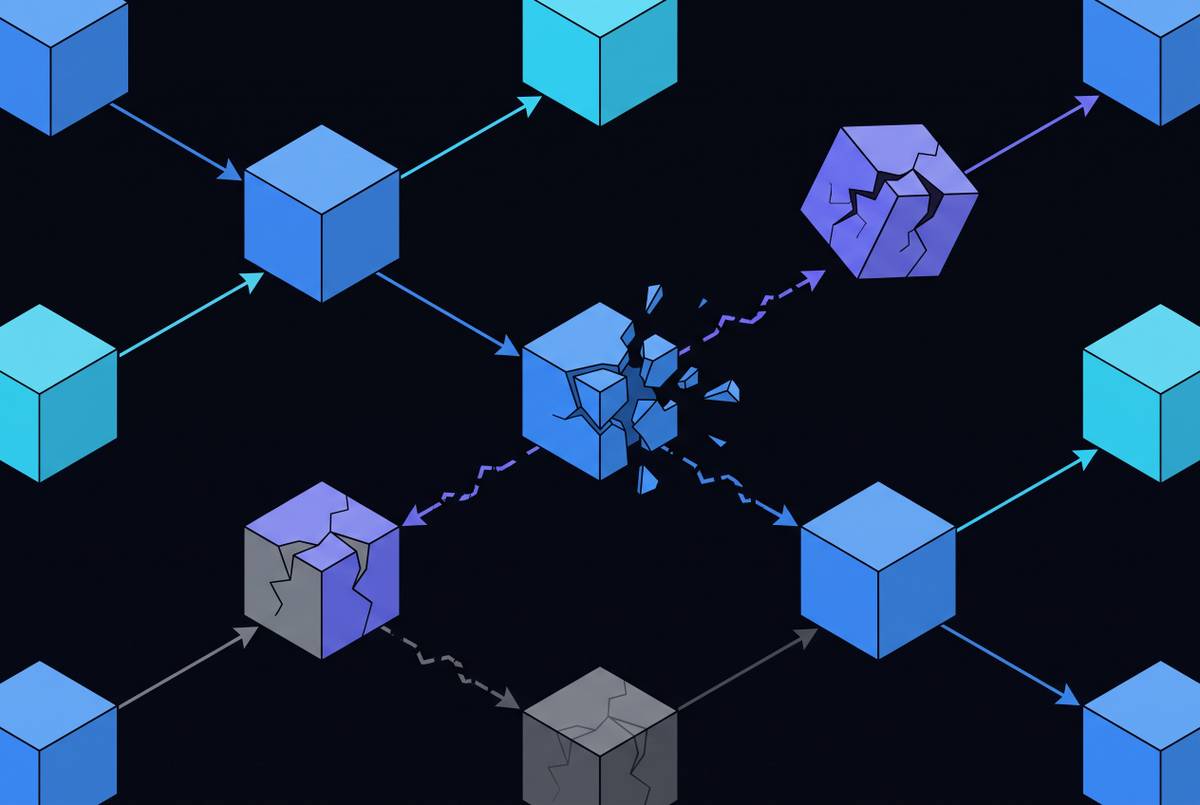
Sub-agents act on behalf of many different users. A CRM lookup agent might serve fifty reps in a single afternoon, each with different account access. Tool calls happen several hops away from the original request, so by the time a database query fires, the orchestrator's permissions and the actual caller's permissions have often diverged, and nothing in the system flags the difference. A sub-agent that's compromised, or just misconfigured, can quietly grab more access than it should have, because nothing at its layer checks whether it's allowed to do what it's about to do.
Most early agent systems enforced permissions at ingestion, controlling what data the orchestrator was allowed to load at the start of a session, and left invocation wide open. Each downstream tool call, retrieving or writing real data, went unchecked. That gap recurs across systems built this way, and it's the default outcome of designing for the top of the chain and forgetting the bottom.
At scale, this plays out the same way. Five different teams build five different integrations to the same CRM, each inventing its own permission logic, and the gap between them compounds every quarter. Audit trails fragment: the orchestrator logs that it made a call, but the sub-agent's own tool invocations vanish from the record. Somewhere in there, a user asks a routine question and gets an answer that quietly drew on data they were never cleared to see.
One number is worth sitting with: MIT's 2025 research found that roughly 95% of enterprise generative AI pilots delivered no measurable ROI, and integration failures drove a lot of that number. Blaming the models is the easy read, and tracing the individual failures tells a different story: it looks like a plumbing problem, with permission fragmentation sitting close to the center of it. A policy document sitting in a compliance folder does not stop a sub-agent from calling a tool it shouldn't. Enforcement built into every layer of the chain does, because no single point of trust ends up carrying the whole load.
How multi-agent orchestration actually structures the call chain
Three layers matter here. The orchestrator takes the user's request, breaks it into pieces, and hands those pieces to sub-agents. Sub-agents are specialists: one handles CRM lookups, another handles code search, another pulls support tickets. Below them sit tool calls, the leaf-level actions where the actual work happens: a database query, an API write, a file read.
The user's identity and access rights start at the top of this chain and have to travel, intact, all the way to the bottom. Every hop in between is a place where that identity can get lost, watered down, or faked outright.
Two coordination patterns show up most, and each creates a different kind of permission problem. Sequential chaining passes the output of one agent into the next; the user's context has to survive that handoff instead of getting rebuilt from scratch at each step, because rebuilding it from scratch is exactly where corners get cut. Parallel delegation is risky in a different way: the orchestrator fans a request out to several sub-agents at once, and each branch has to enforce permissions on its own. A failure in one branch should never leak data into another.
A newer pattern worth watching is the supervisory agent, one that manages a team of specialized agents rather than talking to tools directly. MCP's own roadmap points toward this kind of hierarchical setup becoming more common. That raises the stakes on delegation: supervision adds a layer, and every added layer is one more place permissions can slip through.
Worth separating clearly: MCP governs how agents connect to tools and data sources. A2A, Google's Agent-to-Agent Protocol, governs direct agent-to-agent conversation. They solve different pieces of the same problem, and both need permission thinking built in from day one, not bolted on after something breaks. No architectural choice here is neutral. How delegation gets structured decides exactly where the enforcement gaps open up.
What MCP provides as a permission-enforcement substrate
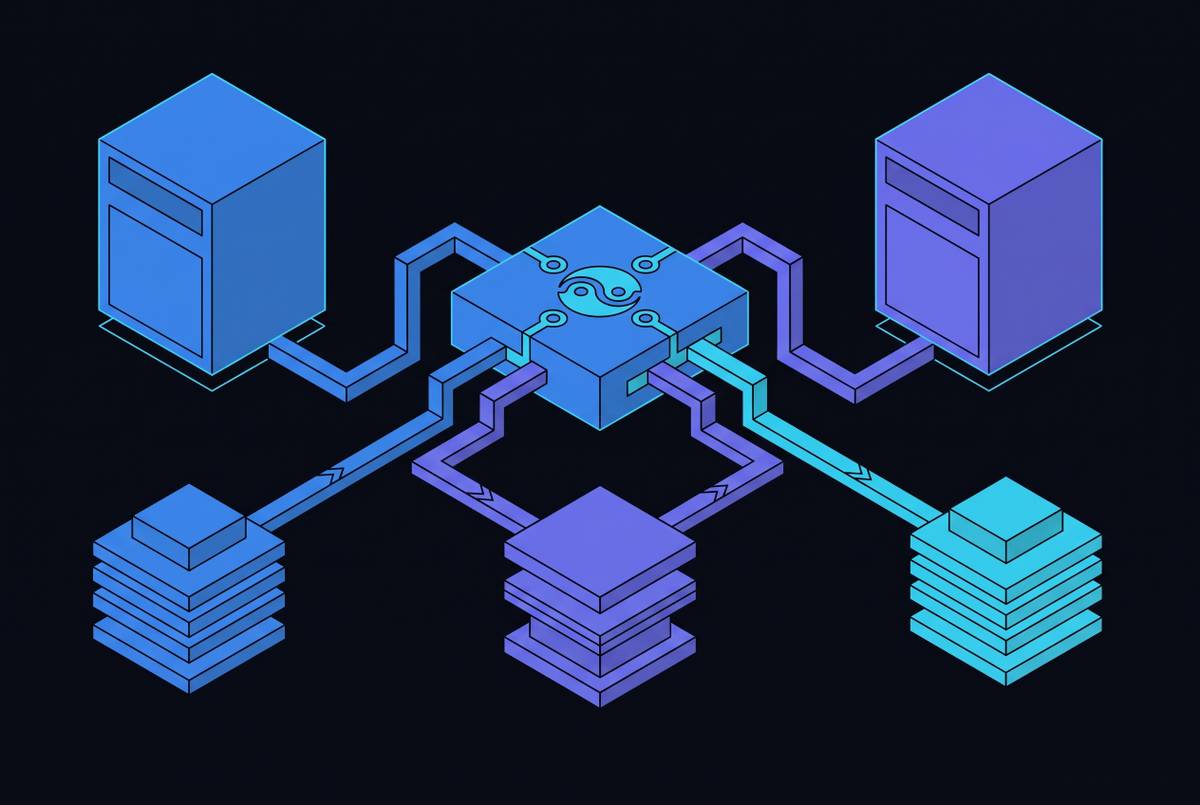
MCP's basic deal is simple: every outside call runs through one defined interface, and that interface handles schema consistency, access control, and logging. Think of it as a universal handshake, standing in for the custom connectors that used to get built one-off for each job.
That solves a real math problem, and the arithmetic is worth doing rather than taking on faith. Before MCP, M agents talking to N tools meant something close to M×N custom integrations, each with its own homemade permission logic bolted on by whoever built it. With MCP, that becomes roughly M+N: each system exposes one interface, each agent speaks one protocol. BCG has called this turning quadratic complexity into linear complexity, which sounds abstract until forty integrations replace four hundred.
Three things come standard at the protocol level. Authentication means every agent or tool carries real credentials, so only authorized parties can even start a call. Authorization means role-based permissions decide which agents can reach which tools, enforced at the server itself, not assumed just because the orchestrator vouched for the request. And every call, every context payload, every response gets logged with a timestamp, which matters enormously the first time someone has to piece together what happened after an incident.
The auth side has moved fast, and the version history tells the story. The November 2025 spec, version 2025-11-25, made OAuth 2.1 the standard for remote MCP servers. The 2026 update went further, adding incremental scope consent: a client asks for only the minimum access the operation in front of it needs, rather than a blanket grant covering everything it might ever want. That progression matters in practice, because early MCP deployments got built before these controls existed, and retrofitting them into a live agent chain is real operational work, not a config toggle.
MCP hands you the substrate. None of it wires itself up automatically, and it won't connect inherited permissions from source systems on its own. Someone still has to build that connection on purpose.
Inheriting permissions from source systems rather than redefining them
Here's the trap teams fall into almost every time a new AI tool shows up: they build a fresh permission layer on top of controls that already exist and already work, rather than inheriting from the system that already enforces those controls correctly. That default causes real problems downstream, and the alternative isn't harder to build. It's just less obvious the first time around.
It fails for reasons that compound on each other. Every new agent or integration becomes another surface where permissions can quietly drift away from the source of truth. When someone's role changes in the CRM, nothing tells the AI layer about it, so stale permissions sit there, unnoticed, until someone stumbles on them. When an auditor eventually asks who had access to what, and when, an AI layer running its own permission definitions has no clean answer to give.
The alternative is inheritance. An MCP server connecting to a CRM, a code repository, or a support platform can pass the calling user's identity straight through to that source system's own access controls. The source system decides what the user sees; the MCP layer doesn't duplicate that logic or override it. When the source system's permissions change, the agent sees the update right away, because there's nothing separate sitting around to go stale.
Take a sales agent pulling CRM data. It should return only the accounts the requesting rep is actually allowed to see, rather than the full universe of accounts the orchestrator happened to load at session start. Those are very different data sets, and mixing them up is exactly the kind of mistake that looks fine in a demo and turns into a liability in production.
Role-based access at the gateway layer works alongside inheritance rather than replacing it. Gateway RBAC decides which agents can call which tools in the first place; inheritance decides what data those tools hand back once called, for this specific user. Both matter, and neither covers for the other.
One more piece worth naming: resource locking. In a multi-agent environment, two agents cannot be allowed to modify the same record at the same time. Gateway-enforced locking handles that collision, and inheritance alone won't catch it, since inheritance is about read and write authorization, not who gets there first.
Where enforcement must live at each layer of the chain
The orchestrator's job is to capture the user's identity and access context the moment the request comes in, and hold onto it. What it must never do is expand its own permissions before handing work to a sub-agent; it delegates scope, it doesn't grant more of it. The classic failure: an orchestrator spun up with broad service-account credentials, and every sub-agent it calls just inherits those broad credentials instead of the actual user's narrower ones.
At the sub-agent layer, the job is domain-specific enforcement. A junior HR sub-agent should not be able to call a payroll tool, full stop, no matter what the orchestrator's prompt asked it to do. MCP's role-based tool access makes this enforceable at the server itself, rather than something that only holds up because the orchestrator's instructions happened to be well written. Watch for this failure mode: a sub-agent picks up a delegated task and quietly inherits the orchestrator's full tool access instead of a properly scoped subset.
Tool calls are where inheritance actually resolves. This is the layer that applies the calling user's source-system permissions at the exact moment data gets pulled or written. The 2026 spec's incremental scope consent earns its keep right here, since the tool asks for only what this one operation needs. Get this layer wrong and the tool call authenticates as the MCP server's own service identity rather than the end user's; suddenly everything that service account can see is fair game.
Audit logging runs across all three layers rather than living in just one. Every call, at every layer, should leave a timestamped record: who started it, what got requested, what came back, which tool got invoked. If that logging only exists at the orchestrator level, everything a sub-agent or tool does downstream disappears the moment compliance or forensics comes looking. Gartner projects that 70% of software engineering teams building multimodal applications will use AI gateways by 2028, up from 25% in 2025, and centralized gateway logging is a big part of why.
No single layer carries this weight alone. Defense in depth, applied separately at each layer, is the only setup that survives a misconfiguration or an adversarial actor trying to poke through.
How a governed MCP registry prevents permission fragmentation across teams
As of early 2026, 80% of Fortune 500 companies have active AI agents running in production, but only 28% have set up MCP servers. Sit with that gap: it means most organizations running agents in production have no shared governance layer underneath any of it. That space between broad agent adoption and thin protocol governance is exactly where ad-hoc, uncoordinated builds pile up. Five teams building five CRM integrations, each with its own homegrown permission logic, isn't a hypothetical. It's the default outcome of moving fast without a shared registry, and it's what most organizations are living with right now, whether anyone's noticed yet or not.
A registry gives teams something a shared drive rarely delivers. Version control tracks every change to a server or skill, so rollback stays possible and drift shows up instead of getting discovered by accident. Ownership means each MCP server has someone accountable for its permission contracts, not an orphaned integration nobody wants to touch. Access scoping gets governed from one place, so which teams and agents can call which servers isn't left to guesswork. Discoverability means a team looking for a CRM tool finds the version that's already permission-correct, instead of quietly rebuilding a worse one from scratch.
Department-scoped servers become the natural unit of reuse. Engineering gets GitHub, Sentry, and Linear servers scoped to the repos and projects a given team actually owns. RevOps and sales get CRM servers that surface only the pipeline data a querying rep is cleared to see. Support gets ticket and customer-history servers scoped to an agent's tier and the customer segment it's allowed to touch. Each one gets its permission contract defined once, reviewed once, and reused, instead of rebuilt team by team.
The scale of the ecosystem makes a registry a necessity now, not a nice-to-have. With more than 5,800 community and vendor MCP servers already out there, unmanaged sprawl is a real risk, on the same scale as the integration mess that hit enterprise software a decade back. Domain experts should still own the permission contracts for their own servers; central IT shouldn't be micromanaging what a support team's ticket server can and can't return. But those contracts need to live in a governed, auditable registry, not on one engineer's laptop where nobody else can find them.
What breaks when permission handling is done ad hoc and how to recognize it early
Four failure signatures show up again and again. Credential bleed happens when sub-agents or tool calls authenticate as a shared service account instead of the actual requesting user; it shows up in audit logs as one single identity making every tool call, no matter who started the workflow. Permission drift is when an agent keeps handing data to a user whose access got revoked recently, caught by comparing agent responses against the source system's own access logs for anyone whose role changed lately.
Prompt injection exploiting a permission gap is the sneakier one, and arguably the most dangerous, because it doesn't read as a bug until someone traces it back. A malicious payload buried in retrieved content tells an agent to call a tool it has no business touching, and that only works when tool access isn't enforced at the server layer, relying instead on the orchestrator's judgment call in the moment. Duplicate integration sprawl, several teams building separate MCP servers for the same source system with subtly different permission logic baked into each, gets caught by auditing the registry, assuming one actually exists.
There's a real gap between a misconfiguration caught in testing and one that surfaces live. Test environments rarely mirror the full spread of real user permission profiles; a gap invisible when tested by an admin account becomes glaringly obvious the moment a lower-privileged user runs the same workflow in production.
One practical early-warning habit: run permission audits in shadow mode, where the workflow logs what it would have returned against what the requesting user is actually cleared to see, without acting on the mismatch yet. Gaps surface before they turn into incidents this way. Here's the governance test that actually matters: if nobody can say who approved a given tool's access contract, when, and what's changed since, that points to a documentation gap sitting somewhere, unread, rather than a functioning governance process.
Approaches organizations are using to implement layered permission enforcement today
Gateway-enforced RBAC with centralized audit logging. Every MCP server call routes through a gateway that enforces role-based access and logs each invocation. The gateway becomes the authority on permissions, which works cleanly when an organization has a small, stable set of servers and roles. The catch shows up later: gateway-defined permissions can still drift from the source system's actual permissions if the two aren't kept in sync automatically.
Source-system permission inheritance via identity passthrough. MCP servers pass the calling user's identity, an OAuth token or its equivalent, straight to the source system, and let that system's own access controls decide what comes back. This gives the tightest alignment with the actual source of truth and kills the drift problem outright. It does need source systems that support per-user API authentication, and plenty of legacy systems just don't have that. Where it's an option, this approach should win by default, not sit as one choice among equals. It's the closest thing to a clear answer this piece has.
Scoped MCP servers per team or department. Instead of one sprawling server covering something like Salesforce for the whole company, each team builds a server scoped tightly to what its own work actually needs. A support team's server surfaces ticket history and customer tier; a sales team's surfaces pipeline and account ownership; neither carries permissions or data the other team has no reason to touch. Narrower scope, in practice, means a smaller blast radius when something goes wrong.
None of these three approaches works alone. Gateway RBAC without inheritance drifts, and inheritance without gateway-level scoping still lets any agent try to call any tool. Scoped servers without a registry behind them just fragment differently than ad-hoc integrations do, only with better intentions going in. Layer them together, and each one closes a gap the others leave open. Credal, an enterprise platform for building and governing AI agents that enforces permissions, maintains audit trails, and hosts a versioned registry of MCP servers across an organization's connected sources, is one concrete implementation of this layered approach. That layering is what separates an agent system that scales safely from one that just scales its own exposure.