Support Ticket Triage With Agentic AI Loops
AI agents can resolve support tickets before routing them elsewhere.
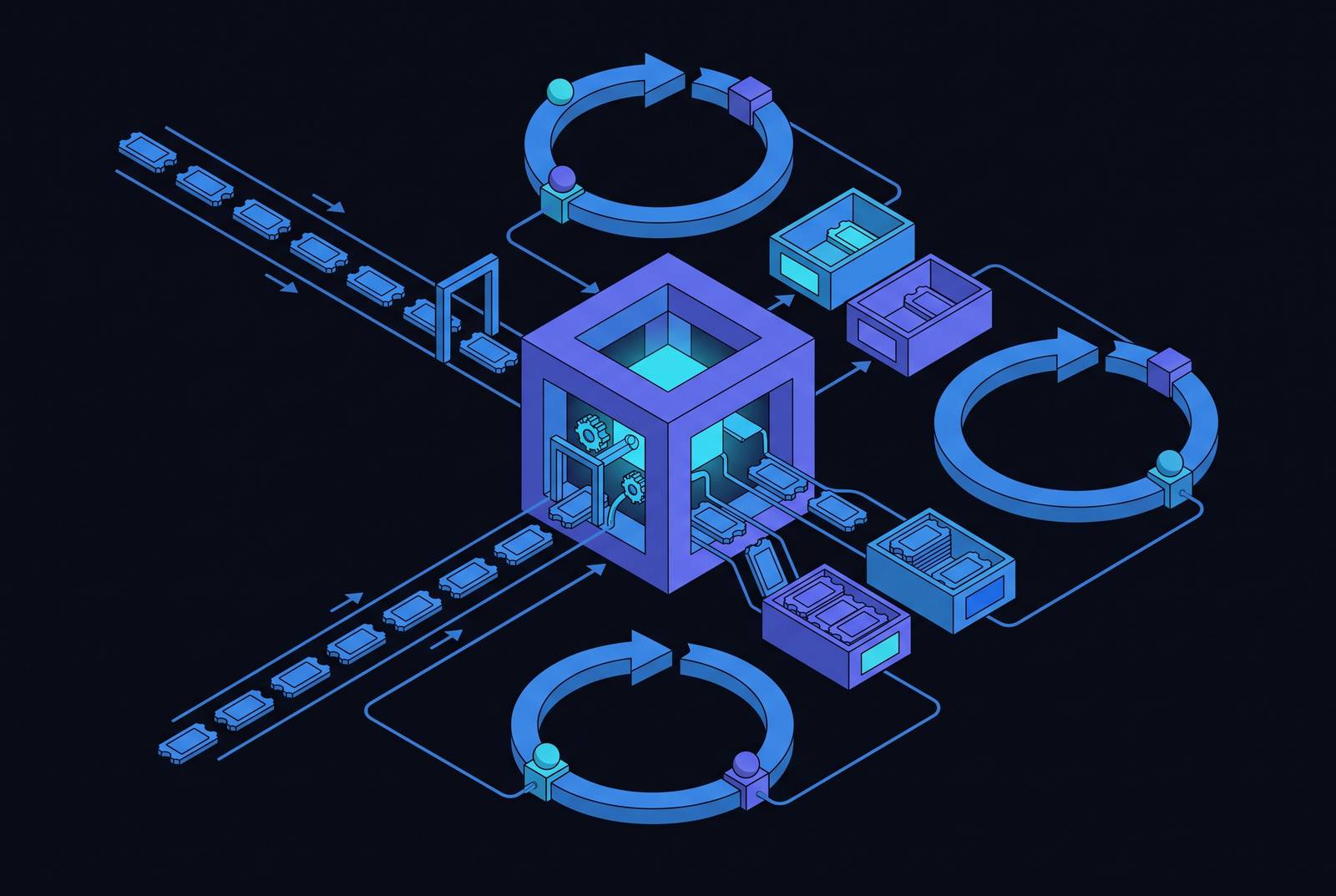
Triage treats ticket handling as a sorting problem: read it, tag it, send it somewhere. That's the wrong frame, because sorting a ticket and resolving it are two different jobs, and most support systems only pay attention to the first one. Under manual or rule-based systems, somewhere between 15% and 25% of tickets get misrouted on the first pass. That gap is a resolution failure that started the moment the ticket got sorted instead of solved.
Agentic AI flips the order of operations. Instead of asking "where does this go," it asks "what do I already know that could close this." When you trace the actual chain behind a ticket, customer to product to feature to known bug to engineering fix, you can act on what you find before anything gets handed off. Only what the agent genuinely can't close gets routed. So triage stops being the finish line and becomes the first attempt at resolution.
What an agentic triage loop does, step by step
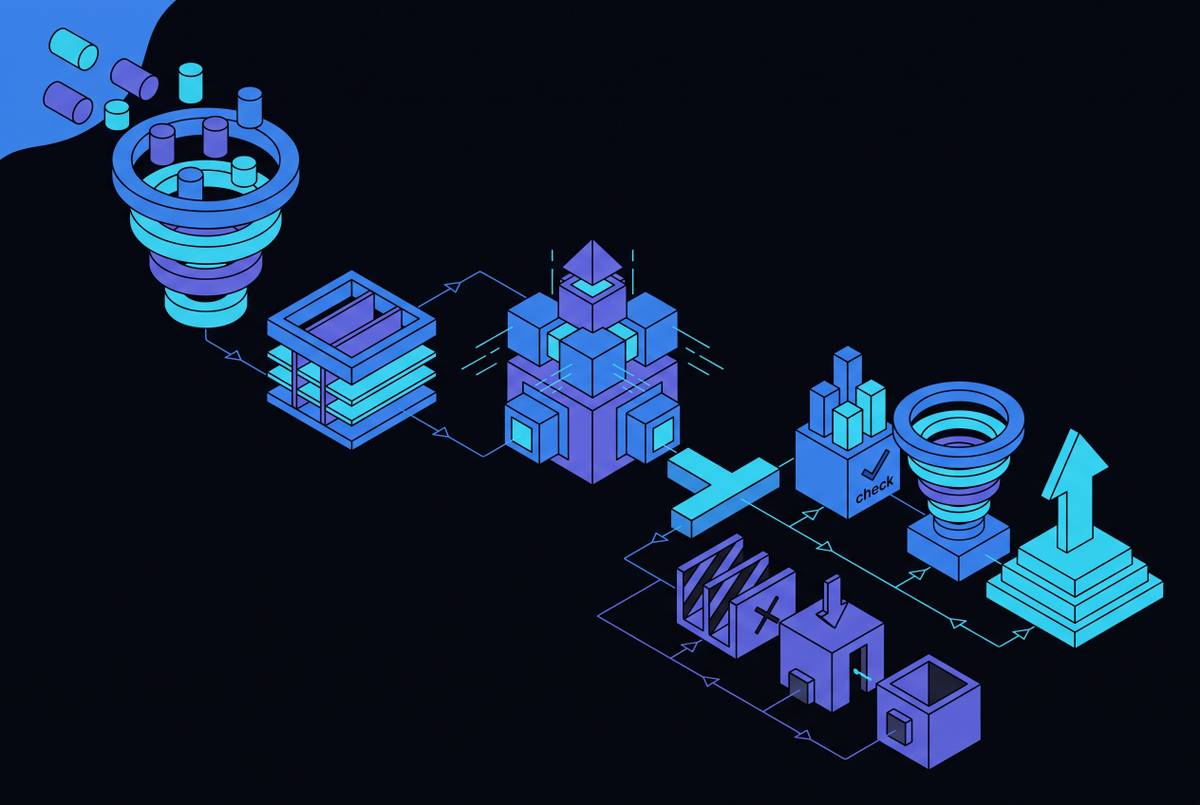
An agentic triage loop isn't just a classifier with better labels: it's a sequence of actions that build on each other, and five stages show up consistently across production systems: intent classification, sentiment and urgency scoring, context retrieval (pulling past tickets, account data, and knowledge base entries), a route-or-resolve decision, and a self-evaluation pass before anything goes out. The agent grades its own draft response against quality criteria, and only sends if it clears a confidence threshold, which keeps low-confidence answers from reaching the customer. Anything below that threshold escalates, but it escalates with the full context already attached, not as a blank ticket for a human to start over on.
What makes this agentic rather than just smart is that the loop keeps going after classification. Humans, fixed business rules, and AI models all do their part in the same run: AI handles the L1 classification where judgment calls are fuzzy, deterministic rules enforce the SLA because that has to be consistent every time, and a human signs off on escalation calls that carry real risk.
A production pattern from Linear shows this concretely. A webhook fires when a new issue comes in. The team running this pattern gets back roughly six engineer-hours a week, and that time doesn't come from automating the easy part. It comes from collapsing research and routing into the same moment the ticket arrives.
The step that separates a real loop from a glorified pipeline is the write-back. When the agent posts its reasoning to the source system, as a comment, a label, a field update, every person or agent who touches that ticket afterward inherits that context and can skip starting the investigation over.
MCP as the Infrastructure for Connected Triage
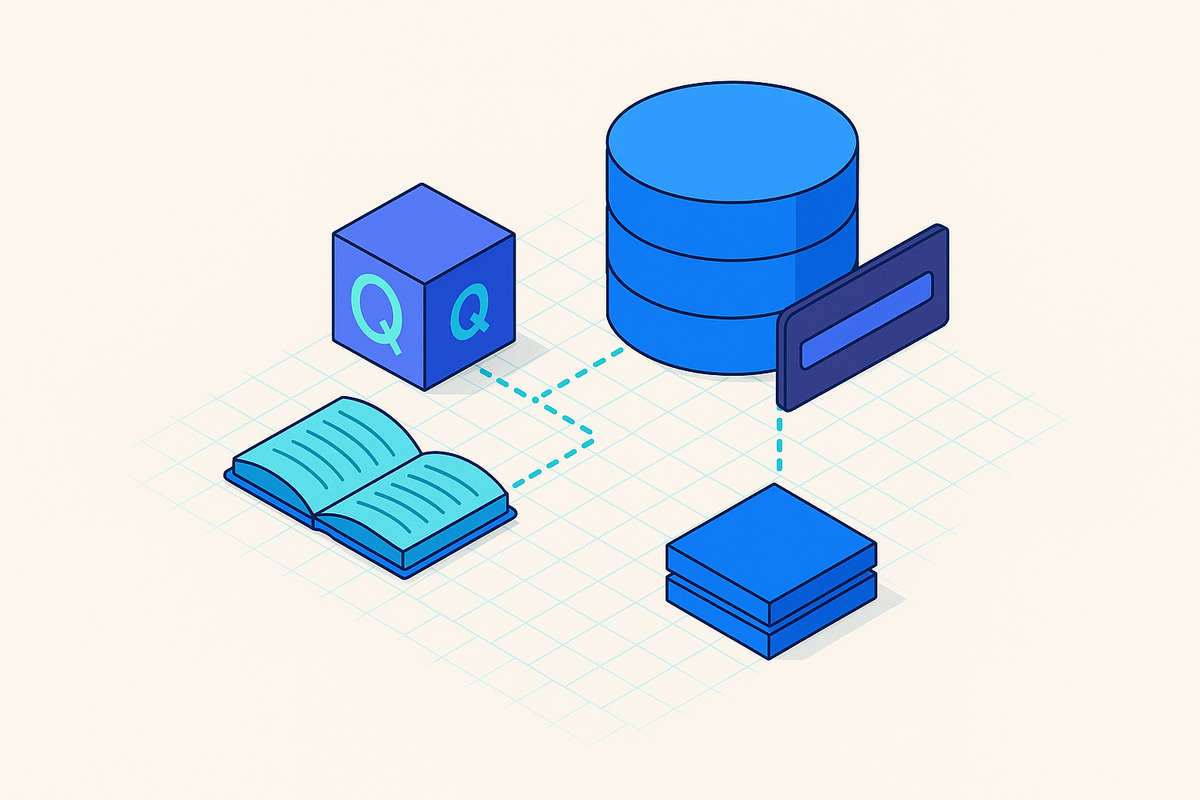
None of this works unless an agent can reach every system it needs to check, so that's what the Model Context Protocol solves. Before MCP, connecting an agent to a CRM, a codebase, and a knowledge base meant building and maintaining a separate integration for each pairing, a cost that multiplies fast as you add tools and clients. MCP collapses that math: build one server for a system, and any MCP-compatible client, Claude, ChatGPT, Cursor, or a custom agent, can use it without a new integration project. N times M bespoke connections becomes N plus M reusable ones.
Anthropic open-sourced MCP in 2024, and adoption since then has been fast: a substantial share of technical leaders report production use, and the protocol sees tens of millions of monthly downloads. On July 28, 2026, the spec revision removed protocol-level session tracking, and that was the most consequential recent change. Cloudflare called it "a major step toward making agent infrastructure work like the rest of the web: stateless, cacheable, routable, and globally scalable."
For triage, that statelessness has a direct payoff: each request carries its own context, so a workflow can scale horizontally and an auditor can trace a single request without reconstructing session history. Support triage doesn't live in that world. Human-scale response times are the norm already, so MCP sits as an intelligence layer next to those systems, not inline with them.
Why most agentic triage implementations stall before they deliver
A working pilot doesn't turn into a production system just because classification accuracy is high. It's about governance. If organizations connect agents to their tools without identity controls, audit logs, and automatic permission inheritance, they tend to stall before they ever reach real scale, no matter how accurate the model is.
A substantial majority of MCP pilots never make it to production, and the reasons cited are consistent: identity management, auditability, and vendor lock-in. Malicious instructions can hide inside tool metadata, and this tool poisoning succeeds at a high rate when systems auto-approve tool calls. The U.S. National Security Agency put it plainly in a May 2026 report: MCP's "rapid proliferation has outpaced the development of its security model."
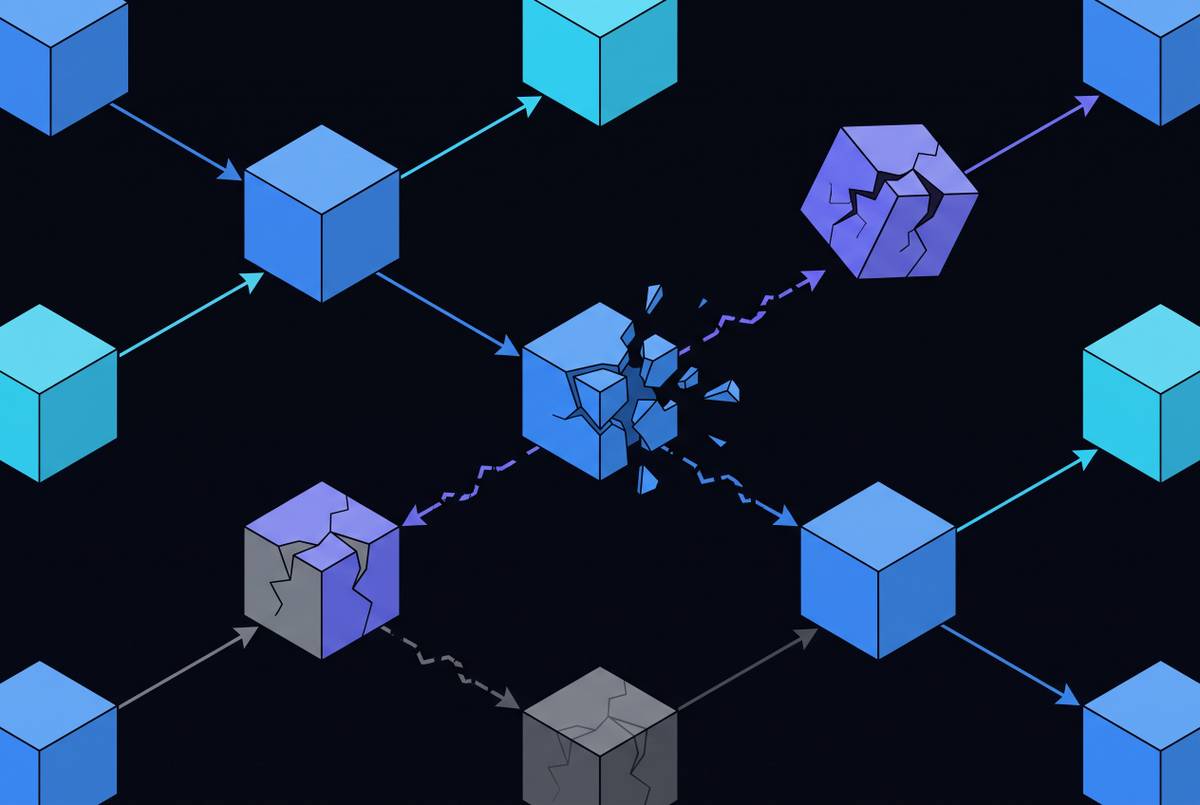
Data quality adds a second layer to the same problem. If a company's CMDB is incomplete or its category taxonomy is inconsistent, no amount of AI reasoning fixes the routing, because the agent is working from the same broken map everyone else was. Many enterprise data teams still don't have the data foundation you need for triage like this.
One architectural flaw causes both problems: bolting AI onto an existing ITSM tool without a governance layer makes routing decisions probabilistic and unauditable at the same time. Those two properties don't mix well with SLA enforcement or with the risk tolerance any serious enterprise operates under.
What governed triage architecture looks like in practice
Governed triage separates what an agent is allowed to do from what it actually does in any given moment, and the key move is letting permissions flow from the source system automatically rather than being redefined inside the AI layer every time something changes. Governance has to live with the workflow itself, not with whichever ticketing tool happens to be running it, so routing decisions stay consistent and traceable as ticket volume grows across departments.
Rippling's MCP server shows how this works. Every request an agent makes gets governed by the real identity and permissions of the user it's acting for inside Rippling. When someone's role changes, their agent's access updates automatically, with no manual redefinition anywhere. Any MCP-compatible client, Claude, ChatGPT, Cursor, Gemini, inherits those same permissions without a separate integration for each one.
The same architecture draws a clear line between deterministic and probabilistic execution. SLA enforcement and escalation rules run on fixed logic because they need to behave the same way every time. Intent classification runs on AI reasoning because that's where judgment is useful. You mix both inside a single run, in sequence, and that's what makes triage fast and auditable at once.
Auditability isn't optional in this model. Every action an agent takes, which tool it called, under what permission, with what result, needs to be logged and revocable. Without that trail, what an organization has isn't governance. It's automation running on faith.
Vendor independence closes the loop. If a company's business context, guardrails, and permissions live inside one LLM provider, a pricing change or a deprecated feature forces a rebuild of every workflow that depended on it. Governed architecture keeps that context separate from any single model, so it travels with the organization instead of the vendor.
How to scale triage across departments without fragmenting permissions
You can extend the same governance pattern that works for one team to the whole organization through team-based provisioning. Administrators define a team's access profile once inside the gateway, and every agent on that team inherits it. So nobody manages raw server URLs or rebuilds access policy by hand for each new hire or each new agent.
In practice, the pattern looks consistent across departments. Sales gets CRM read and write access plus Slack tools. Engineering gets GitHub, Linear, and CI tools. Finance gets read-only accounting tools. Access gets scoped at the team level, not the individual agent, so a new agent joining any of those teams picks up the right permissions automatically.
RevOps and sales teams have real examples to point to. Apollo launched an MCP server in February 2026, and with it, Claude can search for people and companies, enrich existing records, create or update contacts, and enroll prospects into outreach sequences. Enginy's sales-focused MCP server goes further on granularity: it publishes 23 named permission scopes, splits read access from write access on every one of them, and gives workspace admins a policy ceiling that caps what any individual can grant, even by accident.
Support and ITSM teams show the same pattern at larger scale. ConnectWise's zofiQ agent has driven a large reduction in escalations for organizations running it, and MSP deployments report meaningful cuts to both handling time per ticket and overall ticket volume.
What makes this scale without turning into a management headache is the registry: a structured catalog that tells every agent what MCP servers exist, where they live, and how to connect to them. It functions as a service catalog built for an era where the primary users querying it are other machines, not people clicking through a UI. If role-based access control works at the server level, each team or agent sees and uses only the tools it's cleared for, so platform teams can set that access once instead of managing it tool by tool.
The payoff appears across surfaces as well. One properly reviewed MCP tool contract can serve ChatGPT, Claude, Cursor, and Slack at the same time, with no need to rebuild identity and access policy separately for each client. OpenAI has already signaled where this is heading: built-in API connectors are labeled legacy for models released after September 1, 2026, with new integrations expected to point to a remote MCP server URL instead. A skill built once for support doesn't need to be rebuilt for engineering. It gets reused, governed the same way, everywhere it's needed.
How to evaluate the tools doing this in production
Tools that deliver autonomous resolution differ from tools that just deliver faster routing, and you only see the difference once you're running at production volume. Picking a tool on classification accuracy alone just reproduces the same governance and cost problems at higher speed. Six criteria separate the two categories.
Deterministic governance versus probabilistic routing is the first: does the tool let fixed rules handle SLA enforcement while reserving AI reasoning for classification, or does everything run through a probabilistic model with no fixed floor underneath it? Vendor independence is the sixth: can models, data sources, and orchestration layers be swapped without a rebuild, or does the organization's business context live entirely inside one LLM provider's walls?
Measured against those six, each of the major platforms has a clear shape. ServiceNow's Now Assist combines Predictive Intelligence for categorization and routing with generative AI and multi-step AI Agents, all sitting on top of a native ITSM footprint that covers incident, problem, change, and CMDB in one system, with mature reporting and audit trails. Its governance and context stay largely inside the ServiceNow environment, which limits flexibility for organizations running tools outside it. Pro and Enterprise Freshdesk plans include it, and you can add on more advanced features. HubSpot Service Hub bakes triage directly into the CRM, which fits teams already built around HubSpot. Salesforce Einstein does the same for Salesforce-native enterprises, with case classification and routing backed by deep CRM context.
What none of these four address directly is the situation most growing teams actually face: Claude running support agents, Cursor running for engineers, ChatGPT running for business users, each needing the same governed access without a separate identity policy built for each surface. That's the layer a governed, model-agnostic MCP registry closes. Not a replacement for any of the platforms above, but the piece that lets one reviewed tool contract serve every client an organization actually runs.
Where Resolution Gains Come From in Production Deployments
Every deployment reporting strong resolution numbers shares the same structural trait: the agent has governed access to the context it needs at the moment the ticket arrives and acts on it immediately. Tripadvisor, running through Maven AGI, autonomously handles 90% of incoming queries. K1x reached a high resolution rate just one week after it went live. ConnectWise's zofiQ customers report a sharp drop in escalations.
What connects all of these is that the agent reaches account history, known bugs, engineering fixes, and order state at intake, without a separate integration project for each data source, because a governed MCP layer makes that reach automatic rather than custom-built every time, regardless of the specific percentage.
Deployments that fall short of these numbers tend to share a different trait: the agent classifies tickets correctly but can't act on what it finds. No write-back access to the ticketing system. No ability to query the CRM directly. The agent has no permission to post a resolution, only a routing guess. So that agent becomes a faster router, not a resolver, and faster routing alone doesn't close the gap this piece opened with.
The mechanism that compounds over time is the write-back loop itself. Each ticket closed correctly becomes a labeled example for the next one. Every comment posted enriches the context window the next agent or human inherits. Every permission exercised under a governed model gets logged, audited, and can be revoked if it's ever misused, and that traceability is what gives an organization the confidence to expand an agent's autonomy beyond routing. The criteria that matter, deterministic governance, permission inheritance, auditability, vendor independence, are the structural conditions that decide whether a deployment keeps getting better on its own or plateaus at being a slightly faster way to sort tickets into the same queues as before.